

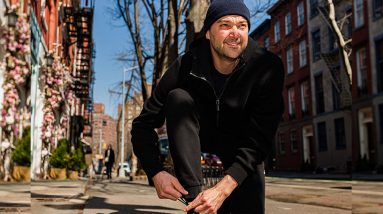
How Michelin Star Chef Daniel Humm Harnesses the Power of Plants and the Art of Goal Setting for Optimal Health and Fitness
Daniel Humm is currently celebrating 25 successful years in his restaurant; Eleven Madison Park in New York, and is living by the mantra of his new book, Eat More Plants, but the process of shifting from steaks to veggies was a serious undertaking, not least because of world renowned dishes like his famous lavender duck.
Pivoting to a plant-based menu mid-pandemic sent shockwaves through the restaurant industry and its critics, but the Swiss-born chef not only held on to his coveted three Michelin stars, he became the first plant-based restaurant in the history of the Michelin guide to earn such an honor.
M&F sat down with Humm between courses to find out how his love of competitive exercise led him to follow both heart and stomach, in order to make a contribution to a sustainable future.
 Make it nice
“I have always enjoyed playing sports and exercising, it helps me to go beyond myself, both physically and mentally,” Humm tells M&F. “One of my main interests is running. In the past year, I had the incredible opportunity to participate in the Boston Marathon, where I completed it in under 3 hours, which was a significant achievement for me.”
There’s no doubt that Humm is a highly competitive individual. He worked in his first kitchen at the age of 14, to support his cycling career, but after turning pro, a serious accident at the age of 24 resulted in internal bleeding and forced him reevaluate. “I thought at the time, ‘hey maybe this cycling thing isn’t the best thing to continue’ and that’s when I decided to start cooking instead,” he shares. “That experience opened my eyes. It made me realize that the high risk of injury and hard training schedules may not have been worth it for a long-term career. Not that being a chef is the easiest career path, but cycling for me was and always will be a love of mine and a sport that influences who I am personally and professionally.”
These days, Humm is still highly active and in addition to running marathons, he’s also added boxing to his various methods of training. He still loves to cycle, but has well and truly caught the running bug. “Currently, I’m immersed in training for the next Boston Marathon,” says Humm. “My goal is to finish it in less than 2 hours. I’m constantly striving to improve my personal records and achieve new milestones in both my sporting and culinary journey. It’s not about competing with others; it’s about pushing myself to be the best I can be.”
 Ye_fanDaniel Humm learned lessons from cycling that helped him dominate the restaurant space
As an athlete, Humm learned in those early days of cycling that discipline, endurance, and the joy of pushing past limits was the recipe for success. And, it’s just the same for him when working in the kitchen. “After my accident, I was forced to put an end to my cycling dream and had to rethink my entire future,” explains Humm. “As I began working more, in these renowned kitchens, I found a love of cooking and made the move to make it a full-time endeavor. I have taken the learnings, resilience, and an athlete’s mentality into everything I do at Eleven Madison Park. I’ve learned a lot about discipline, teamwork, and the importance of setting goals. If I was going to commit myself to the fine dining space, I was going to take that discipline and training from my cycling days and take risks to be the best in order to reach the top.”
Since 2012, Daniel Humm has amassed three Michelin stars. As a celebrated chef with a busy waiting list to eat in his restaurant, everything seemed to be ticking over nicely, but his desire to push himself and set new goals took him in a completely new direction. “In 2017, we were named the number one restaurant in the world,” says Humm. “And, with that, we were left a little disoriented as we searched for what was next to strive for. I thought ‘there must be more’ to the culinary space and fine dining than winning accolades, as wonderful as they are. Then, when the pandemic hit, it highlighted that our food system needs to find ways to change how it operates in order to be more sustainable, especially when it comes to luxury experiences. ‘Luxury’ foods like caviar, lobster, or Kobe beef get imported from the other side of the world frozen, and natural resources continue to decline.”
View this post on InstagramA post shared by Daniel Humm (@danielhumm)
Instead of resting on his laurels, this chef laced-up his apron and got to work. “I felt that by elevating plant-based food to the highest level, we can challenge or redefine what luxury means for fine dining, as well as what we eat at home,” says Humm. “Instead of celebrating how far your food has travelled, we can instead value the beauty and flavor of fresh, plant-based produce that was grown in your local farm.” Switching to plant-based, at a time when one of Humm’s signature dishes was made with duck was undoubtedly a bold move, but he concentrated on the goals that he had set for himself, and for his team of talented cooks.
Daniel Humm Contributes to a Sustainable Future By Goal Setting
“I anticipated there would be criticism,” shares Humm. “But, within that criticism emerged an even greater sense of purpose. This is what drives me and my team. Eleven Madison Park is not ‘anti-meat’, but rather ‘pro-planet’. Global environmental research has showcased the substantial impact of greenhouse gas emissions resulting from animal agriculture. My goal has been to craft the finest plant-based options, showcasing them in novel and unconventional ways in order to challenge the long-established norms that will drive meaningful conversations and awareness. One of Humm’s most personal goals it to make sure that everyone has access to sustainable food, especially those that can’t afford fine dining.
“We reached out to our friends at Rethink Food, an organization founded in 2017 by Eleven Madison Park alum Matt Jozwiak, with the mission of bridging the gap between the 108 billion tons of food that go unused in the United States each year and the 38 million Americans who continue to face food insecurity,” says the Chef. “We’ve collaborated with Rethink many times in the past, and then we became partners at the dawn of the pandemic. Through this work, we were introduced to Robert ‘Bob’ Madison and his team at the Jacob A. Riis Settlement at Queensbridge Houses in Long Island City, where we’ve served hundreds of meals to the community each weekday. Every meal at Eleven Madison Park and every purchase from elevenmadisonhome.com contributes directly to this mission. We are committed to using our resources to combat food insecurity, aiming to create a more sustainable and equitable food system in New York City and beyond.”
Daniel Humm asserts that small steps can lead to great change. “My diet is predominantly plant-based, but not entirely” he notes. “I’ve found that the more I eat plant-based, the less I crave meat. Even if everyone were to eat plant-based for just one day out of the week, it would make a significant difference for the future. I often say it’s about progress, not perfection. I am also a huge fan of traveling and experiencing other cultures, and in those senses I believe it’s important to experience and taste dishes from all around the world.”
So, what does a Michelin star chef eat after intense exercise? Try Daniel Humm’s “Morel Mushroom and Seaweed Baked Rice” for a tantalizing recovery meal.
“Eat More Plants. A Chef’s Journal” is available to pre-order now.
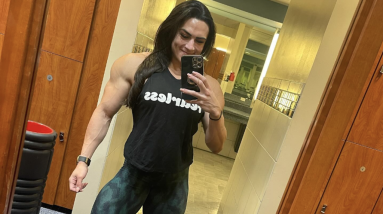
Get Ready for the Ultimate Showdown: A Sneak Peek into the 2023 Women’s Physique Olympia
Of 11 contests to be held at the 2023 Olympia in Orlando, FL, on Nov. 2-5, 2023, none may be as intense as the Women’s Physique Olympia. Nineteen athletes qualified to compete. The reigning champion, Natalia Abraham Coelho, and the former champion, Sarah Villegas, are amidst a heated rivalry that is a boon for interest. The full roster is below in the order that they qualified for the contest”
2023 Women’s Physique Olympia Preview
- Natalia Abraham Coelho (USA)
- Sarah Villegas (USA)
- Brooke Walker (USA)
- Anne-Lorraine Mohn (France)
- Pamela Canfield (USA)
- Elena Aviles Romero (Spain)
- Emily Schubert (USA)
- Emilija Martic (Canada)
- Romana Skotzen (United Kingdom)
- Zana Benta (Brazil)
- Caroline Alves Dos Santos (Brazil)
- Amy McKown (USA)
- Danielle LaMartina (USA)
- Jeannie Feldman (USA)
- Ivie Rhein (USA)
- Karina Goncalves (Spain)
- Alex Hall (USA)
- Marie-Soulange Essoh (USA)
- Julia Monroe (USA)
[Related: 2023 Classic Physique Olympia Preview]
View this post on InstagramA post shared by Natalia Abraham Coelho (@ifbbpronataliacoelho)
[Related: 2023 Mr. Olympia Preview]
How to Qualify
Like the other pro divisions at the Olympia, champions are qualified for life. The second and third-place finishers for the 2022 Women’s Physique Olympia were automatically invited to compete in the 2023 contest. The rest of the roster is filled with competitors who won a Women’s Physique pro show before the qualifying cutoff date of Oct. 9, 2023.
Any athlete who hasn’t qualified before the cutoff date would have to receive a special invitation to compete from the IFBB Pro League or the Olympia promoters. As of Oct. 23, 2023, no invites have been issued.
Past Champions
This contest’s two most recent champions are the only two champions in the 2023 edition. Reigning champion Natalia Abraham Coelho had tried to win this show since 2017 and finally broke through in 2022. 2020 and 2021 champion Sarah Villegas acknowledged mistakes in her 2022 prep but feels if her 2023 condition is presented as aspected, Coelho won’t be able to retain.
Fans who follow both athletes on social media could confirm Coelho and Villegas don’t see eye to eye and want to beat each other in. Villegas has been in this position before when she beat two-time titleholder Shanique Grant to win the championship in 2020. No champion in the history of the contest has regained the title after losing it. Villegas hopes to make that history; Coelho aims to start a dynasty of her own.
Top Contenders
2022 Women’s Physique Olympia third-place finisher Brooke Walker is growing her own fanbase. She is seen by many as a star of the future. She didn’t have to win a pro show to qualify for this contest, so the Olympia will be her 2023 debut. A year of muscle maturity could serve her well if she showcases definition that rivals Villegas, who is usually the most ripped athlete onstage. Walker’s shape compares well to Coelho, so don’t be surprised if Walker is alongside the past two champs in the first callout.
The next highest finisher from 2022 in this show is Ivie Rhein. She won the inaugural Masters Olympia Women’s Physique title in Romania on Aug. 26-27, 2023. Rhein has been in the mix for this title in the past but has never finished higher than fifth.
The last spot in the first callout is anyone’s to claim, but Jeannie Feldman and Anne-Lorraine Mohn are strong candidates. They finished sixth and seventh in the 2022 Olympia, respectively.
Dark Horses
Few people saw Walker emerge as she had to the division’s top tier. Dark horse competitors can be dangerous at the Olympia. Marie Solange-Essoh ranked 10th at the 2022 Olympia in Las Vegas, NV, but the Masters competitor won the 2023 Daytona Pro, proving she can hold her own.
Emily Schubert will make her second Olympia appearance, but her first in two years. She tied for 16th in the 2021 Olympia in Orlando, FL, and has shown significant improvement since then.
Olympia Debuts
Over half of the Women’s Physique field are first-time Olympia competitors — 11 of 19 athletes will grace an Olympia stage for the first time: Pamela Canfield, Karina Goncalves, Elena Aviles Romero, Julia Monroe, Emilija Martic, Alex Hall, Danielle LaMartina, Amy McKown, Caroline Alves Dos Santos, Zana Benta, and Romana Skotzen. At least two of those athletes will leave that stage as one of the top 10 Women’s Physique athletes in the world.
Those who are unable to attend the Olympia in Orlando to spectate live can still watch all 11 pro divisions live from home by purchasing the 2023 Olympia pay-per-view on the Olympia Productions website.
Featured Image: @ifbbpronataliacoelho on Instagram
The post 2023 Women’s Physique Olympia Preview appeared first on BarBend.

Top 5 Health and Fitness Picks of the Week: October 20
Hi friends! Happy Friday! How was the week? I hope you had a great one. What’s going on this weekend? We have an event for the girls’ school, Trunk or Treat, and we’re celebrating the Pilot’s bday a little early (and yes, his favorite cake is on the menu). I’d love to hear what you have going on!
Workwise, I’ve been doing a ton of functional testing for clients lately. As much as I love workout programming, this is close competition for being my favorite work-related task. I LOVE going through all of the data and creating custom action plans. I put on some binaural beats, sprawl out on the PEMF Go Mat (my code is FITNESSISTA15), and go through EVERYTHING. If you’ve been curious about functional testing as a 1:1 client, please let me know; I have three spots left as we wrap up 2023.
It’s time for the weekly Friday Faves party! This is where I share some of my favorite finds from the week and around the web. I always love to hear about your faves, too, so please shout out something you’re loving in the comments section below!

(pics to an art show we attended by the Boys and Girls Club. I got the sweetest greeting cards and a javelina painting for P’s room! Dress is here and P is still loving her Vivobarefoots.)

Friday Faves 10.20 Read, watch, listen:
Five pick-me-ups.
Why building muscle is more important than losing fat.
What little things in your home are just for you?
Fashion + beauty:
Shopbop sale is here! It’s a tiered sale, so the more you spend, the more you save. You can get up to 25% off.
Here are some of my favorite picks:
This floral dress would be gorgeous with heels or booties
This jumpsuit (I have another Pistola jumpsuit in red and love it)
These recycled leather pants – so cute for fall and holiday parties
These wide leg pants
These straight jeans
This nude slip dress
These bow earrings
LOVE the cut of these ALC dresses (size up)
This black maxi
These drop earrings
Fitness, health, and good eats:
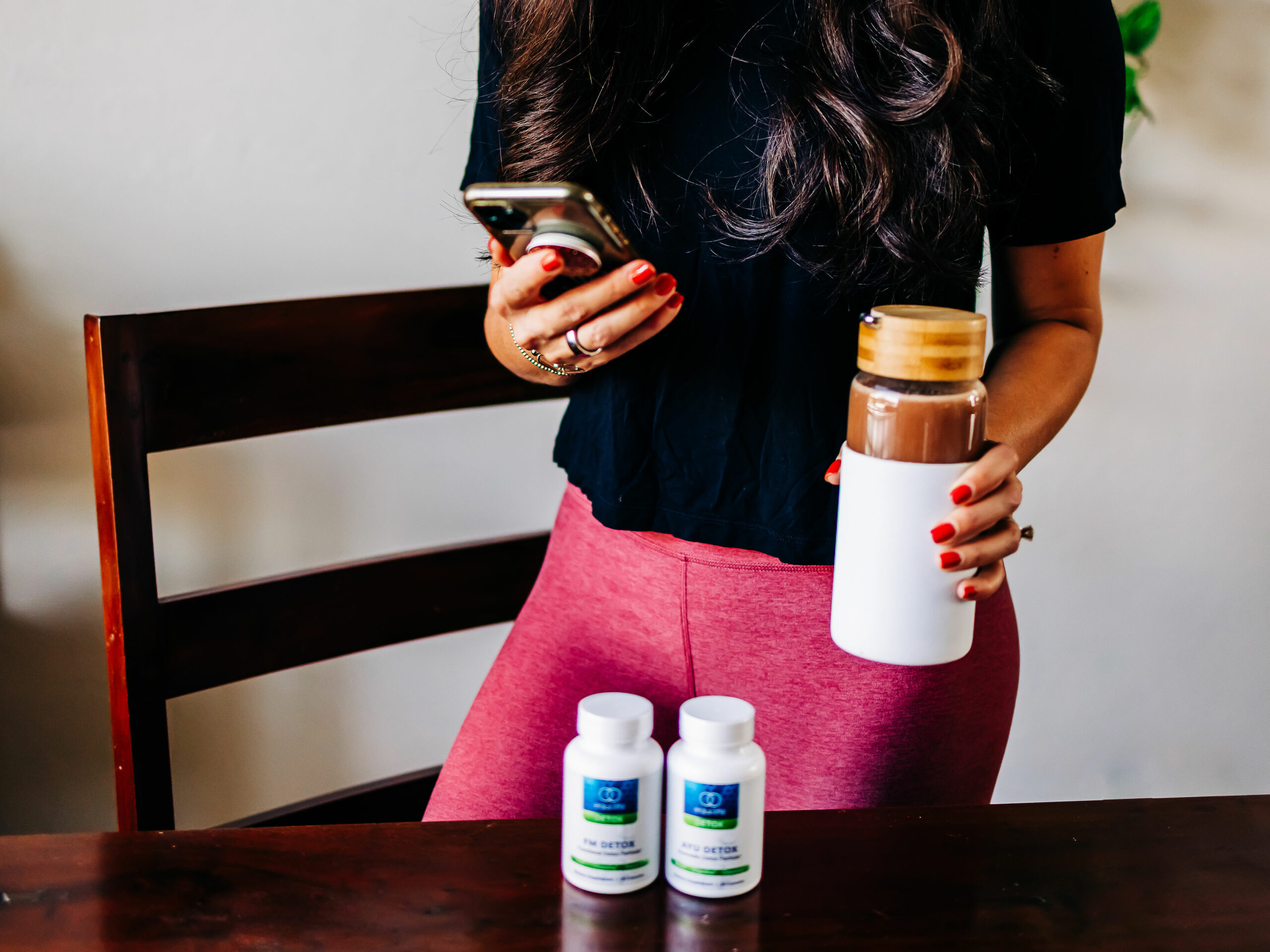
EquiLife has COFFEE! When they launched this past week, I was so pumped about it. Ever since I learned about how coffee is process, particularly how it’s decaffeinated, I’ve been pretty strategic about my coffee choices. I switched to decaf in the morning a few years ago, and when we got our Nespresso, I started drinking the organic pods since the taste of the decaf is horrible.
I’m so excited to try something new that’s free from the pesticides and mold that can negate the positive health benefits of coffee.
Here’s what’s exciting about this one:
Providing more than double the antioxidants found in blueberries
Contains Chlorogenic Acids (CGAs), a superior form of antioxidants
Effective at scavenging free radicals & preventing cell damage
Increases brain function & supports healthy levels of inflammation
Organic, single source coffee
Free from pesticides & mold
Whole bean, available in both regular (Revive) & decaf (Relax)
You can get a free bag of it here with a purchase of $99! (I would do a detox kit and a box of their chocolate brownie snack bars. You’ll have some tasty snacks and be ready for our community detox on January 8th! Use the code FITNESSISTA10 for 10% off, too.)
LOVE the Simple Mills protein pancake mix. It’s so good and the edges are a little crispy.
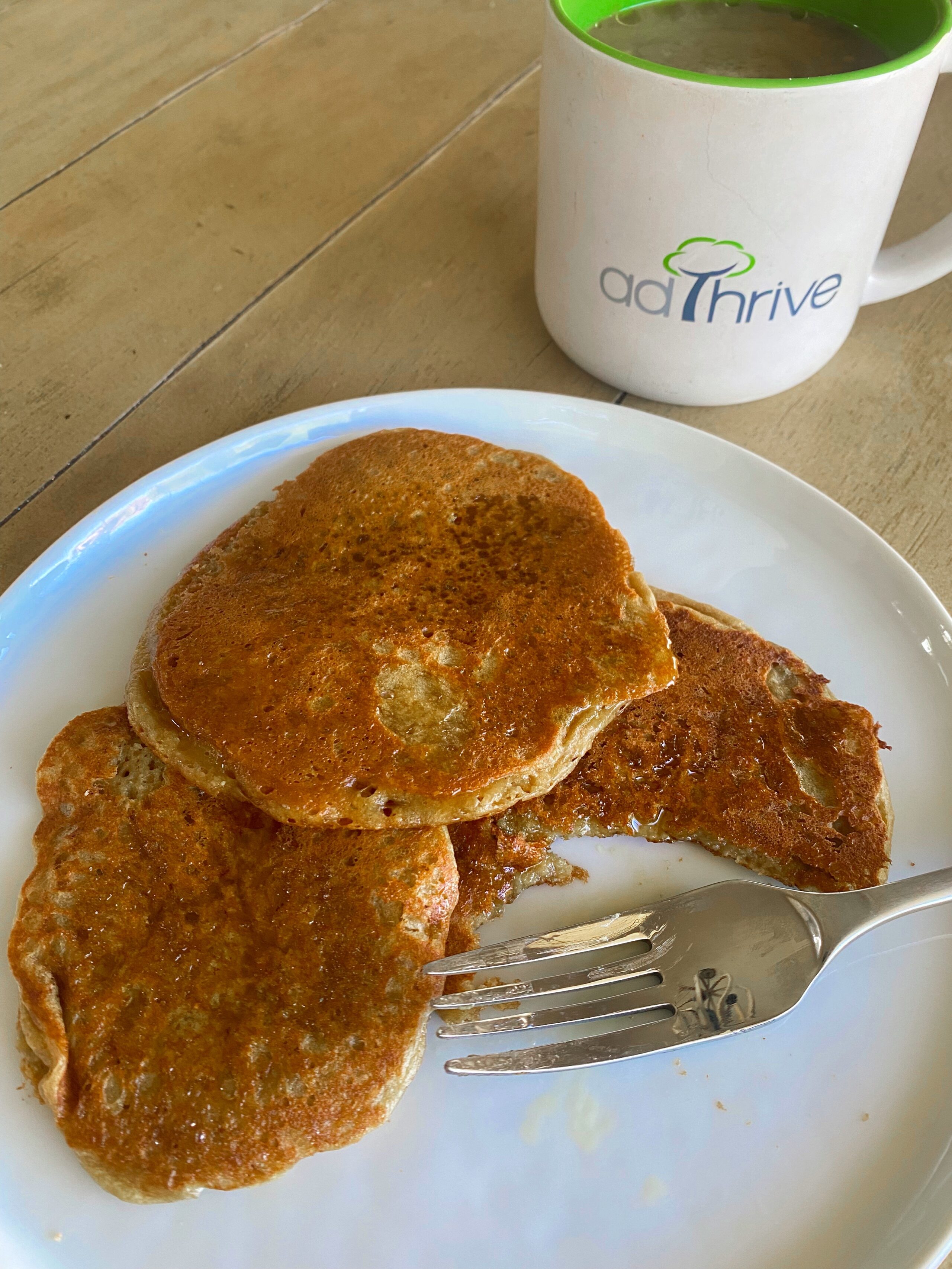
They’re especially amazing with berries on top and a side of chicken sausage.
Cinnamon apple pie ice cream.
Interesting links between seasons and metabolism.
You have to try this pumpkin baked oatmeal.
Happy Friday, friends! Thank you so much for stopping by the blog today and I’ll see ya soon!
xo
Gina
The post Friday Faves 10.20 appeared first on The Fitnessista.
Are Barre Arm Exercises Legit Strength Training or Just Another Trend?
If strong, sculpted arms are one of your fitness goals, you might assume the only way to get them is to perform endless biceps curls and triceps kickbacks. But if you’ve done an at-home barre workout, like Xtend Barre or Barre Blend, you’ve likely felt the burn in your arms.
So can you get a solid strength training workout from those barre arm exercises? Here’s what you need to know.
Does Barre Build Strength in the Arms?
“Absolutely!” says Jen Cordiner, education director for Xtend Barre, an at-home barre program that incorporates cardio, Pilates, and ballet fundamentals to help you burn fat and build muscle.
Barre workouts typically combine bodyweight exercises with high reps to strengthen and build your muscles.
“A focus on proper form and creating your own resistance help lead to a long, lean, sculpted upper body,” Cordiner says. Your target muscles may burn and shake — surefire signs that the routine is working.
Many Xtend Barre workouts also incorporate equipment such as resistance bands or light hand weights to boost the intensity of barre arm exercises. This can really ramp up your upper-body toning results, Cordiner says.
Is Barre Considered a Strength or Cardio Workout?
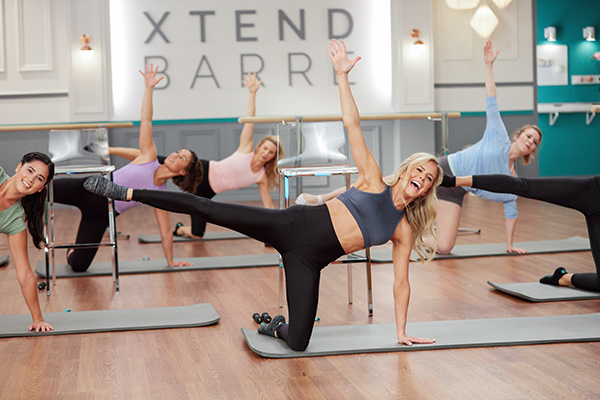
Traditional barre workouts use small, isometric exercises to help you build total-body strength and definition — minimal cardio included.
However, BODi’s barre programs are unique in that it blends traditional isometric exercises with dynamic movements that get you moving through a full range of motion.
The result: You get strength and cardio benefits in a single session. “Our combination of sculpt and cardio offers a full-body workout, which leads to better results,” Cordiner says.
How Often Should I Do Barre Arm Exercises to Increase Strength?
If you really want to see and feel strength results, Cordiner recommends doing barre three to five days a week. As your strength and endurance grow, you can bump up your weekly sessions to five or more.
Ready to get started? Try an Xtend Barre or Barre Blend workout on BODi. Choose from total-body routines, or give specific muscle groups (ahem, your arms) extra attention with focused workouts.
Don’t have a ballet barre? No worries — a sturdy chair, countertop, or the back of the couch will do the trick, so you can start enjoying the benefits of barre arm exercises.
The post Do Barre Arm Exercises Count as Strength Training? appeared first on BODi.
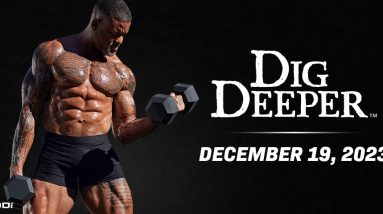
Unleash Your Inner Strength and Achieve a Sculpted Physique with Shaun T’s DIG DEEPER Workout
Build the body you’ve always wanted, become mentally unstoppable, and discover what it’s like to be in control of your results with the first-ever weightlifting program from Super Trainer Shaun T.
Introducing DIG DEEPER, the ultimate body recomposition program coming to BODi in December 2023.
What is DIG DEEPER?
DIG DEEPER is an intense, all-out weightlifting program for all levels, designed to give you a total-body recomposition.
A body recomposition program reshapes your body by torching fat while building muscle to reveal a leaner, more muscular body.
Over 12 weeks, Shaun takes you through three 4-week collections of workouts using a variety of proven lifting techniques that will leave you toned and sculpted.
You will lift heavy, gradually bumping up your intensity, and target every muscle group to help you reach your peak physical and mental strength.
Workouts are 6 days a week, 30-50 minutes a day, with just 1 day of low-impact cardio (no jumping or high impact required!).
There’s also a No Excuses collection of under-25-minute workouts, for when you’re short on time.
What kind of results can I expect from DIG DEEPER?
Get jaw-dropping physical results with DIG DEEPER, as you shred fat and increase muscle mass to completely rebuild your body.
It’s about getting the results you want and feeling more powerful in your body than ever before.
You will see continuous progress as you build and sculpt muscles, even in areas you never thought you could, and achieve next-level strength and fitness — physically and mentally.
What is a body recomposition program?
Your body composition is your ratio of lean mass (such as muscle) to fat mass.
DIG DEEPER is a body recomposition program that changes the makeup of your body by reducing your fat stores while increasing your muscle mass to make you leaner, stronger, healthier, and more powerful.
Body recomposition also speeds up your metabolism, to help you lose weight and keep it off.
Keep in mind that body recomposition looks different for everyone. This is why you might not see the scale move, but you will 100% see and feel a difference in your body.
Why is strength training important?
Whether you want a lean and toned body or a muscular, chiseled physique, weight training is one of the most effective ways to reshape your body and achieve a healthier body composition.
Regular strength training also helps protect and stabilize your joints, improve bone density, and increase strength and muscle mass, to help you look and feel amazing — now and into the future.
How is DIG DEEPER different from other workouts?
DIG DEEPER isn’t just the name of his new fitness program — it’s a mentality Shaun has followed since the beginning of his fitness journey. It’s tattooed on his body, quoted in his gym, and always top of mind.
The term reminds Shaun that when life gets tough, you can back down, or you can dig deeper, push through, and discover the greatness inside of you.
And that’s what he did in his own weightlifting journey.
Shaun immersed himself in weightlifting to take his training to the next level and challenge his body in new ways.
He reshaped his body, a total recomposition of his physique, and shocked the world with his stunning physical and mental transformation.
Stronger and more shredded than ever, he won several gold and silver medals in his first-ever Men’s Classic Physique competition.
Now, he’s sharing his exact body-sculpting method with you, so you can get your own mind-blowing results.
Who is Shaun T?
As a BODi Super Trainer, fitness legend, and motivational superstar, Shaun T has helped millions of people get in the best shape of their lives.
Known for his transformational programs and powerfully inspirational style, he’s the creator of megahits FOCUS T25, T25 + B25 Super Blocks, Transform :20, CIZE, INSANITY, and LET’S GET UP!
Now he’s back with his first-ever weightlifting program that will get you serious results, to help you look and feel incredible.
When will DIG DEEPER be available?
DIG DEEPER will be available for VIP Early Access in December 2023. You’ll need a Fitness membership to purchase the program.
Want more details about DIG DEEPER?
Get all the info about Shaun’s new DIG DEEPER program by visiting FAQ 10406.
The post Lift and Get Shredded With DIG DEEPER From Shaun T appeared first on BODi.
Achieve Sculpted Lower Abs with These 10 Effective Exercises
Try this: Place your hand on your lower abs and cough a few times. That contracting muscle you feel? That’s your transverse abdominis—and targeting this particular muscle is the best way to tone your lower abs!
The transverse abdominis extends between your ribs and pelvis and is the deepest of the six ab muscles. Its fibers run horizontally, wrapping around your trunk from front to back like a corset.
The next 10 exercises can help target your transverse abdominis, tone and strengthen your lower abs, reduce lower back pain, and keep you feeling fit, strong, and energized!
Be sure to take your time and maintain good form (these are not about speed!), and remember to breathe. Try to incorporate these exercises into your workout routine on a weekly basis for the best results!
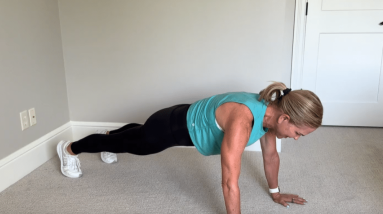
1. Full Plank  Photo Credit: Get Healthy U
The plank is a staple of most ab workouts because it recruits the entire core!
How to perform a plank:
- Begin kneeling on all fours with your hands directly under your shoulders and toes on the mat.
- Tighten your abdominals and raise your body up off the floor, lengthening your legs behind you. Hold your entire body tight, and remember to breathe.
2. Bird Dog  Photo Credit: Get Healthy U
Bird dogs strengthen the lower back and abdominals while promoting stability and balance.
How to perform a bird dog:
- Kneel on the mat on all fours. Reach one arm long, draw in the abdominals, and extend the opposite leg long behind you.
- Repeat on the other side.
3. Forearm Side Plank  Photo Credit: Get Healthy U
Forearm side planks don’t just target your core—they also strengthen your shoulders and upper back.
How to perform a forearm side plank:
- Being lying on the floor with your forearm on the mat and your shoulder stacked over your elbow. Legs are long, with your feet stacked on top of each other.
- Lift your body into a side plank position, keeping your lower knee on the floor and your abdominals engaged. Try not to let your hips rise or drop.
- Repeat on the other side.
4. Bend-Extend Ab Tuck  Photo Credit: Get Healthy U
Bend-extend ab tucks are great for working your lower abdominal area and protecting your lower back.
How to perform a bend-extend ab tuck:
- Start seated on the mat with arms behind you, hands on the mat, and fingers facing your backside. Sit back on your hands and lift up your feet off the mat, keeping the knees bent.
- Keep abs tight, press your legs out long, and your lower back down slightly (you should feel your lower abdominals working). Push yourself back up and pull your knees in to return to the start position.
5. Bicycle Crunch  Photo Credit: Get Healthy U
Bicycle crunches help build coordination and a strong core.
How to perform a bicycle crunch:
- Start lying on your back with your feet off the floor and legs in a tabletop position. Hands are behind your head, and your head, neck, and shoulders are flexed off the mat.
- Bring one knee in and to the opposite elbow, reaching towards it. Repeat on the other side in a crisscross motion working the obliques.
6. Toe Reach  Photo Credit: Get Healthy U
Toe reaches focus on core engagement and really target the transverse abdominis.
How to perform toe reaches:
- Start on your back with your legs long-reaching towards the ceiling.
- Bring your head, neck, and shoulders off the mat and reach your arms up towards your feet. Return to the tips of the shoulders and repeat.
7. Bridge  Photo Credit: Get Healthy U
Bridges stretch the chest, neck, spine, and hips while strengthening the glutes, core, and lower back. They also promote good posture!
How to perform a bridge:
- Begin lying on your back with your knees bent and feet flat on the floor close to the glutes.
- Place your arms flat on the floor next to you, tucking your shoulders under your back. Align your knees with your hip bones.
- Press your palms down as you lift your hips high and squeeze the glutes and abdominals. Keep your neck relaxed on the mat.
- Continue to breathe and hold for 30 seconds.
8. Leg Drop  Photo Credit: Get Healthy U
Leg drops focus on strengthening the lower abs and back. Keep your movements slow to really work the core!
How to perform leg drops:
- Start lying on your back with both legs long towards the ceiling.
- Keep your abs tight as you lower one leg until it’s a few inches off the floor, then switch legs.
- Tip: never go so low with your legs that your back pops off the mat.
9. Flutter Kick  Photo Credit: Get Healthy U
You’ll definitely feel these flutter kicks in your lower abs!
How to perform flutter kicks:
- Start lying on your back, legs extended at a 45-degree angle, with your arms down at your sides and your legs off the ground.
- Slightly lift your head, shoulders, and neck off the ground.
- Start kicking (or fluttering) your legs up and down, alternating as you go. Your flutters should be at a pace you can maintain while still keeping your core still.
- Try to flutter for at least 30 seconds, or as long as you can!
10. Bear Crawl Hold  Photo Credit: Get Healthy U
The bear crawl hold is another challenging move, but it’s perfect for activating your core, shoulders, quads, back, and hips.
How to perform a bear crawl hold:
- Start on all fours and lift your knees so that they’re at a 90-degree angle and hovering an inch off the ground. Only your palms and toes should be touching the floor.
- Keep your back flat, core engaged, legs hip-width apart, and arms shoulder-width apart.
- Hold this position for 20 to 30 seconds, or as long as you can!
Strength Training for Women Over 50: 11 Best Moves  Photo Credit: Get Healthy U
There are many factors involved in maintaining good physical and mental health as you age, but one of the most important things to consider as you grow older is weight training.
These strength training exercises are proven to get results for women over 50!
Strength Training for Women Over 50: 11 Best Moves
The Best Love Handle Workout  Photo Credit: Shutterstock
These five exercises specifically target the love handles and will have you feeling the burn!
Combine this workout with a healthy diet and cardio, and you’ll watch that belly fat “waist” away.
The Best Love Handle Workout
9 Tips For Joint Health | Keep Your Joints Healthy As You Age  Photo Credit: Shutterstock
Keeping your joints healthy is key to staying mobile and experiencing less pain as you age. Although you may not be able to prevent all joint injuries or arthritis, there are many things you can start doing today to improve your joint health!
9 Tips For Joint Health | Keep Your Joints Healthy As You Age
Fitness Icon Brett Wilkin Pulls Out of the Highly Anticipated 2023 Mr. Olympia Competition
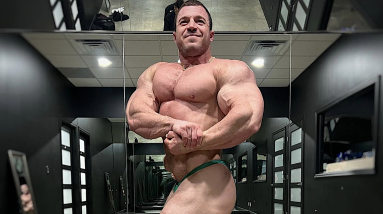
IFBB Pro League Men’s Open bodybuilder Brett Wilkin was the first athlete to qualify for the 2023 Mr. Olympia contest when he won the 2022 Bigman Weekend Pro. On Oct. 9, 2023, Wilkin officially withdrew his name from the 2023 Mr. Olympia, slated for Nov. 2-5, 2023 in Orlando, FL. Wilkin announced that he had to bow out due to digestive issues in an video published to his Instagram page that can be seen below:
View this post on InstagramA post shared by Brett “The Butcher” Wilkin (@brett_wilkin)
[Related: Theo Leguerrier Wins 2023 Italian Olympus Pro Bodybuilding Show]
“To make a long story short, the body was not responding like it should be from the get-go,” said Wilkin. “I had some early red flags, and that just progressed into me not being able to keep food down, keep meals down.”
Wilkin revealed in the video that he hadn’t trained in two weeks as of the time the video was filmed. He estimated losing 15 to 17 pounds in that time due to digestive problems that he’d suffered for several weeks.
After initially keeping the issues to himself while trying to continue his prep, he consulted his wife, Ivana, and coach, Matt Jansen, to pull out of the Olympia. The IFBB Pro League and Olympia promoters were made aware of his decision before Wilkin’s public announcement.
View this post on InstagramA post shared by Brett “The Butcher” Wilkin (@brett_wilkin)
Several of Wilkin’s fellow competitors and renowned bodybuilding champions offered support following Wilkin’s decision, including seven-time Mr. Olympia Phil Heath, seven-time Olympia 212 champion Flex Lewis, and fellow Mr. Olympia competitor Nick Walker, whom Wilkin would’ve shared the stage with in November.
Wilkin’s victory in the 2022 Bigman Weekend Pro was his first victory in the IFBB Pro League, and he would’ve made his Mr. Olympia debut in Orlando had he competed. He also became a father to a daughter in 2023.
Wilkin is the third athlete to withdraw from bodybuilding’s world championship event. Two-time Sandow Trophy winner Mamdouh “Big Ramy” Elssbiay bowed out due to injuries in September 2023. Earlier that same month, 2023 Toronto Pro Supershow winner Iain Valliere withdrew from the contest and announced his retirement from competitive bodybuilding.
With Wilkin’s absence, the 2023 Mr. Olympia roster has 21 athletes scheduled to take the stage as of the time of this article’s publication. The qualifying season concluded on Oct. 9, 2023, which means the only way another competitor can join the lineup is if they are offered a special invite by either the IFBB Pro League or Olympia promoters.
Wilkin concluded his video by sharing his optimism about competing again to potentially qualify for the 2024 Olympia.
Featured image: @brett_wilkin on Instagram
The post Brett Wilkin Withdraws From the 2023 Mr. Olympia Contest appeared first on BarBend.
Discover Your Ideal Healthy Weight
If you’re wondering if there’s a definitive “healthy weight,” here’s the truth: There’s no perfect, absolute number you should aspire to achieve.
Your healthy weight depends on a number of different factors, and there’s no way we can all fit into the same mold.
With that said, everyone has a healthy weight — or better yet, a healthy weight range — they can strive for to limit their risk of weight-related health issues. Here’s how to estimate yours.
How to Find Your Healthy Weight
Age, height, gender, bone density, muscle-to-fat ratio, and overall health can all influence how much you weigh.
While there’s no cut-and-dried formula for calculating your healthy weight, there are four common metrics that medical professionals use:
- Body mass index (BMI)
- Waist-to-hip ratio
- Absolute waist circumference
- Body fat percentage
While these measurements won’t provide you with a magical number to aim for, they can be used as a guideline to determine a healthy weight range.
(Though, again, this isn’t an exact science — it’s also important to pay attention to other factors, like your energy levels, how your clothes fit, and how good you feel overall.)
What Is Body Mass Index (BMI)?

Body Mass Index (BMI) is an estimation of body fat based on a person’s weight and height.
Doctors may use your BMI as a screening tool to determine if you’re at risk for developing obesity-related health problems such as heart disease, high blood pressure, type 2 diabetes, and sleep apnea.
To calculate your BMI, divide your weight in pounds by your height in inches squared, and multiply the result by 703. (Or just use an online BMI calculator.)
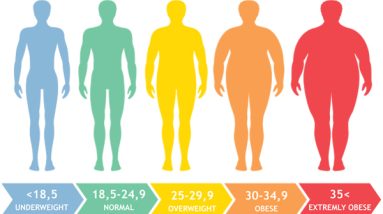
The resulting number predicts where you sit on the weight spectrum:
- Underweight = BMI <18.5
- Normal weight = BMI 18.5–24.9
- Overweight = BMI 25–29.9
- Obesity = BMI of 30 or greater
You can get an idea of your recommended weight range for your height by consulting this BMI chart from the National Institutes of Health.
However, the Center for Disease Control and Prevention (CDC) notes that BMI is not a reliable method of measuring body composition, which is all-important, because it only measures “excess weight” and not excess fat.
Excess weight isn’t always a bad thing. Someone who carries a lot of muscle, for example, may have a high BMI even though their body fat percentage is quite low.
That’s why it’s important to take other metrics, like waist circumference and boy fat percentage, into consideration, too.
What Is Absolute Waist Circumference?

Absolute waist circumference is a fancy term for your waist measurement in inches. This measurement should be taken an inch or so above your belly button, says nutrition scientist Eric Feigl-Ding, PhD.
“People with apple-shaped bodies — or a large amount of fat around the midsection — have high risk levels for health problems, especially when their waist circumference is more than 35 inches (for women) or 40 inches (for men),” he explains.
How can this info help you determine your healthy weight? In general, if your waist circumference falls below that threshold, it’s likely that your weight is within a healthy range.
What Is Hip-to-Waist Ratio?
Like BMI and absolute waist circumference, measuring your hip-to-waist ratio is another quick way to estimate whether you’re at a healthy weight.
To calculate hip-to-waist ratio, simply divide your waist measurement (in inches) by your hip measurement (taken at the widest part of your buttocks—also in inches).
The resulting number can be used to predict your risk of developing health conditions such as heart disease, especially in women.
For men, waist-to-hip ratios of:
- Less than 0.9 = low risk
- 0.9 to 0.99 = moderate risk
- 1 or above = high risk
For women, ratios of:
- Less than 0.8 = low risk
- 0.8 to 0.89 = moderate risk
- 0.9 or above = high risk
Similar to BMI, lowering your waist-to-hip ratio into the “low risk” range means that your weight is likely in — or close to — a healthy range.
What Is Body Fat Percentage?

We get it: When you’re trying to lose weight, you want to see the number on the scale go down.
But water retention, muscle mass, and hormones can cause the scale to fluctuate — so focusing on weight isn’t the best way to gauge whether your healthy lifestyle is paying off.
By keeping track of your body fat percentage, however, you can get an idea of how much fat you’ve lost — even if the number on the scale isn’t budging.
And research suggests that body fat percentage — the percentage of your weight that comes from fat — may be a better predictor of cardiovascular risk factors than BMI.
So how do you measure body fat percentage? The most reliable methods include a DEXA (x-ray) scan, underwater weighing, or bioelectrical impedance.
Some of these methods can be done at home — you can shop online for a body fat scale that uses bioelectrical impedance — but for the most accurate estimate of your body fat percentage, you’ll want to let a professional do the measuring (ask your doctor for a recommendation).
Finding Your Healthy Weight Without Crunching Numbers
When it comes to determining and achieving your goal weight, some of the most important variables can’t be calculated or measured.
Take stock of how you feel overall: Do you have enough energy to be as active as you’d like throughout the day? Does your annual physical show you’re in good health? Are you eating and sleeping well?
Pay attention to that instead of solely focusing on what you see on the scale.
“It’s always about a better weight, not a perfect weight,” says Marty Davey, M.S., R.D. “Aiming for better weight is much more useful, because it’s achievable. A 280-pound person who loses even 10 percent of their weight is still obese, but has reduced health risks. That’s a win.”
The post What Is a Healthy Weight for Me? appeared first on BODi.

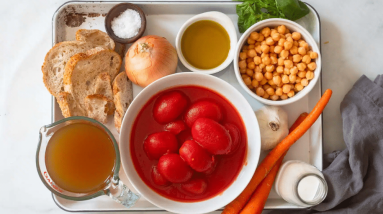
Get Ready for Soup Season with Our Top Healthy Tuscan Soup Recipe
As the temperatures start to drop, we start craving soup. This healthy Tuscan tomato soup recipe is a favorite since it’s super simple to make with a few pantry staples like canned tomatoes, chickpeas, and day-old bread!
Our take on a Tuscan tomato soup (also known as pappa al pomodoro) adds chickpeas for extra plant-based protein and texture. If you are looking for a delicious but healthy homemade tomato soup that is thick and creamy without the need for heavy cream – you’ll love our Tuscan tomato bread soup.
We were honestly so shocked by the creaminess of this soup because it tastes like it has cream, but it is actually dairy-free. Blending half of the soup in a blender and adding the bread to the soup base creates a creamy texture without any heavy cream.
Check out the details for our healthy Tuscan Soup, a few helpful FAQs, followed by the full, delicious recipe.
The Ingredients 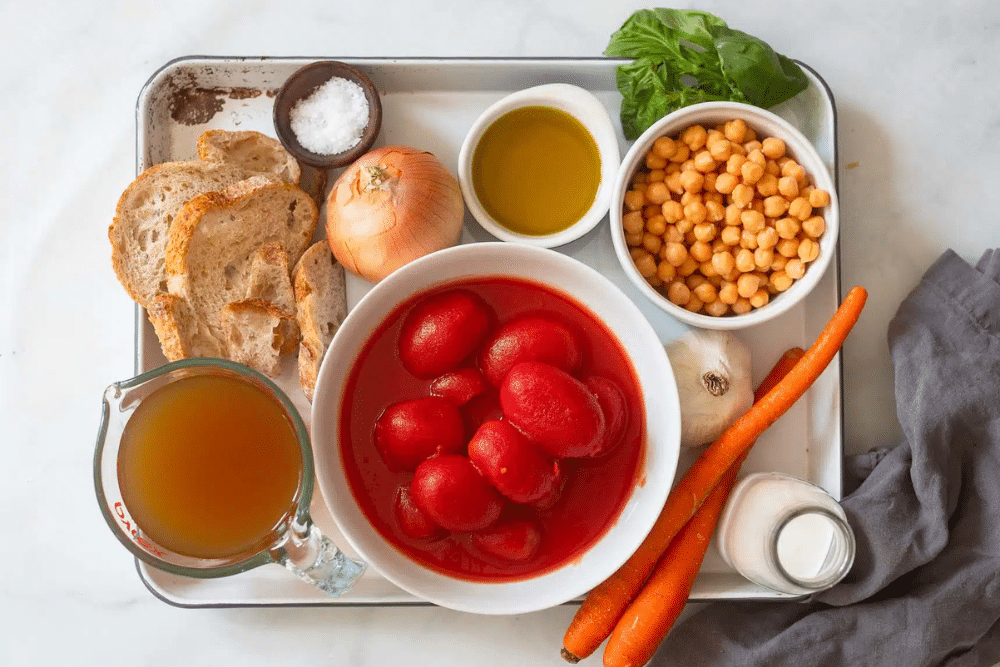 Photo Credit: Get Healthy U
To make our healthy Tuscan soup, you’ll need:
- Canned Tomatoes: we recommend using a higher quality canned tomato like San Marzano tomatoes if you can since they add so much flavor to this simple soup. We prefer whole, peeled tomatoes.
- Onion, Garlic and Carrot: this combo of veggies adds tons of flavor to this soup. If you don’t have fresh garlic, you can substitute with 2 teaspoons of garlic powder.
- Broth: use a flavorful broth for best results. Use vegetable broth for a vegan version of this soup or else you can use chicken stock. For those that need to limit their sodium intake, use a low sodium broth.
- Chickpeas: add some plant-based protein and texture to this simple soup by tossing in a can of drained chickpeas. If you don’t have chickpeas, you can substitute with white beans or butter beans.
- Basil: fresh basil is a perfect pairing with tomatoes. We use fresh basil but you can also use dried basil – we recommend adding about 1 teaspoon dried basil. If you don’t have basil, you can also use a teaspoon of Italian seasoning.
- Bread: cube up day-old or stale bread to thicken this soup. We used a sourdough loaf, but any soft white bread will also work well for this Tuscan soup recipe. You just want to avoid using a whole grain or seedy loaf as the grains and seeds do not break down into the soup.
The Details 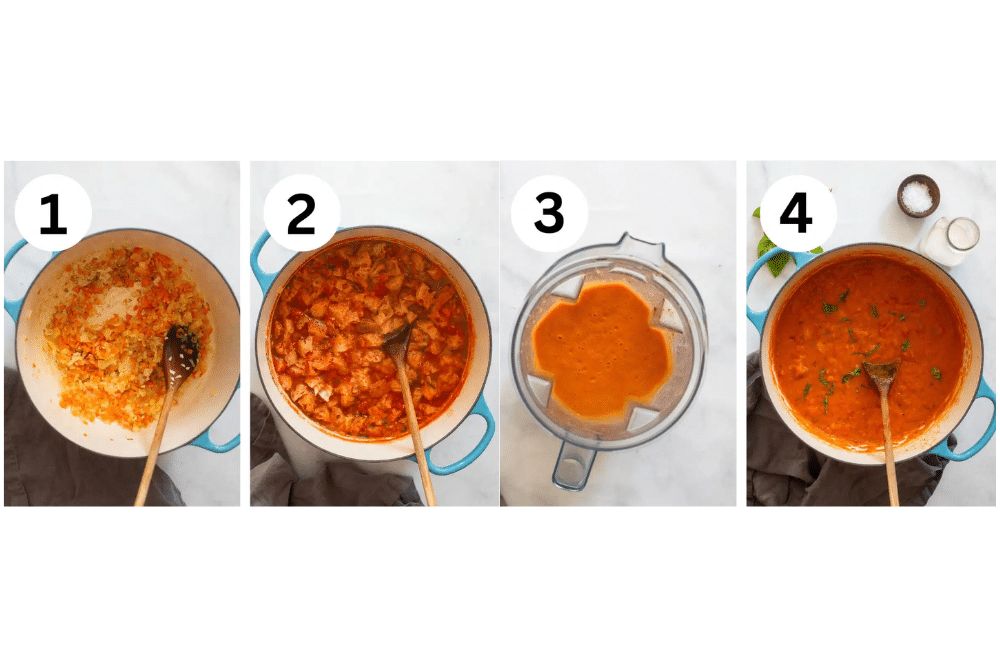 Photo Credit: Get Healthy U
Here are the detailed instructions for our healthy Tuscan soup:
- Saute the Onion and Carrot: start by adding olive oil, diced carrots, and onion to a large dutch oven or large stock pot over medium-high heat. Saute until the onion is translucent. Stir in the garlic and cook for 1 more minute.
- Simmer with the Other Ingredients: Meanwhile, add the canned tomatoes to a large bowl and crush them by hand. Add them to the pot with broth, chickpeas, and basil. Simmer and then add the day-old bread. Simmer until the bread is softened.
- Blend Half: add ½ of the soup to a blender and puree until smooth (or use an immersion blender to partially blend the soup). Stir back into the rest of the soup. Serve with parmesan cheese, olive oil, and more fresh basil leaves.
Tuscan Soup FAQs 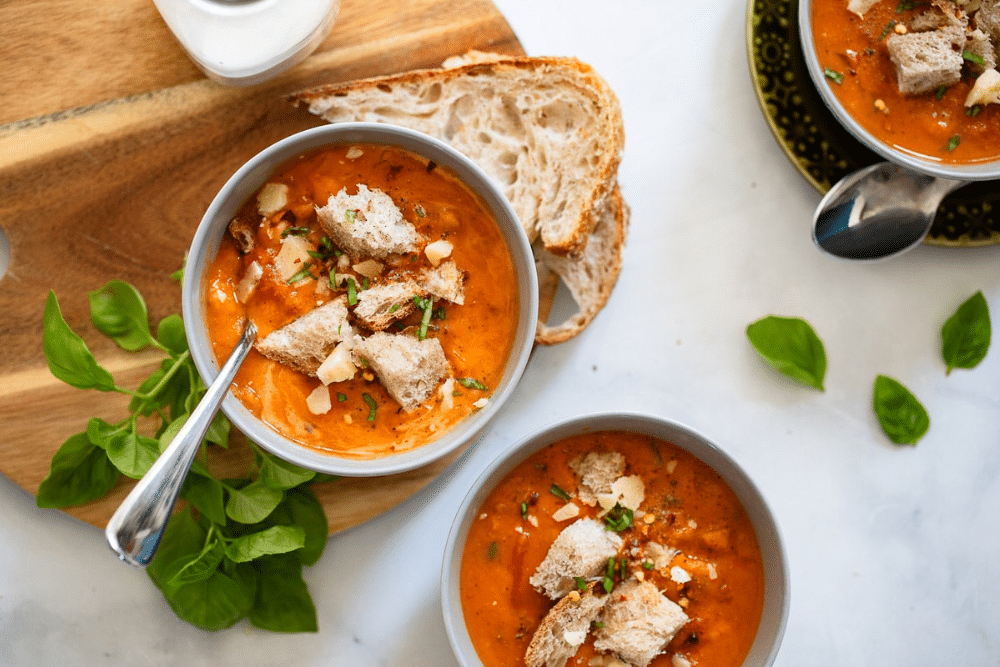 Photo Credit: Get Healthy U
Is this Tuscan soup healthy?
Yes! This healthy tomato basil soup recipe is made without heavy cream but is instead thickened with bread which reduces the total calories. Tomatoes are a good source of several essential nutrients like vitamin C which supports a healthy immune system and potassium, an electrolyte, which is beneficial for blood pressure regulation.
The red color of tomatoes comes from a red pigdment and antioxidant called lycopene. Processed tomatoes (like canned tomatoes) are much higher in lycopene than fresh tomatoes. Those who eat more lycopene rich foods may have a lower risk of heart disease and cancer.
How many calories in tomato soup?
This healthy tomato soup recipe has about 175 calories per serving. Traditional canned Campbell’s tomato soup has only 90 calories per serving. Our version of tomato soup is a little higher in calories since it also has chickpeas which bumps up the protein and fiber content.
Can you make this soup with canned tomatoes?
Yes! We love making tomato soup using canned tomatoes because you can make it anytime of the year, not just the summer when tomatoes are at their best.
Can you make this soup ahead?
If you like to meal prep or make ahead of time, you can just prepare the soup as directed then allow it to cool to room temperature for storage. Store in airtight containers in the refrigerator for up to 3 days or in the freezer for up to 3 months. Reheat in a pot on the stove. Individual servings can be reheated in the microwave.
Full Recipe: Healthy Tuscan Soup 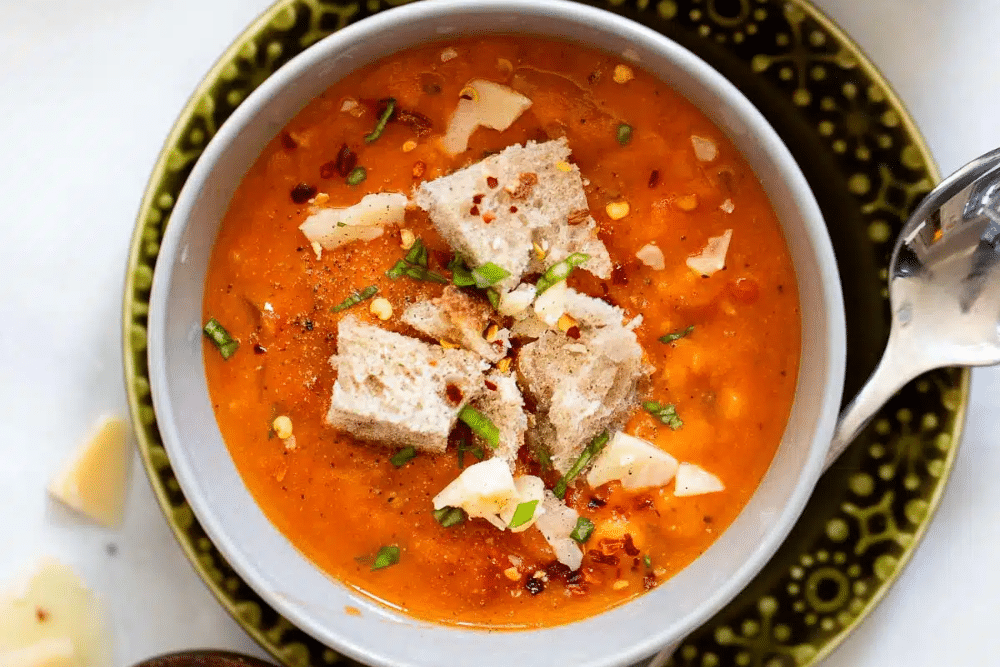 Photo Credit: Get Healthy U
Total Time: 40 minutes
Yield: 8 serving(s)
Ingredients:
- 2 tablespoons extra-virgin olive oil
- 1 medium yellow onion, chopped
- 2 large raw carrots, peeled and chopped
- 3 cloves raw garlic, minced
- 1 (28 oz) can whole peeled tomatoes (San Marzano)
- 4 cups vegetable or chicken broth
- 1 (15 oz) can of garbanzo beans, drained and rinsed
- 10 basil leaves, chopped fine
- 1 ½ cups day old bread, cubed or torn into pieces
- 1/4 teaspoon sea salt and ground black pepper
Instructions:
- Heat the olive oil in a large pot over medium heat. Add the onion and carrots and saute until the onion is translucent. Stir in the garlic and saute for 1 minute.
- In a separate bowl, crush tomatoes by hand. Add them to the pot with salt and pepper. Partially cover and simmer over medium heat for 15 minutes.
- Add the broth, chickpeas, and basil. Bring back to a simmer for another 10 minutes.
- Add the bread cubes; simmer for another 10 minutes until the bread is soft. You can use a potato masher to break down the bread if needed. Add sea salt and black pepper.
- Add ½ of the soup to a blender and puree until smooth (make sure to leave the lid ajar for venting out the steam). Add back to the pot and stir to combine.
- Serve with parmesan cheese, extra olive oil, a dollop of heavy cream (optional), and more fresh basil.
Nutrition Information Per Serving:
- Calories: 175
- Protein: 7 gram(s)
- Fat: 5 gram(s)
- Carbohydrates: 26 gram(s)
- Fiber: 6 gram(s)
- Sugar: 7 gram(s)
More Soup Recipes You’ll Love 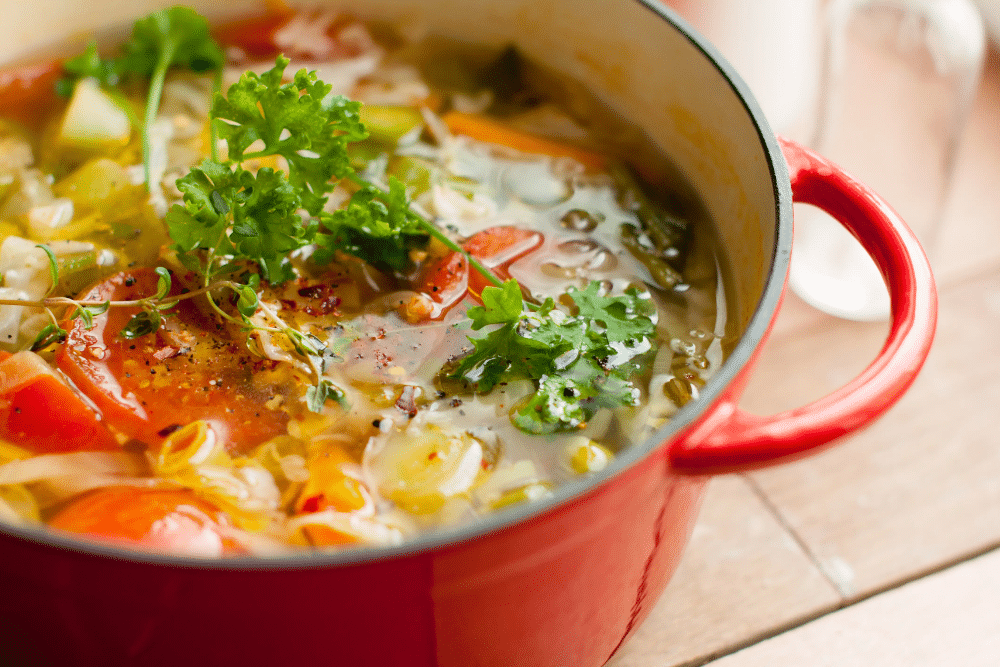 Photo Credit: Get Healthy U
If you are looking for more tomato based soups, here are a few of our favorites: detox vegetable soup, hamburger soup, or this hearty white bean soup. We also rounded up 14 fall soups that everyone will love that are also hearty and delicious.
21 Healthy Quinoa Recipes You’ll Want to Make ASAP 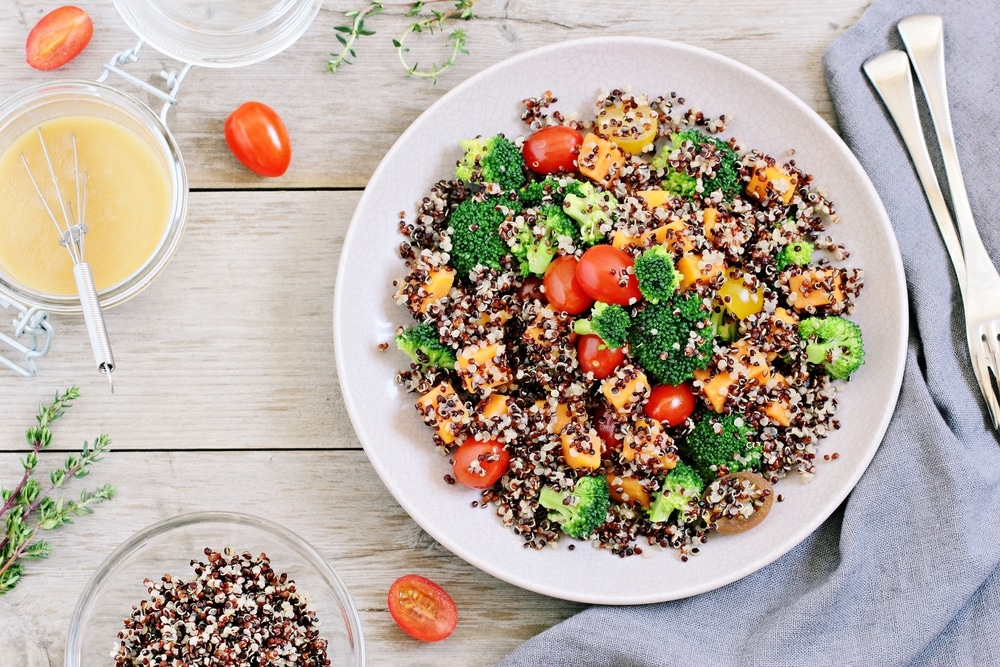 Photo Credit: Shutterstock
On the hunt for the best quinoa recipes? We don’t blame you! Quinoa—an edible seed and plant-based protein—is known for being a nutritional powerhouse and easy to incorporate into any meal needing a healthy boost.
Check out our favorite quinoa recipes that are so delicious, you’ll forget how healthy they are!
21 Healthy Quinoa Recipes You’ll Want to Make ASAP
14 Health Benefits of Cucumbers (And a Few Refreshing Recipes) 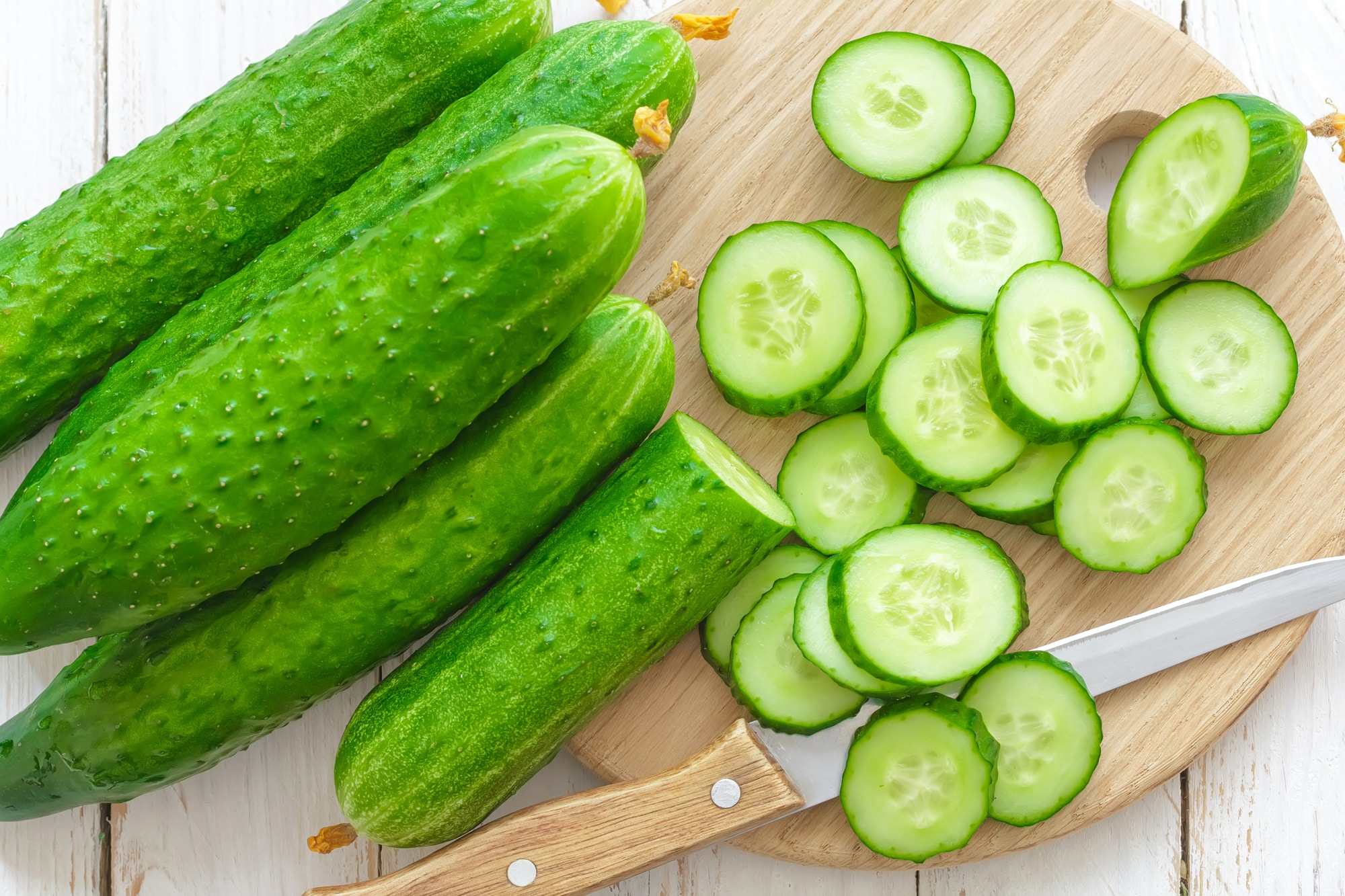 Photo Credit: Depositphotos
From healthy skin to improved memory, check out the top 14 health benefits of cucumbers!
And if you’re lucky enough to have a load from your garden or farmers market on hand, you’ll definitely want to check out some of our favorite cucumber recipes, too.
14 Health Benefits of Cucumbers (And a Few Refreshing Recipes)
Highest Rated Low-Calorie Smoothies  Photo Credit: Depositphotos
Whether you need an on-the-go breakfast, an energizing afternoon pick-me-up, or a refreshing beverage to cool down on a hot day, all are great reasons to whip up one of these highly-rated smoothies!
Smoothies are naturally packed with nutrients and a great source of fiber since you’re including whole fruits and/or vegetables.
Highest Rated Low-Calorie Smoothies
The Impact of Exercise on Academic Performance: Unveiling the Connection
The physical state of every person is crucial. If you have problems with your health, you cannot live a normal life as they cause multiple complications. For example, schoolers cannot focus on their education as their physical state doesn’t let them study well and follow the pace. Thus, physical education steps up. One is supposed to be healthy physically. It’s necessary to take care of physical activity to remain healthy all the time. When youngsters suffer from various ailments, the best grades will never come regularly.
As a result, many students ask – What writing agency can write an essay for me? They commonly use https://domyessays.com/ because they know how skilled and effective its writers are. Yet, you can simply improve your physical state and thus use its help rarely. This informative guest post explains how physical activity can boost school performance and how an ordinary student can sustain his or her physical condition regularly.
The Positive Effects of Physical Activity
If you undertake physical fitness on a regular basis, you surely sustain your own health. There are more than physical benefits for us. Not all people understand that being in shape also improves our mood and develops our brain. The importance of certified physical education in schools and colleges is huge. We will highlight the main benefits that can help students become more effective learners.
Improvement of Cognition
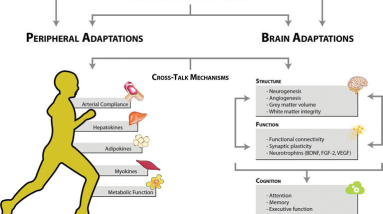
Not all people know that physical education classes are implemented to develop various kinds of cognitive functions. Multiple studies proved that regular physical exercise can develop our brains in many positive ways. Here are the common cognitive functions one can develop if one is physically active:
- Thinking
- Speaking
- Movements
- Creativity
- Concentration, etc.
You should agree that all these and some other functions are crucial for learning aims. When you devote your physical fitness to cognitive and brain health, you become a more effective learner. You can think clearer and more creatively. You gain a better focus on your tasks and thus rarely make mistakes.
Enhanced Mood
Your health and academic life are tightly related to one another. When you work out physically, and you like that, your brain starts to produce additional levels of such natural hormones as endorphin, dopamine, and serotonin. These are the most famous mood regulators that can improve our mood a lot. When you are in a good mood, you surely study better, get a better focus, desire, etc.
We need to underline one crucial fact. You get those hormones only if you really like what you’re doing. If you go to the gym and you hate that, you will never be in a good mood. It will lower and lead to problems with learning. Select the sport that can bring you pleasure.
Increased Memory Capacity
One of the main benefits of physical activity for learners is the chance to sufficiently expand their memory capacities. Regular workouts help your mind hold more information and remember it for a long time. Thus, the process of learning will be more effective.
Physical Activity Linked to Higher Grades
Undertaking physical fitness on the brain is helpful for academic success. We have already mentioned vital benefits you can enjoy if you work out physically and enjoy that process. These benefits help to focus on what you must do, increase your memory capacity, and make you more energetic and productive. As a result, it helps to perform your duties better and thus earn higher grades when you complete your academic projects.
Tips on How to Boost Your Physical Conditions
Physical activity and physical education are crucial for schoolers. When a youngster is physically active and not exhausted, he/she enjoys vital benefits to earn higher grades. It is necessary to figure out how to boost your physical condition. Here are our recommendations:
- Select the sport you like. First of all, select the kind of sport that suits your talents, preferences, and physical abilities. You are supposed to like it.
- Spend enough time on it. Secondly, schedule your time to work out at least thrice per week.
- Do not overwork. You should not exhaust your body. Even 15 minutes of intensive running or gymnastics may be sufficient for you.
- Consume healthy food. Refuse junk food and consume only natural products.
- Sleep well. A person is supposed to sleep 8-10 hours per day to restore the body.
- Drink enough water. An adult person should drink about 5-8 full glasses of water every day to stay hydrated.
The Bottom Line
Physical activity in the classroom is of enormous importance. Teachers should sustain the physical conditions of their students if they want to keep them healthy and involved in the educational process. There are many benefits that help to improve school performance when you are physically active. Parents are expected to encourage their children, too.
The post How Physical Activity Affects School Performance appeared first on GymGuider.com.
Unleash Your Chest Gains: Mastering the Smith Machine Bench Press
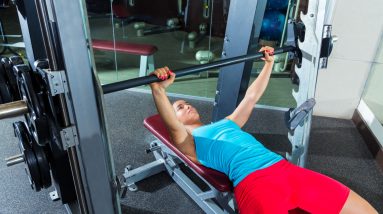
Go into nearly any commercial gym, and you’re likely to find a Smith machine or two in a corner somewhere. More often than not, you might find it deserted in favor of lifting platforms and highly-muscled folks deadlifting 500 pounds. Indeed, the popularity of barbell exercises from the back squat to the clean & jerk has made the humble Smith machine seem obsolete.
But if you’re training alone and aiming to push yourself through failure on the bench press, you might want to reconsider the next time you ignore the oft-neglected apparatus. The Smith machine bench press is an outstanding exercise that offers significant yet untapped upper body gains.
 Credit: lunamarina / Shutterstock
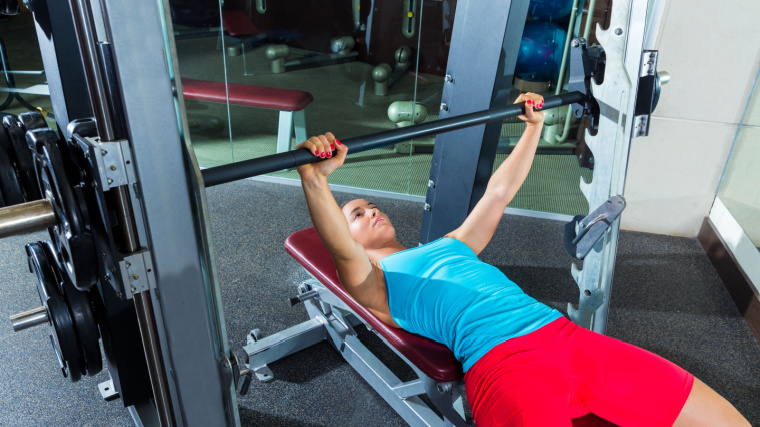
Countless lifters from years past have made the Smith machine bench press a staple in their routines. Here’s how to do it, why you should try it, some alternatives, and common mistakes to avoid.
- How to Do the Smith Machine Bench Press
- Smith Machine Bench Press Variations
- Smith Machine Bench Press Alternatives
- Benefits of the Smith Machine Bench Press
- Muscles Worked by the Smith Machine Bench Press
- Who Should Do the Smith Machine Bench Press
- Common Smith Machine Bench Press Mistakes
- Frequently Asked Questions
How to Do the Smith Machine Bench Press
The Smith machine bench press is performed similarly to your standard bench press, but there are some unique differences. Here’s how to do it.
Step 1 — Setting Your Base 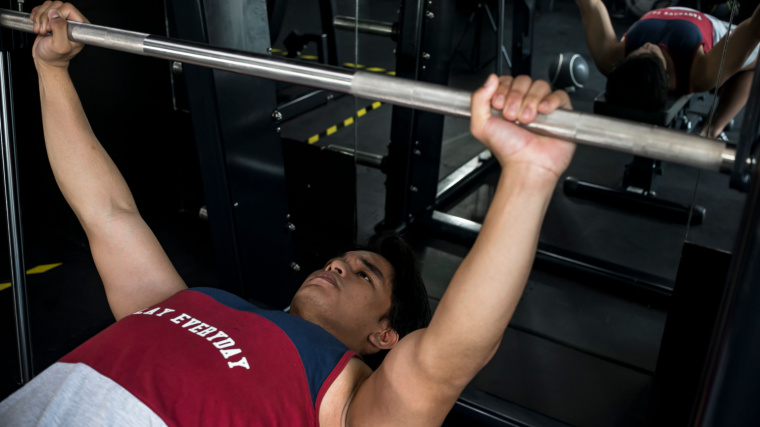 Credit: MDV Edwards / Shutterstock
Place an adjustable bench in the Smith machine rack. Lie down flat on your back with the bar lined up approximately midway between your collarbone and your belly button. Make sure your feet are flat on the floor and that you’re able to unrack the bar.
Coach’s Tip: Remember to take advantage of the safety bumpers. Line them up at approximately chest height when you’re lying on your back.
Step 2 — Setting Your Grip
Tuck your shoulder blades back and down, engaging your lats with your arms fully extended in front of your body. Grip the bar evenly between each hand, taking care to stay dead center on the bench and the machine. Maintain this grip width with your shoulders back and down for the duration of the set.
Coach’s Tip: If your Smith machine bar doesn’t have any markings, create your own. Try draping a lifting strap in the middle of the bar before you set up.
Step 3 — Arch 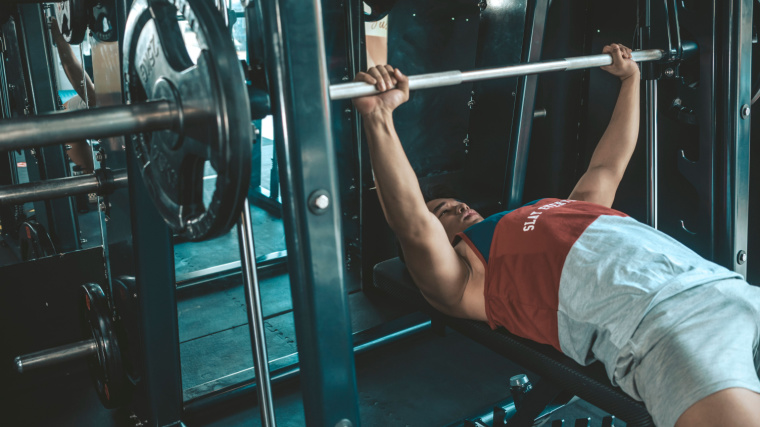 Credit: MDV Edwards / Shutterstock
Keep your hands on the bar and create a tight natural arch through your thoracic spine. Pull your upper back toward the bar, keeping your lats engaged. Plant your feet flat on the floor where your body has moved to create the arch to maintain this new position.
Coach’s Tip: The bar should now be directly above the highest part of your chest due to your arch.
Step 4 — The Descent 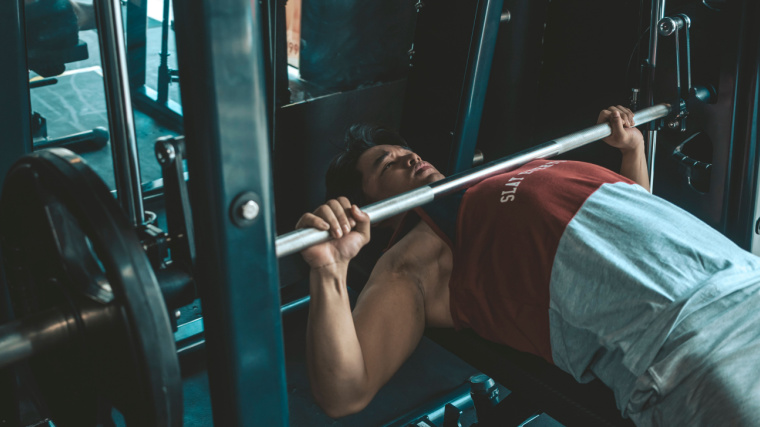 Credit: MDV Edwards / Shutterstock
Maintain five points of contact — both feet on the floor, your butt, upper back, and head on the bench. Begin a slow and controlled descent through the first repetition, making micro-adjustments to your grip to accommodate your body type and mobility. Stop once the bar reaches your chest or you feel your hands, wrists, elbows, or shoulders starting to lose position.
Coach’s Tip: The Smith machine bench press may not reach your chest on each repetition, and that’s okay! The full range of motion (ROM) is going to be unique to your body.
Step 5 — Press 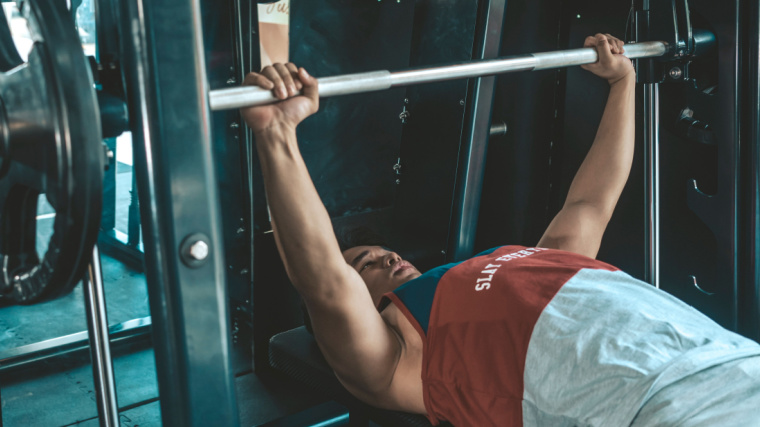 Credit: MDV Edwards / Shutterstock
With your feet flat on the floor, create huge leg tension by pushing into the ground. Maintain your arch and use this leg drive to stay as tight as possible. Push the bar back to the starting position, making sure to stop before you untuck your shoulders.
Coach’s Tip: Think of performing a quad extension to engage your leg drive.
Smith Machine Bench Press Variations
The Smith machine bench press is a great asset for building your upper body strength. There are also a handful of useful variations to complement your chest workouts further — here they are.
Close-Grip Smith Machine Bench Press
https://youtube.com/watch?v=qf_FTh3QyYsVideo can’t be loaded because JavaScript is disabled: Smith Machine Narrow Grip Bench Press (https://youtube.com/watch?v=qf_FTh3QyYs)
[Read More: 5 Bench Press Programs to Build a Bigger, Stronger Chest]
- Set up your close-grip Smith machine bench press in the same way as your standard setup.
- Adjust your grip an inch or two closer than normal on either side.
- Perform repetitions, emphasizing your triceps by keeping your arms tucked closer to your body.
Paused Smith Machine Bench Press
https://youtube.com/watch?v=ftEOh_pQHPYVideo can’t be loaded because JavaScript is disabled: Paused Smith Machine Bench Press (https://youtube.com/watch?v=ftEOh_pQHPY)
[Read More: The Best Online Workout Programs For Coaching, Cardio, Value, And More]
- Set up on the Smith machine as you normally would, getting tight before you unrack.
- Lower the bar under control, reaching your chest or the point where you feel you would begin to lose position any lower.
- Pause the bar for one to two seconds before driving it back to the starting position.
Incline Smith Machine Bench Press
https://youtube.com/watch?v=8urE8Z8AMQ4Video can’t be loaded because JavaScript is disabled: Smith Machine Incline Press (https://youtube.com/watch?v=8urE8Z8AMQ4)
[Read More: The Best Back Workout for Men, Women, Strength, and More]
- Set up on the Smith machine and adjust your bench to the first or second inclined position.
- Sit down on the bench. Set your grip by placing your shoulder blades back and down and grabbing the bar.
- Drive your body into the bench by pushing with your legs.
- Descend the bar until it touches your chest or where you feel like you’d lose position. Drive the bar back to the starting position and perform for repetitions.
Smith Machine Bench Press Alternatives
If you’re looking to swap out the Smith machine bench press for some helpful alternatives, look no further than the Smith machine push-up, chest press machine, and Smith machine JM press.
Smith Machine Push-Up
https://youtube.com/watch?v=wBAox4aobw4Video can’t be loaded because JavaScript is disabled: Bar Push-Up Smith Machine | Exercise Guide (https://youtube.com/watch?v=wBAox4aobw4)
[Read More: Build a Titanic Torso with These Bodybuilding Chest & Back Workouts]
- Set the height of the Smith machine bar to accommodate your strength or repetition goals. The higher the bar, the less load you press.
- Set your shoulders back and down to find your grip, place your hands evenly on the bar, and lean your body weight into the machine.
- Control your descent by slowly bending your elbows. Use the ball of your foot to create a pivot point on the ground. Press yourself back to the starting position once your chest has reached the bar.
Chest Press Machine
https://youtube.com/watch?v=n8TOta_pfr4Video can’t be loaded because JavaScript is disabled: How to Use a Chest Press Machine (https://youtube.com/watch?v=n8TOta_pfr4)
[Read More: Get Freakishly Strong With the 5×5 Workout Program]
- Choose the chest press machine of choice: either flat, incline, or decline. Converging machine orientations work best here.
- Adjust the seat so the hand grips align roughly with your armpit height.
- Push yourself into the bench using your feet, grip the handles tightly, and drive out until your elbows are fully extended. Control the descent back to the starting position, and perform for repetitions.
Smith Machine JM Press
https://youtube.com/watch?v=sQJzzZVqV3kVideo can’t be loaded because JavaScript is disabled: JM Press on Smith Machine | PhysiqueDevelopment.com (https://youtube.com/watch?v=sQJzzZVqV3k)
[Read More: How to Do the Lat Pulldown for a Wider Back and Better Pull-Ups]
- Set up on the Smith machine similar to how you would do your close-grip bench press.
- Initiate your descent by bending your elbows, but keep your arms tucked close to your body.
- Each repetition will be a combination of a skull crusher and a close-grip bench press. The bar path should be roughly over the top of your nose.
- Lower the bar as you would with a skull crusher, keeping your upper arms in place but bringing your forearms down with the bar toward your face. Maintaining that same position, press the bar up as you would with a close-grip bench press.
- Reset and repeat for reps.
Benefits of the Smith Machine Bench Press
Although the Smith machine bench press gets a lot of negative attention from those would would prefer a barbell, it is extremely beneficial. This lift allows you to perform one of the best upper body exercises using an extremely stable machine. This makes building muscle extremely straightforward — and less risky when you’re training alone.
High Stability
Free weights are a huge asset in the gym. They are easy to use for progressive overload as you increase strength and build muscle over time. However, before a free weight is as effective as it should be, you first need to groove the pattern. Learning to stabilize an exercise is a prerequisite to safely and effectively executing it for your goal.
With the Smith machine, the bench press pattern itself is maintained in a very specific position. The restricted range of motion makes the exercise extremely easy to execute without running into stability plateaus. This higher level of stability makes it a lot easier for you to simply hop in and sprint towards gains.
[Read More: The Ultimate 10-Week Powerbuilding Workout Routine for Mass and Strength]
It should be noted that if you’re a powerlifter, you might want to avoid using this as a training tool since you’ll want to train as specifically as possible for the barbell bench press. That said, if you’re in the offseason and want to train without a spotter — or concern for stability — you’re in luck here.
Upper Body Strength With Less Fear
The Smith machine bench press is a subtle twist on your standard bench press. Both recruit a ton of muscle mass and are some of the most highly loadable upper body exercises in the gym.
The higher you’re able to load an exercise the more top-end strength you’ll unlock. Add in the high stability benefit of the Smith machine and your upper body strength can skyrocket.
 Credit: Image Source Trading Ltd / Shutterstock
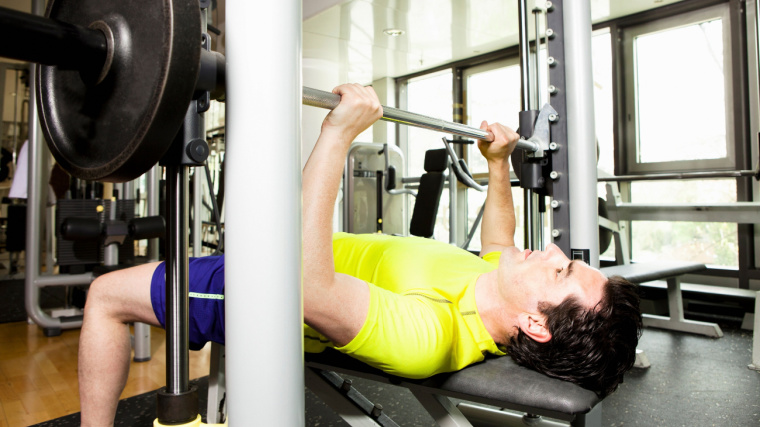
If you’re training alone, this is a tremendous asset. When you don’t know anyone who can spot you in the gym, the Smith machine comes with built-in safeties. A quick twist of your wrist, if you start failing a rep, can save you from a disaster. This way, you can load up feeling confident that you can safely miss your lift.
Muscle Gain
Similar to building strength, the Smith machine bench press makes it easy to chase major muscle gain. Squeezing out those last few repetitions — the ones that are the hardest and really challenge your progress — is a bit more intimidating on a free bench.
You’re going to need to push yourself, preferably with an experienced spotter, to accomplish progressive overload. The Smith machine helps reinforce your technique, safety, and confidence in training hard enough for muscle gain.
Muscles Worked by the Smith Machine Bench Press
Like any horizontal upper body pressing exercise, the Smith machine bench press primarily targets your chest, triceps, and shoulders.
Chest
The chest is the clear motivator behind nearly every horizontal pressing exercise. Your chest (or pectoralis major) is a fan-shaped muscle that attaches between your collar bone, sternum, and upper ribs to a..
Upgrade Your Ab Workout: 14 Exercises That Crush Crunches
When it comes to flat abs, endless crunches don’t work!
Regardless of your age, the key to a flatter stomach is training your entire core, including exercises that target different areas of your abdominals.
So, if you can’t stand crunches or simply want to mix up your core workout routine, try these 14 effective ab exercises that target all of your abdominal muscles, including your obliques, lower abs, and upper abs.
1. V-Ups 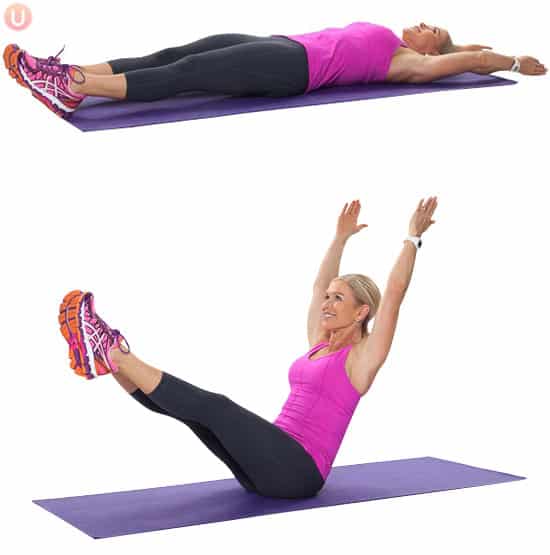 Photo Credit: Get Healthy U
V-ups are one of the best ab workouts because they also develop incredible balance.
- Lie flat on the floor and extend your arms behind your head. Keep your feet together and your toes pointed.
- Keep your legs straight and lift them up as you simultaneously raise your upper body off the floor. Keep your core tight as you reach for your toes with your hands. Slowly lower yourself back down to the starting position.
Targets: transverse abdominus, rectus abdominus
2. Side Plank Dips
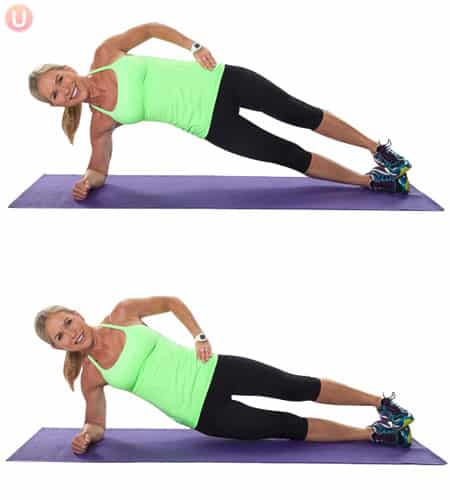 Photo Credit: Get Healthy U
Side plank dips are oblique exercises for anyone looking to develop core strength and enviable side abs.
- Start by laying on your right side with forearm below shoulder, body lifted and legs long, and feet stacked. Keep body straight, abs tight, and place left hand on hip.
- Dip your hips down towards the mat and lift back up using your obliques and core muscles.
Targets: internal obliques, external obliques
3. Side Plank Reach Through
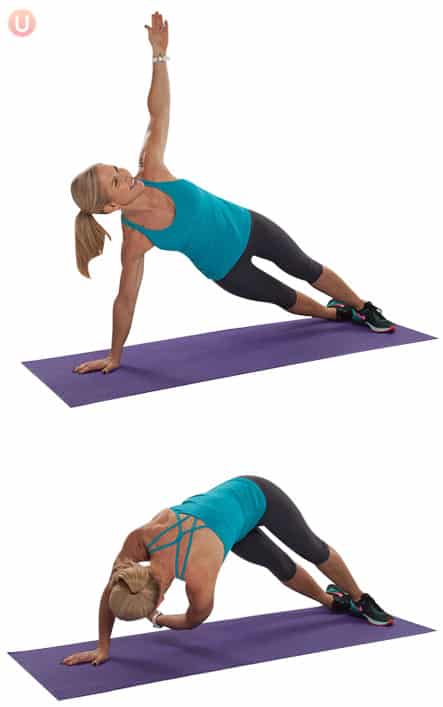 Photo Credit: Get Healthy U
The side plank reach-through is one of the best ab oblique combination movements. You must keep your core engaged the entire time – you’ll be feeling this move!
- Begin in a full side plank position with the right hand below shoulder, left arm reaching high above left shoulder, and legs long. (Modify by placing bottom knee onto mat if needed)
- Tighten the abdominals and slowly scoop the left arm under the body, following with your eyes until you see behind you.
- Slowly reach the left hand back to start position.
- Repeat for the desired number of repetitions and switch sides.
Targets: transverse abdominus, internal obliques, external obliques, rectus abdominus
4. Toe Reach
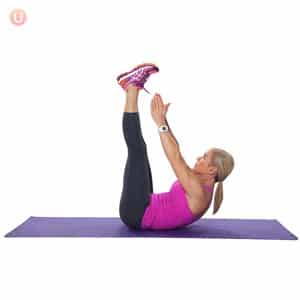 Photo Credit: Get Healthy U
The toe reach is different than the classic crunch you see in most ab workouts. This move focuses more on total core engagement.
- Start on the back with legs long-reaching towards the ceiling.
- Bring the head, neck, and shoulders off the mat and reach arms up towards the feet. Return to the tips of the shoulders and repeat.
Targets: rectus abdominus, transverse abdominus
5. Forearm Plank
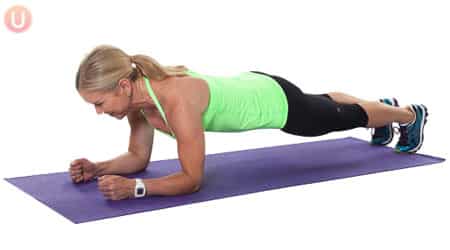 Photo Credit: Get Healthy U
The plank is a staple of most ab workouts because it recruits the entire core.
- Begin lying on the floor with your forearms flat on the floor, making sure that your elbows are aligned directly under your shoulders.
- Engage your core and raise your body up off the floor, keeping your forearms on the floor and your body in a straight line from head to feet. Keep your abdominals engaged, and try not to let your hips rise or drop.
Targets: transverse abdominus
6. Bicycle Crunches
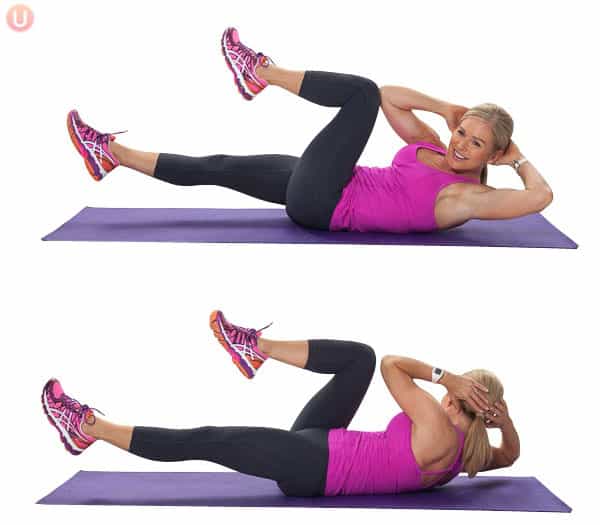 Photo Credit: Get Healthy U
The bicycle crunch builds coordination and a strong core, and is one of the best ab movements out there!
- Start lying on your back with feet off the floor and legs in a tabletop position. Hands are behind the head, and the head, neck, and shoulders are flexed off the mat.
- Bring one knee in and reach the opposite elbow towards it. Repeat on the other side in a crisscross motion working the obliques.
Targets: transverse abdominus, internal obliques, external obliques, rectus abdominus
7. Boat Pose
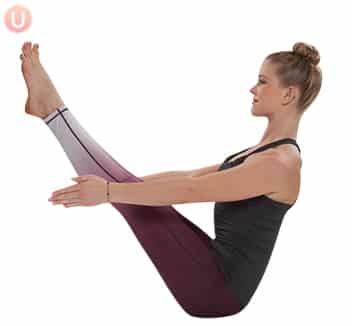 Photo Credit: Get Healthy U
The boat pose is deceptively simple. This move takes incredible core strength and builds core strength. A win-win.
- From a seated position, draw your navel in toward your spine, bracing the abdominals.
- With your hands on the floor behind you, bring your legs up off the floor with your knees bent in front of the chest.
- Keeping abdominals tight, slowly lift hands off the floor and reach them forward and up while lengthening legs upward. Your body will look like a “V” shape. Lengthen your spine as you hold. (If your hamstrings are too tight, you can bend your knees.)
- Keep abdominals tight and breathe. Stay for 30-60 seconds or as long as you can.
Targets: transverse abdominus, rectus abdominus
8. Sweeping Scissors
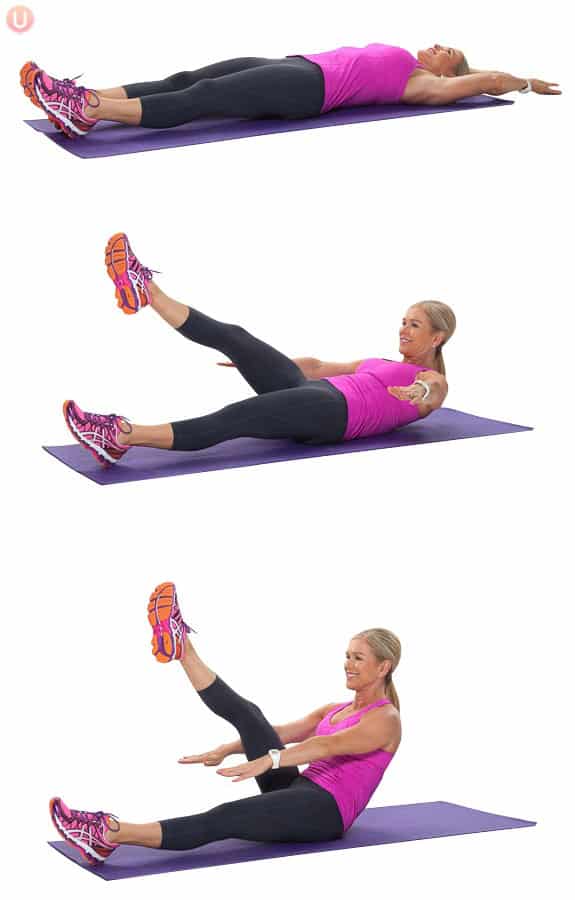 Photo Credit: Get Healthy U
Ready for a challenge?
- Start lying on the mat with arms over your head and legs long.
- Sweep arms out to the sides and bring your head, neck, and shoulders off the mat.
- Reach your arms long and lift one leg up and in towards the chest. Reach your arms forward on the sides of the leg. Roll back to the mat, lowering your leg, and repeat on the other side.
Targets: transverse abdominus, rectus abdominus
9. Side To Side Obliques
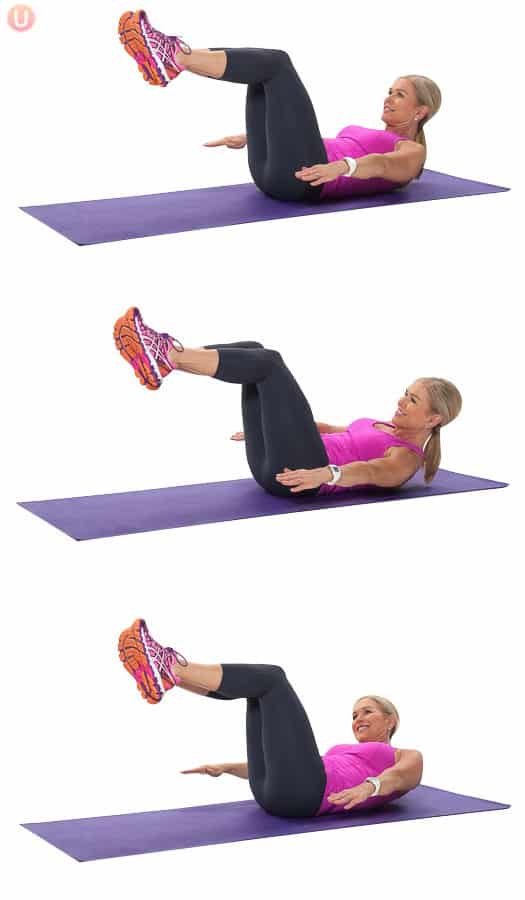 Photo Credit: Get Healthy U
The side-to-side oblique move is one of the best ab exercises for targeting the obliques.
- Lie on the mat and bring your knees into the chest, forming a tabletop position. Bring the head, neck, and shoulder off the mat while coming into a crunch, reaching your arms long at the sides.
- Exhale as you reach your right fingers to the right side in a forward motion, then return to center on the inhale. Exhale and reach left fingers to the left side in the same motion. Switch side to side without lowering onto the mat.
Targets: transverse abdominus, internal obliques, external obliques, rectus abdominus
10. Bend Extend Ab Tuck
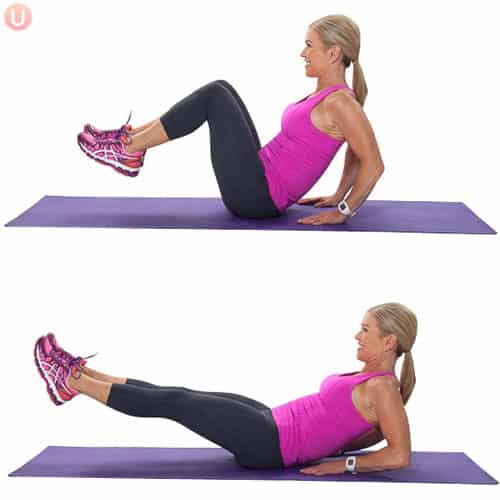 Photo Credit: Get Healthy U
Ab workouts don’t have to be boring. There’s always a new variation to try, just like this bend extends ab tuck.
- Start seated on the mat with arms behind you, hands on the mat, and fingers facing your backside. Sit back on your hands and lift up your feet off the mat keeping the knees bent.
- Keep abs tight and press your legs out long while slightly lowering your back. You should feel your lower abdominals working, then push yourself back up and pull your knees in to return to your starting position.
Targets: transverse abdominus, rectus abdominus
11. Spiderman Abs
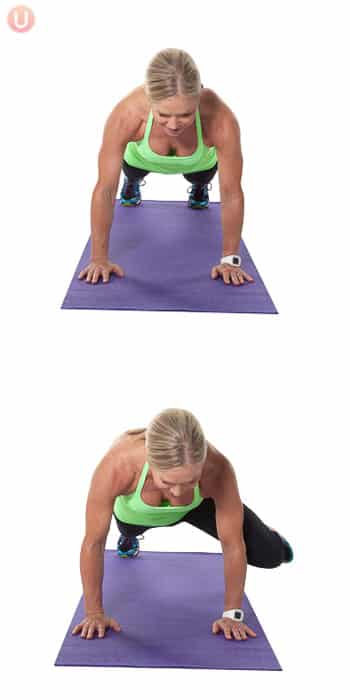 Photo Credit: Get Healthy U
Spiderman abs is a move that hurts so good! Give it a try, and your lower abs will be at attention.
- Start in a plank position with hands on the mat slightly wider than shoulders, legs long behind you, and abdominals and glutes squeezed tight.
- Pull the left knee toward the outside of your left elbow and hold for one count. Return to the starting and repeat on the right side.
Targets: transverse abdominus, external obliques, internal obliques
12. Forearm Star Plank
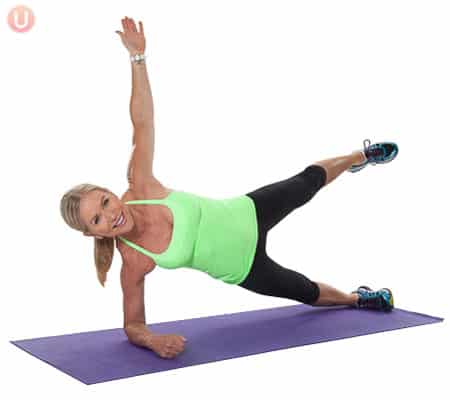 Photo Credit: Get Healthy U
This forearm star plank is a variation on the plank that will help you strengthen your core and those elusive lower abs.
- Begin lying on the right side, forearm on the floor, body lifted, and legs extended long on the mat with feet stacked.
- Tighten the abdominals and lift the left leg and arm up in the air. Hold them straight and keep the body still for the desired amount of time. Switch sides.
Targets: external obliques, internal obliques, transverse abdominus
13. Hip Dips
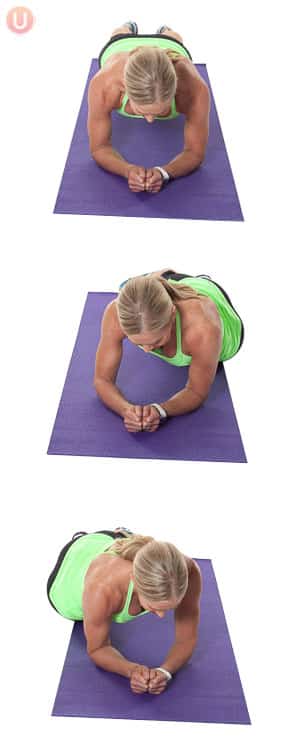 Photo Credit: Get Healthy U
Hip dips really build those oblique muscles!
- Begin in a forearm plank position with your forearms flat on the mat, making sure that your elbows are aligned directly under your shoulders, your core is engaged, and your body is in a straight line from your head to your feet.
- Lower your left hip toward the floor until it almost touches, and then immediately raise back to the center.
- Repeat on the right side.
Target: transverse abdominus, external obliques, internal obliques
14. Double Leg Stretch
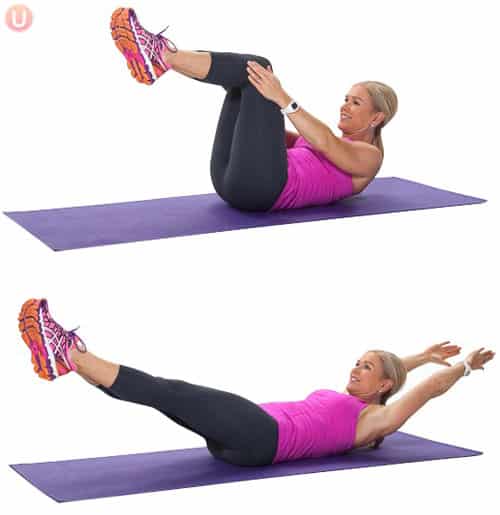 Photo Credit: Get Healthy U
You’ll definitely feel the burn with this one. (Which is a good thing!)
- Start lying on your back with knees bent 90 degrees and arms lengthened alongside the calves. Your lower back should be pressed against the mat with your head, neck, and shoulders flexed up off the mat.
- As you inhale, stretch your arms straight behind your head and legs straight to a diagonal position in front. As you exhale, circle your arms around and back to your legs while drawing your knees back into the 90-degree angle. Repeat for the desired number of reps.
Targets: transverse abdominus, rectus abdominus
Strength Training for Women Over 50: 11 Best Moves 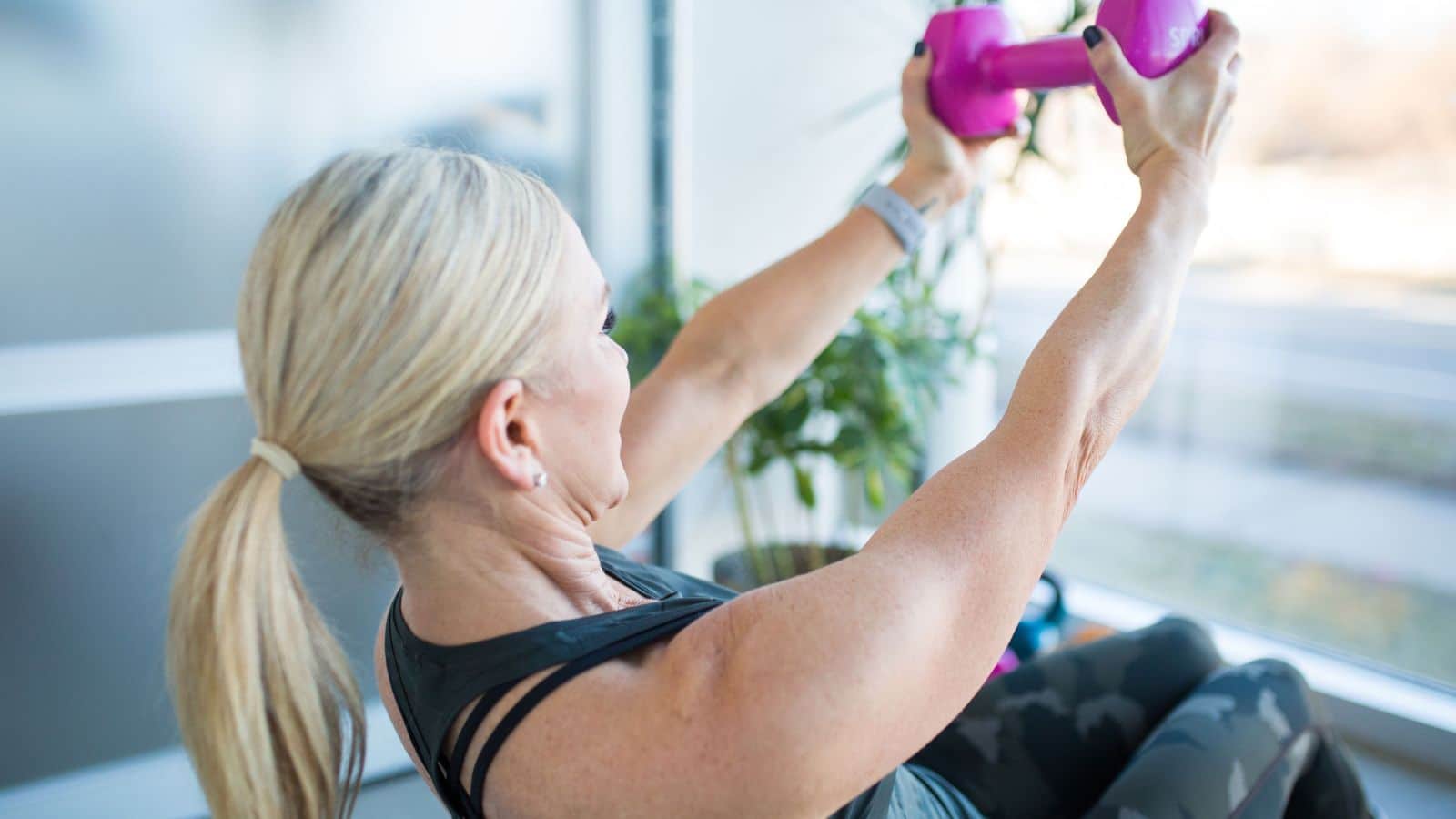 Photo Credit: Get Healthy U
While aging is inevitable, aging well is not.
There are many factors involved in maintaining good physical and mental health as you age, but one of the most important things to consider as you grow older is weight training. Thesestrength training exercises are proven to get results for women over 50.
Strength Training for Women Over 50: 11 Best Moves
3 Walking Workouts For Weight Loss  Photo Credit: Depositphotos
If you want to start working out or get back in shape after taking a break from exercise, there’s no better—or more convenient—form of exercise than walking. Walking is low-impact and doable for almost everyone, but if weight loss is your goal, we’re here to tell you that intensity is the key to success.
3 Walking Workouts For Weight Loss
The Best Love Handle Workout 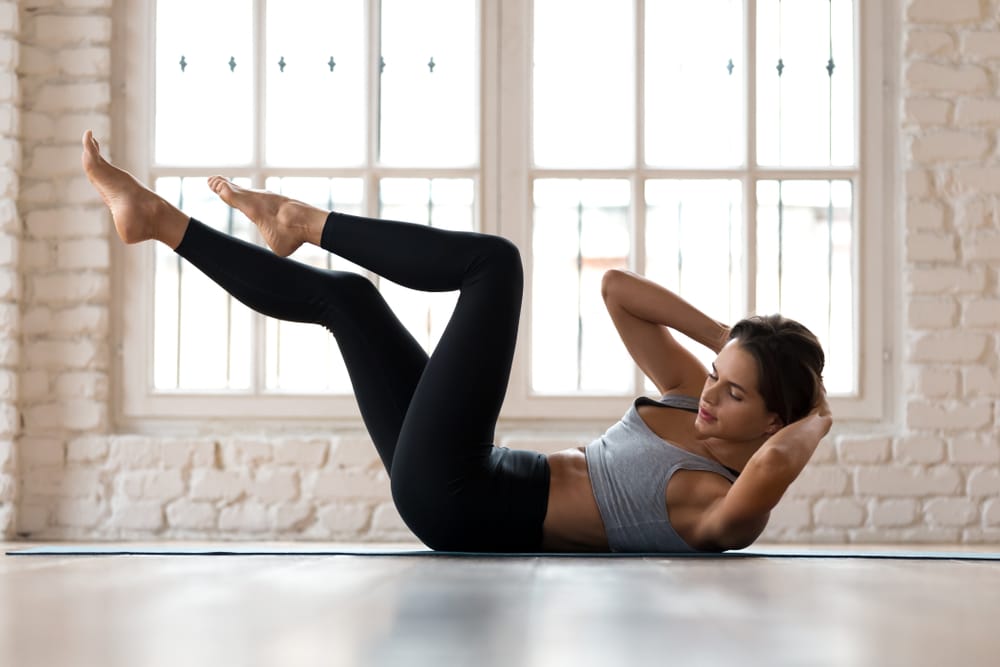 Photo Credit: Shutterstock
These five exercises specifically target the love handles and will have you feeling the burn!
Combine this workout with a healthy diet and cardio, and you’ll watch that belly fat “waist” away.
The Best Love Handle Workout