


10 Leg Stretches That Will Supercharge Your Lower Body Fitness
If you do it right, leg day is an intense experience. Squatting, lunging, and hinging until you’re a puddle on the gym floor takes up a lot of time and mental real estate. But once you’ve crushed your leg exercises, you’ve got to reassemble yourself — leg stretches can do that very well.
 Credit: djile / Shutterstock
Leg day is not just about strength. It’s also one way to stay on top of your mobility, using loaded stretching as a tool to double down on your flexibility. Leg stretches are a massive asset in preparing for a bodyweight leg workout or helping you cool down after the fact. If you’re looking to flex some lower limb knowledge, here are the 10 best leg stretches.
Best Leg Stretches
- Seated Pigeon Pose
- Pigeon Pose
- Half-Kneeling Hip Flexor Stretch
- Couch Stretch
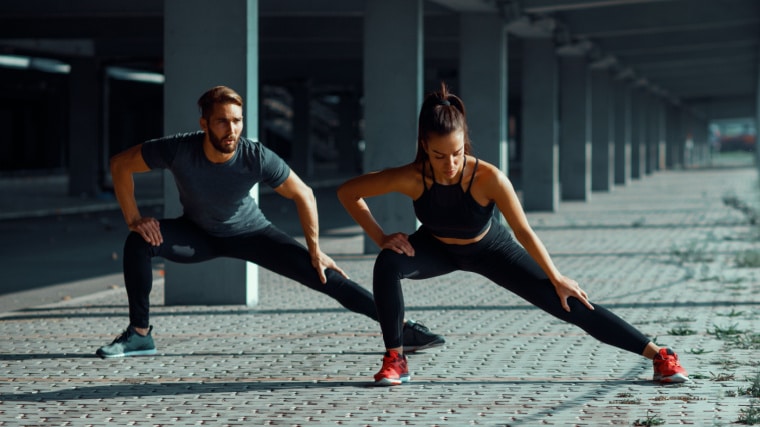
- Adductor Split Stance Stretch
- Frog Pose
- Hurdler’s Stretch
- Standing Toe Touch
- World’s Greatest Stretch
- Calf Stretch
Editor’s Note: The content on BarBend is meant to be informative in nature, but it should not be taken as medical advice. When starting a new training regimen and/or diet, it is always a good idea to consult with a trusted medical professional. We are not a medical resource. The opinions and articles on this site are not intended for use as diagnosis, prevention, and/or treatment of health problems. They are not substitutes for consulting a qualified medical professional.
1. Seated Pigeon Pose
https://www.youtube.com/watch?v=9duW9HncInYVideo can’t be loaded because JavaScript is disabled: Seated Pigeon Pose (https://www.youtube.com/watch?v=9duW9HncInY)
[Read More: Yoga for Bodybuilding: How Getting Flexible Helps You Gain Muscle]
Primarily targeting the glutes, the pigeon pose delivers a very efficient stretch with scalable options for all mobility levels. But the classic, original variation can be tricky to learn.
Enter the seated pigeon pose. This variation allows you to choose the position that best serves your current needs. Use this option to ease into leg stretches and practice pristinely controlled stretching.
How to Do it:
- Sit on the edge of a weight bench with your feet flat on the floor. Aim for your legs to make an approximate 90-degree angle at the knee.
- Place your left ankle on top of your right knee, creating a figure-four position with your legs.
- Keep a tall posture and lightly hinge forward until you feel a stretch across your glutes.
Coach’s Tip: Be sure to maintain square hip and knee positioning. Try not to let your support knee drift off to one side as this diminishes the stretch.
Sets and Reps: Perform 2-4 sets of a 30-second timed hold on each side. No rest is required between sets.
2. Pigeon Pose
https://www.youtube.com/watch?v=1o7awuDGzagVideo can’t be loaded because JavaScript is disabled: PIGEON STRETCH (https://www.youtube.com/watch?v=1o7awuDGzag)
[Read More: How Strength Athletes Can Add Yoga to Their Program]
The classic pigeon pose is the next step in stretching your glutes. Where the seated pigeon pose uses a bench as a support, the classic pigeon pose places you on the floor. This small change increases the mobility demands but also allows for a potentially deeper stretch.
How to Do it:
- Place one leg on the floor with your shin and foot resting underneath your body.
- The opposite leg should be flat on the floor behind the rest of your body.
- Keep your back straight and slightly lean forward, similar to performing a hinge.
- Choose a shin angle on your forward leg that allows you to feel a deep stretch in your glute but isn’t forced into position. Hold for time.
Coach’s Tip: You don’t need to aim for a completely straight left-to-right shin angle for benefits here. Find the shin angle that allows you to feel a mild stretch without discomfort.
Sets and Reps: Hold the pigeon pose for 2-4 sets of 30 seconds. Perform a 30-second stretch on both sides to complete one set.
3. Half-Kneeling Hip Flexor Stretch
https://www.youtube.com/watch?v=0J360jIbhYUVideo can’t be loaded because JavaScript is disabled: Hip Flexor Stretch- Kneeling (https://www.youtube.com/watch?v=0J360jIbhYU)
[Read More: New Study Finds That Stretching Can Directly Create Muscle Growth]
Between training the lower body and the amount of sitting involved in the average lifestyle outside of the gym, your hip flexors are almost certainly tight at some stage of the week.
The hip flexors are a group of muscles that sit at the top of your thigh around your hip crease. While it doesn’t take a hard sell to get most people stretching them (it feels really good), nailing the technique is paramount for the best results.
How to Do it:
- Kneel down on your right knee, making a 90-degree angle on your left leg.
- Keep your hips square and pointed straight ahead.
- Brace your core and prevent any flaring of your ribcage.
- Squeeze your glute on your right leg, pushing your hips forward naturally. Hold this posture by maintaining the glute squeeze.
Coach’s Tip: Keep your torso stacked over your hips on this stretch. Squeezing the glute extends your hip and gives you all the stretch you need in the perfect spot.
Sets and Reps: Perform 2-4 sets of 30 seconds per leg, alternating sides without resting until all sets are complete.
4. Couch Stretch
https://www.youtube.com/watch?v=QiKl5UoiG5cVideo can’t be loaded because JavaScript is disabled: Couch Stretch for Hip Flexors (https://www.youtube.com/watch?v=QiKl5UoiG5c)
[Read More: How to Do the 90/90 Stretch to Squat Heavier and Move Better]
The couch stretch is an advanced version of the half-kneeling hip flexor stretch. Whether you’re using a bench, yoga block, or couch itself, this is a move you should ease into. A deeper stretch or higher pain tolerance isn’t necessarily the name of the game for stretching your legs. Dial in the right spot and you’ll get everything you need from the couch stretch.
How to Do it:
- Kneel down on your right leg with a couch (or bench) placed close behind you.
- Make a 90-degree angle with your left leg ahead of you.
- Place your right ankle or the top of your right foot on the edge of the coach (or bench).
- Flex your right glute and keep your back straight as you feel a stretch develop across the length of your right quadriceps.
Coach’s Tip: Be sure to maintain a stacked torso posture here as well. Do not arch your back or you may begin losing the stretch in the place you’re trying to target.
Sets and Reps: Perform 2-4 sets of 30 seconds per leg here, starting slow and easing into it. There is no need for rest between legs. You can simply alternate once each hold is complete.
5. Adductor Split Stance Stretch
https://www.youtube.com/watch?v=ANue9qDFg90Video can’t be loaded because JavaScript is disabled: Hip, groin and inner thigh – Adductor stretch in standing (https://www.youtube.com/watch?v=ANue9qDFg90)
[Read More: 7 Stretches That Can Help Your Posture]
The adductors are the inner thighs and are often forgotten about when the time comes to stretch the legs. Your quads, glutes, and hamstrings (and even calves!) are usually pretty obvious targets, but your adductors are very important as well.
Something as simple as an adductor split stance stretch is enough to make a difference in your lower leg mobility. Making sure the adductors are properly stretched before or after your workouts may help improve the range of motion on many movement patterns.
How to Do it:
- Take a standing position with your legs set outside of shoulder width.
- Keep your feet pointed straight ahead or subtly pointed out.
- Brace your core and shift your weight more towards your left leg.
- Keep your right leg straight and bend the left knee. Slowly push your right leg towards the floor.
Coach’s Tip: Ease into the adductor split stance stretch. The adductors are often targeted less and hold a lot of tension, so you won’t need much to start feeling them.
Sets and Reps: Perform 2-4 sets of 30-second timed holds per side, switch sides without resting to complete all sets.
6. Frog Pose
https://www.youtube.com/watch?v=0rwSFWC9x3EVideo can’t be loaded because JavaScript is disabled: FROG POSE: BEST STRETCH FOR LOW BACK PAIN AND HIP PAIN RELIEF! (https://www.youtube.com/watch?v=0rwSFWC9x3E)
[Read More: How Deep Stretching Promotes Emotional Release]
You’ll be working on dynamic stretching here. This stretch, borrowed from yoga, is a floor variation of the split stance adductor stretch and thus also stretches your inner thighs.
The frog pose is scalable and more dynamic than the split stance adductor stretch, allowing you to rock back and forth to find the perfect position. The frog pose is also extremely time-efficient as you won’t need to switch sides. One well-executed frog pose stretches both adductors at the same time.
How to Do it:
- Kneel down on your exercise mat and assume a quadruped position (on your hands and knees).
- Widen your leg stance enough that you create a triangle with your legs and the floor. You should place your weight onto the inner portion of your knees.
- Widen the leg stance as much as needed to begin feeling an adductor stretch.
- Using your arms, move yourself forward and backward to find the appropriate stretch across your adductors.
Coach’s Tip: Ease into your frog pose. The adductors are often tight and the frog pose is a very effective position to stretch them. It won’t take much to get started.
Sets and Reps: Hold your frog pose for 2 sets of 30 seconds to 1 minute at a time. You won’t need to switch sides as one frog pose stretches both adductors simultaneously.
7. Hurdler’s Stretch
https://www.youtube.com/watch?v=6LYSIXjuXi8Video can’t be loaded because JavaScript is disabled: Hurdler Stretch (https://www.youtube.com/watch?v=6LYSIXjuXi8)
[Read More: The 9 Best Stretches for CrossFit Athletes to Maximize Performance]
You might remember this one from middle school. The hurdler’s stretch is a simple way to begin stretching out your hamstrings and adductors but allows you to individually target each side. Using your own body as a landmarking tool for progress, reach for your toes and see how quickly your mobility improves each session.
How to Do it:
- Take a seat on the floor, extend your right leg slightly off to one side, and bring your left foot into your right inner thigh.
- Flex your right ankle to the sky to start your stretch, keeping your left foot in contact with your right thigh.
- Keep your back straight as you subtly begin to lean towards your right foot.
- Reach for your right foot and ease into a slight hamstring and adductor stretch.
Coach’s Tip: Once you have mastered the standard hurdler’s hamstring stretch, try rounding your back to move through other commonly stiff areas (for example, the lower back).
Sets and Reps: Perform 2-4 sets of 30 seconds per side. Alternate stretches between legs without resting.
8. Standing Toe Touch
https://www.youtube.com/watch?v=gmLS4RllgoQVideo can’t be loaded because JavaScript is disabled: Standing Toe Touch (https://www.youtube.com/watch?v=gmLS4RllgoQ)
[Read More: Active Stretches Explained — Science-Backed Selections for Optimal Recovery & Performance]
While simply bending over is usually enough to start feeling the stretch, adding a bit of finesse to your technique is a quick way to alter what you’re targeting. Shifting from side to side, or even keeping your back straight or rounded are ways to change the focal point of the standing toe-touch.
How to Do it:
- Take a close foot stance (about hip-width or closer) with your toes pointed straight ahead.
- Bend over and reach for your toes, allowing your back to round and relax into a deep stretch.
- You can also bring one foot into your hand and kick your foot back into your hand — this will provide a good quad stretch.
Coach’s Tip: Initiate with more of a hinge technique for a better hamstrings and glute stretch, or shift to one side for a better stretch into your quadratus lumborum.
Sets and Reps: Perform 2 sets of 30 seconds to 1-minute of the standing toe-touch. If you are emphasizing one side or using a different technique, perform the stretch once on both sides to complete one set.
9. World’s Greatest Stretch
https://www.youtube.com/watch?v=RibEzqNmm4sVideo can’t be loaded because JavaScript is disabled: World’s Greatest Stretch (https://www.youtube.com/watch?v=RibEzqNmm4s)
[Read More: 7 At-Work Stretches to Boost Your Gym Performance]
The world’s greatest stretch is named as such because it hits your adductors, hip flexors, glutes, and thoracic spine all at the same time. While it is taxing in its own right with all the moving parts, it would be hard to find a more well-balanced stretch for your routine.
How to Do it:
- Get into a deep lunge, sending your right leg ahead of your body and sinking into your right hip.
- In this extended lunge position, keep your hips square while you rotate your thoracic spine to face the floor before turning your torso to face the right.
- Switch legs and perform for repetitions, holding each part of the stretch for a few seconds at a time to stretch each muscle.
- Perform even repetitions on your left side and your right.
Coach’s Tip: Start small and work up. The world’s greatest stretch may feel like a workout itself, perform a handful of repetitions per side and rest as needed.
Sets and Reps: Perform 2-5 repetitions of the world’s greatest stretch per side. Hold each stretch sensation for 5-10 seconds before alternating sides. Rest between sides as necessary.
10. Calf Stretch
https://www.youtube.com/watch?v=SAuayeWseq8Video can’t be loaded because JavaScript is disabled: Calf Stretch with wedge (https://www.youtube.com/watch?v=SAuayeWseq8)
[Read More: Try These 8 Tight Calves Stretches to Improve Ankle Mobility]
Don’t neglect your calf muscles. But where many leg stretches take some effort to get into and hold, the calf stretch is a nice way to truly relax as you cool down. Performed either against a wall or with a small wedge, this one takes minimal effort for its benefits.
How to Do it:
- Take a front-to-back split stance with your lead foot placed upon a wedge.
- Flex your front ankle up to start the standing calf stretch. Keep your back leg flat or on the ball of your foot to support.
- Keep your knee on the lead leg slightly bent to prevent hyperextension.
- Lean forward into the lead leg, keeping the ankle flexed up and stretching your calf.
Coach’s Tip: Keep your back straight and perform a hinge technique to get the best stretch in your calf without spilling over into other muscles.
Sets and Reps: Perform 2-4 sets of 30 seconds per leg. There is no need to rest between sets, simply perform all rounds back to back.
Warming Up for Leg Stretches
As much as possible, avoid stretching your muscles cold. You don’t want to sink too deeply into a stretch suddenly before your muscles are acclimatized. Think of it like performing ramp-up sets of back squats — you do some reps with an empty barbell and then gradually get heavier instead of diving right into your working sets.
Something as simple as five to 10 minutes of moderate cardio can improve your stretch session with minimal upfront effort.
A few examples may include:
- Stair Climber: 5 minutes at moderate intensity.
- Exercise Bike: 10 minutes at moderate intensity.
- Elliptical: 10 minutes at moderate intensity.
- Rowing Machine: 5 minutes at moderate intensity.
How to Train for Leg Flexibility
Using both dynamic and static stretching can help enhance your lower body flexibility. Incorporating stretches before or after your leg day during a structured dynamic warm-up or cool-down is the obvious route, but the resistance training session flow itself works well too.
Try performing your lower body exercises (for example Romanian deadlifts or Bulgarian split squats) with tempo training techniques.
https://www.youtube.com/watch?v=B4Bm8QnbapAVideo can’t be loaded because JavaScript is disabled: Joe Yoon: Better Stretching and Mobility (Podcast) (https://www.youtube.com/watch?v=B4Bm8QnbapA)
Controlling the eccentric portion (the lowering half) of each repetition is a way to incorporate loaded stretches into your routine. In combination with your warm-up or cool-down routine, loaded stretches are a powerful way to build and maintain your flexibility.
Selecting Leg Stretches
Your program helps direct which stretches you’ll get the biggest benefit from. Warming up is a great way to identify where you feel tightness and best select the stretches for you. Once you have completed your general cardio warm-up, make sure to take on some lower-load ramp-up sets for your first exercise.
Visual feedback on your technique (from the mirror, film, or a trusted training buddy or certified personal trainer (CPT) can help you figure out what areas you need to work on. You can also simply monitor where you’re feeling tight to..
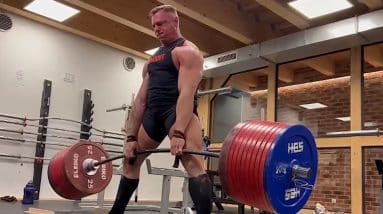
Krzysztof Wierzbicki Astonishes with Jaw-Dropping 510-Kilogram Beltless Deadlift Off Blocks
Polish powerlifter Krzysztof Wierzbicki is deadlifting unfathomably heavy again. The 110-kilogram lifter shared a video on his Instagram page on Jan. 17, 2024, wherein he pulled a monstrously heavy 510 kilograms (1,124.4 pounds) off blocks in a sumo stance while wearing lifting straps.
While Wierzbicki’s deadlift was not pulled off the floor — meaning that the range of motion from the bottom of the lift to lockout is narrowed — he did not wear a lifting belt. You read that right: Wierzbicki locked out a 510-kilogram deadlift off blocks without any equipment other than lifting straps. Check it out below:
View this post on InstagramA post shared by Krzysztof Wierzbicki (@mr.deadlift)
[Related: Brian Le (66KG) Raw Deadlifts 12.5 Kilograms Over the IPF World Record In Training]
Given that Wierzbicki has pulled the heaviest deadlift ever seen on camera — a 502.5-kilogram (1,107.8-pound) sumo pull in April 2022 — it should not come as a surprise that he is continuing to add weight to the barbell.
However, adding 7.5 kilograms (16.5 pounds) in the context of the heaviest-ever-seen deadlift is surprising. To contextualize, it can’t be contextualized. That range was unfathomable, as it was uncharted territory since no human had ever done it. Wierzbicki just almost (read: off blocks) did it.
For reference, below is the video of that 502-kilogram effort:
View this post on InstagramA post shared by Julian Howard (World’s Strongest Fan) (@worldsstrongestfan)
[Related: Amanda Lawrence (84KG) Squats a 250.5-Kilogram Raw Double]
Wierzbicki did not share his body weight at the time of this remarkable 510-kilogram block-pull. He does, however, appear more muscular than his previous deadlift PR, though camera angles can be deceiving. The 510-kilogram block pull was 4.64 times his 110-kilogram competition body weight.
The closest comparison to this pull is less likely to be found in competitive powerlifting and more likely to be found in the world of competitive strongman. The partial deadlifts performed in strongman are at similar weights; the current Hummer tire deadlift is 549 kilograms (1,210 pounds), locked out by 2020 World’s Strongest Man Oleksii Novikov of Ukraine at the 2022 Shaw Classic.
However, the similarities of Novikov’s record lift more or less end at the weight. Novikov pulled in an equipped conventional stance rather than a nearly raw (straps) sumo stance, and rather than weight plates on the barbell, there were giant treaded wheels intended for a gas-guzzling SUV.
Rauno Heinla holds the all-time 18-inch deadlift world record at 540 kilograms (1,190.5 pounds), scored at the 2023 Tartu Rammumees ja Rammunaine contest in Tartu, Estonia. Similar to Novikov’s lift, Heinla’s was performed in a conventional stance, though only with lifting straps and a weight belt, but with weight plates the size of Vauvillian bicycle wheels.
View this post on Instagram
A post shared by Rauno Heinla (@rauno_heinla)
Wierzbicki is more or less in a league of his own, forging a path into the realm of what is humanly possible with a barbell off the ground. Onlookers can assume Wierzbicki either has the capacity to add more weight to the barbell, eventually remove the blocks, or both.
Featured image: @mr.deadlift on Instagram
The post Krzysztof Wierzbicki Deadlifts 510 Kilograms Beltless Off Blocks In Training appeared first on BarBend.

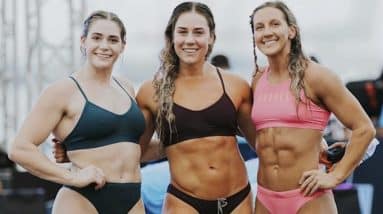
Results of Team Event 5 at the 2024 Wodapalooza Miami
The penultimate event of the 2024 TYR Wodapalooza Miami competition featured a three-round waterfall-style exercise trio of biking, box step-overs, and kettlebell hang snatches.
Team Ice Barrel — Brooke Wells, Baylee Rayl, and Paige Powers — posted the top time among the female teams to build momentum with only one workout to go. Team TYR — Ricky Garard, Jayson Hopper, and Dallin Pepper — sealed the deal for the male teams.
[Stay Tuned: 2024 Wodapalooza Miami Live Results and Leaderboard]
View this post on InstagramA post shared by Baylee Rayl Christophel (@bayleerayl)
Elite Team 5 Results — Waterfall on the Bay
For time, each athlete completes three rounds (waterfall style) of:
- Echo Bike — Men: 24 calories | Women: 18 calories
- Eight Kettlebell Box Step-Overs — Men: 53 pounds | Women: 35 pounds
- 12 Double Kettlebell Hang Snatches
[Related: 2024 Wodapalooza Miami Team Event 4 Results]
Elite Female Team Results
- Team Ice Barrel — 10:24.94
- Stronger Than a 90s Trend — 10:54.69
- Rx Performance — 10:57.00
- Team Bareen — 11:06.65
- NGH — 11:17.34
- Team Scandinadian — 11:18.87
- Fearless Misfits — 11:19.83
- Team Treta — 11:38.75
- Mile High Muscles — 11:46.91
- Kolesnikov Team — 11:49.04
- Dixieland Delight — 11:49.21
- Team Frog Grips — 11:56.81
- Three Queens — 12:00.52
- Lycan Gang — 12:17.03
- Plus Ultra — 12:18.69
- Lifters Girls — 12:19.51
- Reebok Crew — 12:20.70
- US Army Warrior Fitness — 12:21.09
- Conquer Cuties — 12:34.50
- Base Wellness — 12:44.59
- Trailer Park Girls — 13:11.25
- Kriger Meets Trainingculture — 13:13.09
- Torian Black — 13:19.15
- Firebarns Club — 13:24.32
- Leapin Lemurs — 13:30.65
- Limey Girls — 13:34.79
- Sweet Sticky Thicc and Pretty — 13:50.02
Elite Male Team Results
- Team TYR — 9:20.00
- Team Picsil — 9:48.94
- The Strapping Young Lads — 9:55.89
- Team GOWOD — 10:02.89
- Ombré Hombres — 10:26.33
- Picsil Traincult — 10:41.52
- Team Gorila 911 — 10:44.47
- Complex Wodex — 10:47.60
- Conquer Athlete — 10:49.22
- Tres Leches — 10:51.50
- Project Girona — 10:54.21
- CrossFit Mayhem the Empire — 11:05.39
- Omnia — 11:13.77
- Truecoach Traincult — 11:19.87
- EFP — 11:25.53
- Canadians From the East — 11:29.16
- Foxed Ferret Manatee Men — 11:32.60
- Krypton — 11:38.90
- Velitus Traincult — 11:43.43
- Kinesis Black — 11:43.66
- Maxlift Australia — 11:51.44
- Team Overtake — 12:19.51
- Midwest Cowboys — 12:41.00
- Soul Ab Squad — 12:42.66
- DSM Performance TCC — 13:10.59
- Team Evolve — 13:11.63
- Tenskills Pro 1 — 13:21.84
- Rehab to Perform — 13:50.26
- Mayhem Outlaws DNF
- Rx Smart Gear WD
The last event for the Teams division at the 2024 TYR Wodapalooza is titled “Worm Fran,” and it is exactly what it sounds like — thrusters, pull-ups, and muscle-ups galore.
Featured image: @bayleerayl on Instagram
The post 2024 Wodapalooza Miami Team Event 5 Results appeared first on BarBend.

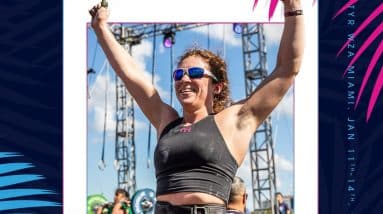
Results of Individual Event 3 at the 2024 Wodapalooza Miami Competition
The closing event of Day One at the 2024 TYR Wodapalooza Miami contest was titled “Deja Vu.” The adjusted workout at Bayfront Park in Miami, FL, due to inclement weather, challenged athletes to row, throw wall balls, pull their chins to the bars, jump over boxes, and snatch some dumbbells.
Below are the full results:
[Stay Tuned: 2024 Wodapalooza Miami Live Results and Leaderboard]
Event 3 Results — Deja Vu
Part A: Three minutes. Part B: Five minutes. Part C: For time (eight-minute time cap). One minute rest between each part.
- Assault Row — Men: 25 calories | Women: 20 calories
- 30 Wall Balls — Men: 20 pounds | Women: 14 pounds
- Strict Chin-Over-Bar Pull-Ups — Men: 20 reps | Women: 14 reps
- 30 Box Jump Overs — Men: 24-inch box | Women: 20-inch box
- 25 Single-Arm Dumbbell Snatches — Men: 100 pounds | Women: 70 pounds
This workout will apply two scores:
- Total reps across all parts
- Time on Part C
View this post on InstagramA post shared by The TYR Wodapalooza (@wodapalooza)
[Related: 2024 Wodapalooza Miami Individual Event 2 Results]
Results are recorded as follows: Athlete (number of reps + time)
Elite Individual Women’s Results
Emma Cary made a big push for the top spot during the last two events of the day. And with only a two-day, five-event weekend, a big push did the trick. The three-time CrossFit Games athlete took first place overall in this event, edging out Arielle Loewen. She came in second to Loewen’s first in Event 2, and successfully switched the order around in Event 3.
In doing so, she tied up second place on the leaderboard, just six points behind overall leader Gabriela Migala.
- Emma Cary (182 + 05:31.0)
- Arielle Loewen (180 + 06:36.4)
- Rebecka Vitesson (170 + 06:15.4)
- Gabriela Migała (169 + 06:18.0)
- Danielle Brandon (166 + 05:56.2)
- Abigail Domit (166 + 06:02.2)
- Rebecca Fuselier (166 + 06:44.6)
- Elizabeth Wishart (165 + 06:53.8)
- Lexi Neely (165 + 06:54.8)
- Sydney Wells (160 + 06:18.2)
- Emily Rolfe (160 + 06:19.9)
- Keara Napoli (157 + 06:52.4)
- Katie Canning (157 + 07:21.4)
- Nina Vragovic (157 + 07:24.4)
- Gabrielle Spenst (156 + 07:21.4)
- Caroline Stanley (155 + 06:36.3)
- Olivia Kerstetter (153 + 06:51.1)
- Jessica Androsik (151 + 07:01.9)
- Callista Lang (150 + 07:02.1)
- Margaux Masset (149 + 07:06.9)
- Grace Walton (147 + 06:20.6)
- Emily De Rooy (147 + 07:44.5)
- Ro Scott (147 + 07:58.7)
- Briony Challis (146 + 07:04.0)
- Andra Moistus (144 + 06:10.1)
- Becca Merritt (143 + 07:17.5)
- Feeroozeh Saghafi (142 + 06:04.7)
- Elena Carratala Sanahuja (142 + 07:07.6)
- Emily Rethwill (142 + 07:15.9)
- Freya Moosbrugger (141 + 06:28.1)
- Allison Weiss (141 + 06:54.5)
- Stacy Lerum (140 + 06:55.7)
- Bergros Bjornsdottir (140 + CAP + 109)
- Dani Speegle (135 + 06:37.5)
- Nicolette Torreggiani (135 + 06:46.0)
- Christee Hollard (135 + 07:07.3)
- Julia Hannaford (135 + 07:50.5)
- Ellia Miller (131 + CAP + 108)
- Ashley Shoemaker (124 + CAP + 117)
- Matilde Oyen Garnes WD
Elite Individual Men’s Results
The men’s side of the competition was full of climbing in Event 3, too. Ricky Garard, who had started the weekend with a lackluster 13th-place finish, also started his climb in Event 2 with a third-place run.
In Event 3, all bets were off as Garard worked his way to first place in the event and on the overall leaderboard. He’ll start off the second and final day of competition just 4.5 points ahead of Patrick Vellner for the top podium spot.
- Ricky Garard (199 + 06:02.1)
- CJ Gerald (198 + 06:44.6)
- Samuel Kwant (195 + 05:53.1)
- Brent Fikowski (193 + 07:48.0)
- Patrick Vellner (190 + 06:04.0)
- Jacob Heart (190 + 06:12.5)
- Roman Khrennikov (189 + 06:29.4)
- Samuel Cournoyer (186 + 06:12.6)
- Jack Farlow (184 + 05:59.0)
- James Sprague (184 + 06:08.9)
- Colten Mertens (184 + 06:43.1)
- John Wood (184 + 06:54.4)
- Nick Mathew (183 + 07:24.2)
- Austin Hatfield (181 + 06:11.6)
- Evan Rogers (181 + 06:54.1)
- Lucas Heuze (180 + 06:39.8)
- Travon Benton (179 + 06:38.8)
- Jack Rozema (179 + 07:06.0)
- Alex Vigneault (179 + 07:15.4)
- Connor Voltz (178 + 06:40.2)
- Harry Lightfoot (178 + 06:41.4)
- Henrik Haapalainen (178 + 07:08.0)
- Drake Lewis (177 + 04:42.3)
- Bronislaw Olenkowicz (176 + 06:50.5)
- Antonios Makaronas (175 + 07:42.1)
- Kalyan Ribeiro De Souza (174 + CAP + 122)
- Guilherme Malheiros (173 + 06:54.4)
- Luke Parker (173 + 07:07.3)
- Kaique Cerveny (172 + 07:08.7)
- Joshua Hong (170 + 07:40.6)
- Spencer Panchik (169 + 05:49.7)
- William Bennett (169 + 07:08.5)
- Francis Pelletier (168 + 07:24.0)
- Juan Ignacio Sforzini (163 + 07:15.9)
- Guilherme Domingues (160 07:51.1)
- Tanner Balazs (153 + CAP + 111)
- Arturo Torres (147 + CAP + 114)
- Nikita Yundov (141 + 07:55.3)
- Martin Feiferlik (129 + CAP + 115)
- Kevin Jurs DNF
- Alexandre Caron WD
[Related: 2024 Wodapalooza Miami Individual Event 1 Results]
The second day of competition for Individuals will feature the remaining two workouts. Once Individual champions are crowned, the Elite Teams will take the competition floor on Jan 13-14 for their competition in Miami.
Featured image: @
The post 2024 Wodapalooza Miami Individual Event 3 Results appeared first on BarBend.

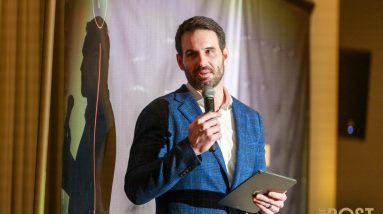
Former NFL Quarterback Christian Ponder is Revolutionizing the Mindset of Retired Athletes in the ‘Post’-Sports Era
Former NFL star Christian Ponder discovered early in his career that a quarterback’s success oftentimes came down to preparation. Now as an entrepreneur, he’s parlaying those football experiences—both good and bad—and other athletic attributes to help former athletes in their transition from the field to the boardroom.
In September, Ponder launched The Post, a private membership club comprised of only professional college and former Olympic athletes. Ponder along with co-founder Jason LaRose, came up with the idea of this sports safe space with the intention of helping create a leadership network for ex-athletes to make the transition to the business world once their careers came to a close.
The adjustment from gameday to life after sports isn’t always seamless—it even affected Ponder, who had earned an MBA while playing at Florida State from 2007-2010, and was already prepared for a post-football life in finance.
“It didn’t take me long like mentally to be like alright, it’s over, it’s time to move on,” Christian Ponder says. “But there was a bit of paralysis by analysis when sports was over. You can choose any path to go down when it comes to do that next chapter, but it’s hard because it’s like, what am I good at? What am I actually interested in outside of sports and it does take a little bit of time to navigate that part of it.”
Ponder adapted, just as he did while during his collegiate days with the Seminoles. It wasn’t as if the Dallas, TX, native’s gameday preparation was ever incomplete. However, an abundance of interceptions—13 INTs as a sophomore at Florida State—as well as a whole host of admittedly bad decisions had placed Christian Ponder at a quarterback crossroads early in his career.
While calls for his benching grew louder, Christian Ponder quietly retreated to the film room, using whatever down time he had to elevate his ability to better read defensive coverages through countless hours of film study. At the same time, with the extra work, he, along with the help of then-offensive coordinator (and eventual head coach) Jimbo Fisher, was able to find and fix the multitude of “correctible errors” that had plagued his 2008 season.
The added prep was partly responsible for a complete offensive turnaround his junior and senior seasons. His interceptions had dropped significantly, his touchdowns increased, and his overall performance was not only helping silence the naysayers—he even got some early season Heisman whispers. His talents and leadership helped elevate his draft status when he was selected 11th pick in the 2011 NFL draft by the Minnesota Vikings. In his second season, Ponder led the Vikings to a playoff appearance.
“Coach Fisher always said the game was won and lost before you ever stepped on the field because of how you prepared, Ponder says. “So if you’re struggling you got to just reinvest much more effort and that much more time to prepare to be able to have that confidence to step on the field and play your best.”
Ponder says the ability to adapt through adversity is one of the attributes that makes athletes successful in the business world. It’s been reported that more than 90 percent of Fortune 500 CEOs played sports, and 52% of all female C-suite CEO played collegiately. With the Post, Ponder has created a club for this like-minded business types to use their skills and resources and sports skills—preparation, teamwork, and the intense commitment to competition—to help others find success in their post-athletic endeavors.
“It’s what we’ve kind of coined the athlete operating system, which is a set of intangibles—work ethic, grittiness, competitiveness and dealing with failure,” Christian Ponder says. “Dealing with it not in a depressing way, but how am I gonna learn from failure even and apply that to the next time. [Athletes are] coachable, ambitious and always trying to achieve more. And I just think those characteristics translate so well into business and sets you up for success.”
While Christian Ponder is continuing to help develop a Winning Strategy for helping other athletes achieve success, the same formula can be applied to his fitness as well. At age 35, Christian Ponder has maintained his NFL playing weight—225 pounds—relying on recycled Vikings training journals he kept for his post-football regiment.
Ponder admits to training with not quite the same intensity as he did during his playing days, when he was a member of the 400-pound bench club while starring at Florida State. These days his muscle maintenance is inspired by maintaining the good graces of his wife, ESPN host Samantha Ponder, by sticking to an agreement they made just after the couple tied the knot.
“After we got married she said, ‘Look when you’re done playing football, you can’t lose 10 pounds and you can’t go over 10 pounds from when we got married,” Christian Ponder recalls. “My playing weight was 225. So I can’t go past 235, and can’t get super skinny. So 225 was an ideal weight was to maintain. It gets harder as you get older…but I’m still right there.”
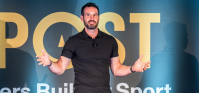
Winning Strategy: Christian Ponder 1. Most Mistakes Can Be Fixed, if You Work to Find and Correct Them
I had a lot of failures, a lot of bad picks, and just many bad plays. I think back to my redshirt sophomore year at Florida State. It was a bad season. A lot of people thought I shouldn’t be the starter for the next year. But what I did was I spent a lot of time in the film room. I spent a lot of time with my coaches, but also a lot of time by myself figuring out like, Why did you make all those stupid mistakes? What was happening? It made me a lot more confident to realize they were stupid mistakes—all preventable things, and up to me to invest in the time to get better, to study and understand defenses.
I think [former FSU coach] Jimbo Fisher had such a great perspective when it came to quarterbacks and success at the quarterback level. He would ask the question, “Why are we doing this?” “On this play, why is the pass route designed this way against this coverage and who are you identifying? Is it the corner? Inside linebacker? Outside linebacker? Safety? So spending a lot of time learning from that season really helped me have an incredible junior year. I think even after my junior year I could’ve turned pro in the NFL draft, but I had another failure—three interceptions against Clemson. The third [int] would’ve been been a pick 6, and I was so mad I tried to blow up a 230-pound safety—he barely moved and I ended up separating my AC joint and couldn’t go in the draft.
There have been a lot of failures. But what I learned from my sophomore year made me a better player.
 The Post2. Embrace Self Awareness
I appreciate feedback. There are times when it gets hard—it’s hardest when you’re not playing well and you’re not you’re confident. If it keeps piling on it can hurt your confidence. And confidence is really important, especially at the quarterback position and as you get into the higher levels where the pressure is the highest.
Losing your confidence is detrimental to your performance. But I think criticism is an important part of growth. And we have to be aware of the things that aren’t going well. One of the biggest strengths athletes have is this hyper-awareness and self criticism around things like, what went well, but also and more important, what didn’t go well with my performance and how to identify those things. Whether it’s through a coach criticizing me or any other forms of criticism, or just my own criticism against myself, I have to know the things that I can get better at and put in the effort to get better so I can perform better.
At the Post we believe in the strength of self awareness. So the resources that we offer our members include how to invest in self awareness. And then our job is to bring the resources to help our members get better at whatever they identify as things that they may be a little bit deficient in. We can help them get better and offer pathways of growth.
Obviously we don’t criticize people, we help people identify things that they can continue to get better at and how do we help them get there. That’s a part of the athlete journey. That’s a part of everyone’s journey, right? I think it’s your choice, whether you want to have some honest conversations with yourself and if you want to get better, you’ve got to figure out what you can get better at and how to do it.
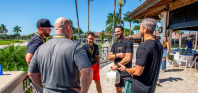 The Post3. A Strong Athletic Mindset Requires A Strong Physical Presence
What was so great about being in sports and football was that you had so much structure, especially when it came to working out. You always had a strength coach and a program. I knew that my time playing would eventually end, so I actually kept a lot of my workout books, especially during my time with the Minnesota Vikings, so I still try to follow similar things.
I belong to an Equinox in New York right down the street from me. And as much as I just hate working out in public gyms—where [many] guys aren’t used to like being in weight rooms and putting weights back or like, God forbid, you can’t go get a drink between your sets or someone’s gonna steal your bench. It drives me nuts, but I still try to get to the weightroom about five days a week. I don’t need to be as fit as I was on the football field and don’t need to be throwing around as much weight as I did while I was playing
I’ll also run in Central Park with a buddy of mine a few times a week, as well as do some anaerobic stuff like hill runs. I also play in a basketball league that’s both fun and competitive but also a great workout.
These days, however, I don’t have as much time. Back then it was your job to stay fit and you dedicated your time in the weightroom and conditioning throughout the day. It’s not the case now. I have three kids and I’m the founder of a startup. I don’t have the same amount of time, you know, to spend 90 minutes in the gym and work out.
I’ve learned that sometimes it’s OK to just get 30 minutes in and do what you can. That’s definitely different, and I’ve had to accept that. It got to the point a few years where it was like there was no point to a 30-minute workout. So I wouldn’t work out at all. So it became a change in routine and a change in mindset. I’m not trying to kill myself. At this point, it’s maintenance for me, not about throwing up big numbers. I just want to stay fit enough that I can keep chasing my kids around and live a long healthy life.
View this post on InstagramA post shared by Christian Ponder (@cpseven)
4. Why Christian Ponder Believes Athletes Need Outlets Like The Post
I got my undergrad in finance, and got my MBA while still playing at Florida State. I knew I wanted to get into finance. That’s one of the main reasons we moved to New York, it’s the financial capital world, I think on paper I had it all together. I didn’t expect the transition to be difficult, but it was. I think going through that experience was a big motivating factor for launching the Post.
We’re not trying to help athletes in transition. What we’re trying to do is build a community for athletes to transition into when they’re done. Like what I had when I transitioned to college or when I transitioned to the NFL, we kind of had this veteran locker room to step into and just like we had where you have players who were juniors and seniors in college or players in the NFL for 10-plus years, who knew what it took to compete at that level as a young person. Your building relationships. Learning via osmosis to figure how to compete at that level.
It’s the same what we’re trying to do: How do we take former athletes who are doing extremely well in business because of their athletic background. For me life [post-football] was a loss of identity, a sense of purpose, structure and routine and a loss of community. So for us at the Post, it’s about how to combat that.
Athletes shouldn’t shed their identity when they’re done—success in sports and business require the exact same qualities. In business you’ve got to work hard, you’re gonna be introspective, have great goals, and you’re gonna deal with failure— all the things that made you a great athlete.
View this post on InstagramA post shared by Christian Ponder (@cpseven)
5. Find Your Group of Like-Minded Teammates
In creating the Post, I knew I wasn’t alone. You talk to so many athletes about what they miss most about playing, and it’s usually some version of missing the locker room or the team, which is just another word for community. So I knew I wasn’t alone in those feelings, and before you know, I saw these ideas started happening. I got a lot of feedback, like, why hadn’t this been built already? It seems like an obvious ideas. And I don’t know the answer to that, but I just built it on selfish ambition because I just missed being around other athletes, so I knew I couldn’t have been the only one.
We’re just trying to build that space for athletes to reconnect with their community. Again, it’s a community we’ve been a part of for so long. And what we’re trying to do is create that sports ecosystem that we all participated in, and was created in a way to get the best out of us when it came from an athletic perspective or potential. You had teammates who were there to support you and push you along the way. You had coaches and training and all these resources to unlock as much of that athletic potential as possible. We’re just trying to take that same ecosystem, that same group of people and try to unlock or harness all of that professional business potential that athletes possess because of that athlete operating system as we call it.
So if you miss being a part of that community, if you identify as an athlete, we’re here for you. Our members go from mid 20s to mid 70s. our theme is once an athlete always an athlete, and I think one of the things about athletes is that we always thought our best performance was still ahead of us, so it will always still get better. For us, we’re trying to be that that grease on the wheel that helps you get there.

Discover the Serene Power of Embracing Child’s Pose Throughout Your Entire Yoga Class
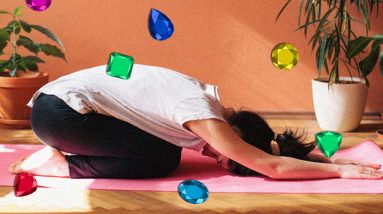
In a dimly lit yoga studio, I was somewhere between cat-cow and threading the needle when tears started swelling up in my eyes. The feeling of deep grief and hopelessness I fought back all day came to a climax while I was on my Lululemon mat. I quickly folded forward into a child’s pose, ignoring the instructor’s flow, and I stayed put for the rest of class. Doing so felt most aligned for me in the moment.
The power of tuning into what your body and soul needs in the present moment is honest and liberating. But that day in the studio, when I was was overcome with emotion, I wasn’t focused first and foremost on what my body was asking of me. Rather, I was just trying to get myself into a compact position, so as to not be remembered “yoga-class crier.”
I laid there raw, belly between my thighs, arms stretched forward like two railroad tracks, and my head peeking between them. Intrusive thoughts took up residence in my mind: Did the teacher think I was being disruptive? Did the other students see me as an annoyance? Yoga is about taking what you need, right?
I’m a certified yoga teacher who had, at that point, facilitated dozens of classes, during which I’d invited students to consider child’s pose, or balasana, as their home base. I welcomed them to find it at any point in class when they needed a moment to recenter or find their breath. During the yoga class when I found myself in child’s pose as a calming measure, I found myself needing to take my own advice—to take a breath, as I was searching for a home.
A reminder: Child’s pose is yoga
Yoga, which means “union,” in sanskrit refers to a marriage of the mind, body, and soul. Meaning, it’s much more than a purely physical exercise. The asanas, or yoga postures, are just one tool yoga offers to help bring the mind to a state of awareness. Asanas alone, though, are not reflective of the full meaning of yoga.
The eight limbs of yoga are philosophies from Patanjali’s Yoga Sutra, which aim to teach how to live a meaningful life and provide a path to enlightenment. Asana is one of the eight limbs. Samadhi is the last phase of the eight limbs of yoga, and it’s characterized by intense focus and arriving at a state of bliss and union with the self. But sometimes, you must wrestle or struggle to access peace, and clarity.
Maintaining my child’s pose was my personal struggle during that class. I chose to tune in to the strong emotions that washed over me as I sought solace; I resisted the urge to get up and back into the flow, in light of fear for what classmates may have thought of me. I didn’t allow my ego to bully me into prioritizing external acceptance over internal need. With deep breaths and a surrendered heart to the earth, I sat in the uncomfortable awareness of it all for the duration of class.
Even so, I never intended to go to yoga class and then break down emotionally. I didn’t consciously realize that I was in a depleted state and needed turn inward before I could outwardly express. After paying the $28 class rate, I fully intended to participate. In fact, movement often supports me in releasing my uninhibited emotions. But my body—as I would soon learn—was beckoning for something different.
Remaining in a child’s pose allowed me to experience my most authentic form of practice at that moment: awareness of self.
Remaining in a child’s pose allowed me to experience my most authentic form of practice at that moment: awareness of self. And immersing myself into my feelings in that one pose for the duration of class was a a fruitful yoga experience.
There’s no way to control when your proverbial dam breaks, and the resulting flow of emotions may overtake you. When this happens, it’s important to take solace in knowing that the only path to liberation is through the chaos. After you fall apart is when you tend to grow. What may feel like destruction, pain, and turmoil in the moment, is what gives way to fertile soil where you can plant new seeds. From there, opportunities can emerge. Sometimes, getting to that fertile ground may involve crying in child’s pose for an entire yoga class.
Child’s pose can be the ‘right use of energy’
Staying in one posture for an extended period of time supported my total emotional surrender. I allowed myself to soften in a way that movement-focused yoga flows wouldn’t have supported. As my forehead touched the ground, I felt safe to fall apart. Soon, tears spilled over the edges of my mat. When moments of self-doubt arose, I self-soothed by rocking my forehead back and forth. I began tapping into my vagus nerve, activating my parasympathetic nervous system, which contributes relaxation of the body. I acknowledged the temporary nature of my feelings, and affirmed I wouldn’t always feel scattered, but in that moment of barely holding on, my emotions were valid and welcomed. I embodied compassion for myself.
There is a yoga principle called brahmacharya, which means “the right use of energy.” Brahmacharya encourages us to be transformed by our yoga practice by listening to our body and letting the practice serve us; by directing our power away from external desires and instead toward finding peace and happiness within ourselves.
Given that yoga means “union,” it’s crucial that I remain open to receive what I need, even if it shows up in a way that feels disruptive. There is a proclivity in movement classes—and life—to push ourselves beyond our edge; to keep up and look accomplished. What if the real accomplishment were giving yourself precisely what you needed, moment by moment, no more or less? To embrace yourself as you are, with all your weaknesses and strengths? To affirm you are powerful and you always have the choice to take what you need unabashedly? That feels like a worthwhile way to spend a yoga session to me. And so I continue inviting students of mine and myself to consider child’s pose as calming home base in yoga.