

My Journey to the Top 3 in “Squid Game: The Challenge” – Unveiling My Fitness Regimen, Winning Tactics, and the Notorious Green Outfits – By Sam Lantz
As a reality television watcher, I became deliriously happy when “Squid Game: The Challenge” picked me to appear on the show’s first season on Netflix.
But after whooping it up with my husband, I got down to work.
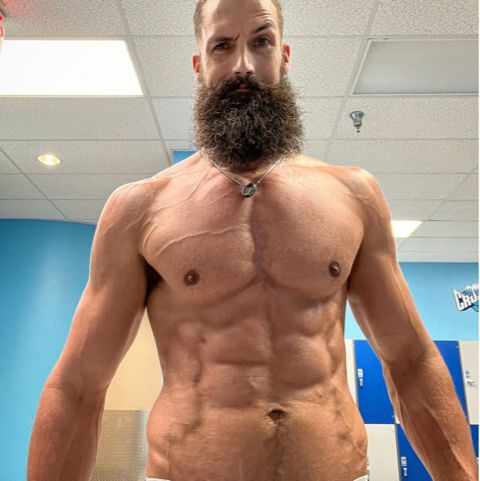
Reality shows are usually physical, requiring people to push their bodies to the limit. As an avid gym rat, I wasn’t worried. Working out is about positive mental health for me, which is why I hit the gym seven days a week. I’m tall — a towering 6’7” — so my focus is on “putting roots into the ground,” meaning making my tall frame as still as possible, so I’m not only focusing on whatever muscles I’m working on, but I’m also firming up my core to get a secondary workout as well.
I have three different abdominal/core routines that I like. I choose one to finish with every day: either 2 sets of 25 reps of leg lifts, or 2 sets of 25 reps of side and flat planks, or 2 sets of 25 reps on whatever ab machines are available. Finishing with a different ab workout every day keeps the muscles from becoming too complacent. Working out didn’t come natural to me. In my early life I was a super skinny kid who hated his body. My confidence in the gym came from figuring out that the gym wasn’t a scary place but instead was a space to simply make myself feel better; almost my therapy. Everyone needs that, but especially young people like me who didn’t have the family support to survive life, no less reality television.
So how did the lessons I learned from my workout regimen help me survive all 10 episodes of “Squid Game” where I ended up as one of three finalists out of 456 players?
First, I had watched the original scripted “Squid Game” series that preceded the reality version. Through three separate viewings I knew I would need to prepare to survive games like “Red Light Green Light” that required fast sprints and frozen posing. So, before the January 2023 taping, I prepared by running a quarter of a mile every day on a treadmill. I typically don’t like running, but after that regimen my body assimilated to jumping into sudden action.
Secondly, I knew that the real physical pain from “Squid Game” would be mental. Like most reality shows, the players are confined from the outside world. We were completely infantilized. We lived together in a dorm for 17 long days, only saw sunlight a limited amount every day, didn’t know the time, watch the news, or have a cell phone, and we ate every meal together. It’s no surprise, then, that our emotions hung from a thread — which makes for great television, but oftentimes not great decision-making.
For this I prepared by learning meditation to calm myself every morning, or whenever it was needed. It especially came in handy in the “white room of doom” where we were staged before each challenge. I also came to peace with giving up control. My “Squid Game” life existed in an artificial world created by the show’s producers. I knew to expect nothing, which helped give me the balance needed to survive sudden upsets or player drama. There was a flow to those 17 days, so I did my best to not fear it or fight it, but to flow along wherever it took me.
Finally, I hid my strengths. Luckily, the wardrobe design on “Squid Game” required players in shapeless green tracksuits. Mine was sized double extra-large, which meant it was easy to hide my physique. As a reality show watcher, I am aware of the universal rule that says the players who are the most in shape tend to have a target on their back because our reptilian brains tell us that they are threats.
I downplayed physical strength which helped me focus more on the social and mental rigor the game required. I became friends with everyone. I hugged people when they needed hugs, I shook hands and high-fived when others achieved victory. I made a specific choice to be everyone’s favorite number three — Not their best friend and not their worst enemy.
Instead, I just wanted to be the low-key guy who would never be considered a threat, and in a situation designed around identifying those who would be a threat to your game, this social interaction was key. In the end, the competition was less about physical challenges and more about social relationships, mental fortitude, and chance.
“Squid Game” gave me the gift of understanding that I can withstand anything. Growing up gay in a household that didn’t want me, I was often told I would never amount to anything. That gave me the strength I knew I had before “Squid Game.” But by pushing me to new extremes, I realized just how strong I had become.
The game of life is not unlike the game of television. My time on “Squid Game: The Challenge” didn’t result in millions in prize money, but I learned it had an unexpected payoff: an awareness of how strong I really am, outside and in.
Sam Lantz is an artist living in Fort Lauderdale. He was among the top three finalist in “Squid Game: The Challenge” on Netflix.

Tips for Strengthening Abs with the Standing Rope Crunch Technique
Are you looking for an exercise that can strengthen your core and help you get the toned midsection you desire? Standing Rope Crunches are the perfect solution! This challenging exercise targets your abdominal muscles, obliques and lower back, helping you build strength and burn calories. With FitGAG’s expert guide, you’ll be able to master Standing Rope Crunches and achieve your fitness goals. So what are you waiting for? Get started on your Standing Rope Crunch journey today!
Exercise Information
The Standing Rope Crunch is a resistance training exercise that targets the muscles in the core. This exercise involves using a rope to add resistance and challenge your core muscles throughout the entire range of motion, making it an effective workout for those looking to strengthen their core. Let’s dive into some general information about this exercise:
Level
The Standing Rope Crunch is suitable for individuals of all fitness levels, from beginners to advanced athletes.
Equipment
To perform the Standing Rope Crunch, you will need a rope.
Type of Exercise
The Standing Rope Crunch is an isolation exercise that targets the muscles in the core, involving a single-joint movement that mainly focuses on one specific muscle group.
Standing Rope Crunch: Working Muscles
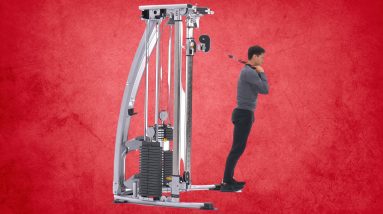
The Standing Rope Crunch is an isolation exercise that primarily targets the muscles of the abdominal region. This exercise involves using a rope attached to a high anchor point, such as a pull-up bar, to add resistance to the traditional crunch motion. In this section, we will discuss the primary and secondary muscle groups that are involved during the Standing Rope Crunch exercise.
Primary Muscle Group: Abdominals
The primary muscle group targeted during the Standing Rope Crunch exercise is the abdominal region, including the rectus abdominis, transverse abdominis, and oblique muscles. These muscles are responsible for flexing the trunk of the body, which is the primary motion of the Standing Rope Crunch exercise.
Secondary Muscle Group: Shoulders
In addition to the primary muscle group, the Standing Rope Crunch exercise also engages the muscles of the shoulders. The rotator cuff muscles and middle deltoid muscles are engaged during the crunching motion to stabilize the joint and maintain proper posture.
By engaging both the primary and secondary muscle groups, the Standing Rope Crunch exercise provides a comprehensive core workout. This makes it an effective exercise for building abdominal muscle strength and size, improving posture and stability, and developing functional fitness for activities in daily life.
Stay tuned for the next section, where we will discuss the benefits of the Standing Rope Crunch exercise.
Benefits of Standing Rope Crunch
Standing Rope Crunch is an exercise that targets your core and offers several benefits. Here are five benefits of incorporating this exercise into your fitness routine:
- Improved Core Strength: Standing Rope Crunch helps improve your core strength by engaging your abdominal muscles and developing overall stability in the core.
- Enhanced Balance and Stability: Standing Rope Crunch engages more muscles in the upper and lower body, which can help improve overall balance and stability.
- Increased Range of Motion: Standing Rope Crunch allows you to work your core through a full range of motion, which can help improve your overall flexibility.
- Reduced Risk of Injury: Standing Rope Crunch can help improve your overall joint stability and reduce the risk of injury and strain on your abdominal muscles.
- Variation and Progression: Standing Rope Crunch can add variation to your core workouts, which can help prevent boredom and stimulate new muscle growth. Additionally, the exercise can be made more challenging by using a heavier rope or increasing the number of reps.
By incorporating Standing Rope Crunch into your fitness routine, you can enjoy these benefits and more. However, it’s important to start slowly and progress gradually to avoid injury and ensure proper form. Additionally, it’s important to incorporate a variety of exercises into your fitness routine to ensure you’re targeting all muscle groups and avoiding boredom.
Standing Rope Crunch: Step-by-Step Instructions
The standing rope crunch is an exercise that works your abdominals and obliques. Here are the step-by-step instructions for performing the standing rope crunch:
Starting Position:
- Hold a rope in both hands, with your palms facing each other.
- Stand with your feet slightly wider than shoulder-width apart.
- Tighten your core and keep your back straight.
Now, let’s move on to the step-by-step instructions for the standing rope crunch:
- Begin by crunching your core, bringing your elbows in towards your torso.
- Pause briefly at the end of the movement, when your elbows are just outside your chest.
- Slowly release the movement and bring your arms back to the starting position.
Repeat the movement for the desired number of repetitions.
Standing Rope Crunch – Proper Form and Technique
The Standing Rope Crunch is an effective exercise that targets the core muscles. This exercise is performed using a rope, and proper form and technique are important to avoid injury and achieve maximum results.
Starting Position
- Stand upright with your feet hip-width apart and the rope looped around your hands.
- Hold the rope with both hands, with your arms extended straight out in front of you.
- Engage your core muscles and maintain a stable base.
Proper Form and Technique
- Crunch the Rope: Crunch the rope by pulling the rope up towards your body, squeezing your core muscles.
- Keep Your Arms Straight: Keep your arms straight and your elbows slightly bent throughout the exercise, using your abdominal muscles to control the movement.
- Return to the Starting Position: Return to the starting position by bringing the rope back to the starting position in front of your body.
- Breathe Deeply: Breathe deeply and regularly throughout the exercise to maintain your energy and focus.
- Gradually Increase Intensity: Gradually increase the number of repetitions or sets of the exercise over time as your abdominal muscles become stronger.
- Incorporate into Your Routine: The Standing Rope Crunch can be a great addition to your core training routine, helping you to build strength and muscle effectively.
By following these tips, you can perform the Standing Rope Crunch with proper form and technique, building and strengthening your core muscles effectively while minimizing the risk of injury. Remember to start slowly, focus on your breathing, and gradually increase the difficulty and intensity of the exercise over time.
Frequency and Progression: How to Get the Most Out of Your Standing Rope Crunch Workouts
The Standing Rope Crunch is a resistance band exercise that targets the core muscles, specifically the obliques and rectus abdominus. In this section, we will discuss how to properly incorporate the Standing Rope Crunch into your workout routine and how to progress with this exercise over time.
Frequency
To see significant results with the Standing Rope Crunch, it is recommended to perform this exercise 2-3 times a week. However, it is important to listen to your body and avoid overtraining. If you feel any pain or discomfort, stop the exercise immediately. You can also alternate between the Standing Rope Crunch and other core exercises, such as planks or Russian twists.
Progressive Overload
To progress with the Standing Rope Crunch, it is important to gradually increase the difficulty of the exercise over time. Start with a lighter band resistance and gradually increase the resistance as you become stronger. Another way to progress is to decrease the rest time between sets or increase the number of repetitions. Gradually increase the resistance and reps/sets and avoid adding too much too quickly.
Mix It Up
To prevent boredom and keep your Standing Rope Crunch workouts fresh, it is important to mix up your exercise routine. You can perform the Standing Rope Crunch with different types of bands or vary the number of reps and sets. You can also incorporate other core exercises, such as bicycles or mountain climbers.
Proper Form
Proper form is essential when performing the Standing Rope Crunch to avoid injury and get the most out of the exercise. Start by holding the band with both hands and standing with your feet shoulder-width apart. Your hands should be in front of your chest with your elbows slightly bent. Pull the band apart by spreading your hands out to your sides, keeping your elbows in line with your shoulders. Squeeze your abdominal muscles together at the end of the movement. Return to the starting position by slowly bringing your hands back together. Keep your core engaged and your back straight throughout the movement.
Track Your Progress
To ensure you are making progress and staying on track with your Standing Rope Crunch workouts, it is important to track your progress. Keep a workout journal or use a fitness app to log the band resistance, reps, and sets for each exercise. This will help you identify areas where you need to improve and keep you motivated to continue pushing yourself.
Incorporating the Standing Rope Crunch into your core workout routine can be a great way to build strength and improve your posture. By following these tips for frequency, progressive overload, and proper form, you can ensure that you are getting the most out of your Standing Rope Crunch workouts and reaching your fitness goals.
Mistakes of Standing Rope Crunch Exercise
The standing rope crunch exercise is a great way to target your abdominal muscles and strengthen your core. However, like any exercise, there are common mistakes that can reduce its effectiveness and increase the risk of injury. Here are five mistakes to avoid during the standing rope crunch exercise:
- Not using proper form: Using poor form during the standing rope crunch exercise can reduce its effectiveness and increase the risk of injury. It’s essential to maintain proper alignment of the spine, hips, and shoulders throughout the exercise.
- Using too much resistance: Using too much resistance during the standing rope crunch exercise can increase the risk of injury and reduce its effectiveness. Instead, focus on using a rope with appropriate resistance that allows you to maintain proper form.
- Not using a full range of motion: Neglecting to use a full range of motion during the standing rope crunch exercise can reduce its effectiveness. Make sure to fully extend your arms in front of your body before returning to the starting position.
- Not engaging the abdominal muscles: Engaging the abdominal muscles is essential to ensure that you are targeting the correct muscles during the standing rope crunch exercise. Failure to engage these muscles can reduce the effectiveness of the exercise.
- Not using proper breathing: Using improper breathing technique during the standing rope crunch exercise can reduce its effectiveness and increase the risk of injury. Make sure to exhale as you pull the rope towards your chest and inhale as you return to the starting position.
By avoiding these common mistakes, you can ensure that you are getting the most out of your standing rope crunch exercise while reducing the risk of injury. Remember to use proper form, use an appropriate resistance, use a full range of motion, engage the abdominal muscles, and use proper breathing throughout the exercise. With consistent practice, you can improve your core strength and develop better posture with the standing rope crunch exercise.
Variations of Standing Rope Crunch: Add Challenge to Your Core Training
Standing Rope Crunch is a great exercise to help target and strengthen your core muscles. However, doing the same exercise every day can become monotonous over time. Here are some variations to add challenge and variety to your training routine and challenge your core muscles in different ways:
Single-Arm Standing Rope Crunch
This variation involves performing the exercise with one arm at a time, which adds more challenge to your balance and stability and targets your core muscles from a different angle. Be sure to keep your core engaged and your feet slightly apart as you perform the exercise.
Standing Rope Crunch with Resistance Bands
This variation involves using heavier resistance bands to add extra resistance and challenge your core muscles. Be sure to use proper form and technique and avoid jerking or pulling the bands.
Standing Rope Crunch with Pause
This variation involves pausing for a few seconds at the end of each repetition, which challenges your core muscles and improves your overall muscular endurance. Be sure to keep your core engaged and your feet slightly apart throughout the exercise.
Standing Rope Crunch with Isometric Hold
This variation involves holding the fully contracted position of the exercise for a few seconds, which challenges your core muscles and improves your overall muscular endurance. Be sure to keep your core engaged and your feet slightly apart throughout the exercise.
Standing Rope Crunch with Cross Body Reach
This variation involves adding a cross body reach to the exercise, which targets your core muscles and improves your overall core strength and stability.
Incorporating these variations into your Standing Rope Crunch routine can help you add challenge and variety to your core training and achieve greater gains in overall core strength and athletic performance. As always, make sure to use proper form and technique to avoid injury.
Standing Rope Crunch: 5 Alternatives to Strengthen Your Core
The standing rope crunch is a great exercise for strengthening your core and improving your posture. However, if you’re looking to mix up your routine or add some variety, there are plenty of alternatives you can try. In this section, we’ll explore five exercises that target your core and can help you build strength and improve your posture.
Plank
The plank is a great exercise for targeting your core and improving your posture.
- Lie face down on the floor and prop yourself up on your forearms.
- Engage your core and lift your body up, keeping your back straight and your feet together.
- Hold the position for the desired amount of time before lowering back down.
Bird Dogs
Bird dogs are a great exercise for targeting your core and building strength.
- Start on your hands and knees and extend one arm in front of you and the opposite leg behind you.
- Engage your core and keep your back and leg straight while you hold the position.
- Lower your arm and leg back down and repeat on the opposite side for the desired number of repetitions.
Hollow Holds
Hollow holds are a great exercise for targeting your core and building strength.
- Lie face up on the floor and lift your legs and arms off the ground.
- Engage your core and keep your back and legs straight while you hold the position.
- Lower your legs and arms back down and repeat for the desired number of repetitions.
Flutter Kicks
Flutter kicks are a great exercise for targeting your core and improving your posture.
- Lie face down on the floor and lift your legs off the ground.
- Alternate kicking your legs up and down while keeping your core engaged.
- Continue for the desired number of repetitions.
Crunches
Crunches are a great exercise for targeting your core and strengthening your abs.
- Lie face up on the floor and bend your knees so your feet are flat on the ground.
- Engage your core and crunch your chest towards your knees.
- Lower your chest back down and repeat for the desired number of repetitions.
Incorporating these alternatives to standing rope crunch exercises into your routine is a great way to strengthen your core and improve your posture. These exercises require little to no equipment and can be done at home or at the gym. Give them a try and see how they work for you!
Standing Rope Crunch: Tips and Tricks for Developing Stronger Core Muscles
The Standing Rope Crunch is an excellent exercise to help you develop stronger core muscles. In this section, we’ll share some tips and tricks to help you perform the Standing Rope Crunch correctly and get the most out of it.
- Warm-Up: Before performing the Standing Rope Crunch, it’s important to warm up your entire core. You can do this by performing some light cardio or dynamic stretching, such as side bends.
- Use the Right Equipment: To perform the Standing Rope Crunch, you need a rope and a sturdy object to secure it to. Make sure you choose the right resistance level for your needs and follow the manufacturer’s instructions for use.
- Proper Form: Maintaining proper form is crucial when performing the Standing Rope Crunch. Begin by holding the rope securely in both hands, with your palms facing down. Keeping your arms straight, pull the rope up until your hands are at chest level, then slowly return to the starting position.
- Engage Your Core Muscles: To perform the Standing Rope Crunch correctly, you need to engage your core muscles. Focus on squeezing your abs as you pull the rope up.
- Use the Right Repetition Range: Aim to perform 2-3 sets of 8-12 reps with the Standing Rope Crunch.
- Mix it Up: Mixing up your Standing Rope Crunch routine can help keep your workout fresh and challenging. You can try different variations, such as changing the resistance level or using a different hand position.
- Stretch Afterwards: After performing the Standing Rope Crunch, it’s important to stretch your entire core, especially your abs and lower back.
- Listen to Your Body: As with any exercise, it’s important to listen to your body and avoid pushing beyond your limits. If you feel any discomfort or pain, stop the exercise immediately.
Incorporating these tips and tricks into your Standing Rope Crunch routine can help you get the most out of this exercise and achieve stronger core muscles. Remember to always maintain proper form, engage your core muscles, and listen to your body. With time and practice, you’ll be able to perform the Standing Rope Crunch like a pro and enjoy the benefits of stronger and more toned core muscles.
Incorporating Standing Rope Crunches into Your Workout Routine for Maximum Effect
Standing rope crunches are a great exercise for strengthening your core and improving your posture. Here are some tips to help you incorporate this exercise into your workout routine for maximum effect:
- Warm-up properly: Before doing standing rope crunches, it’s important to warm up your core with exercises like side planks, bridges, and bird dogs.
- Use proper form: To perform standing rope crunches, stand with your feet shoulder-width apart and hold a resistance band with both hands. Extend your arms straight out in front of you, holding the ends of the band at shoulder height. Then, pull the band towards the top of your head by crunching your abs and bringing your elbows towards your knees. Return to the starting position and repeat.
- Mix up your routine: Don’t just perform standing rope crunches in isolation. Mix it up by incorporating other core exercises, such as planks, V-sits, and Russian twists.
- Use progressive overload: To continue to see progress, you’ll need to use progressive overload, which means gradually increasing the resistance or repetitions over time.
- Don’t overdo it: It’s important to give your muscles time to recover, so don’t overdo it with standing rope crunches. Aim to perform the exercise for 2-3 sets, 1-2 times per week.
- Focus on your breathing: It’s important to regulate your breathing throughout the exercise to ensure that you’re getting enough oxygen to your muscles. Inhale as you crunch and exhale as you return to the starting position.
- Engage your core: To get the most out of standing rope crunches, make sure to engage your core muscles, including your abs, lower back, and obliques. This will help you maintain proper form and prevent injury.
- Rest between sets: Allow your muscles time to recover between sets. Rest for 60-90 seconds between sets to ensure that you’re performing each rep with proper form.
- Incorporate standing rope crunches into your workout routine: In addition to incorporating standing rope crunches into your workout routine, consider doing them as part of a superset or a circuit to challenge your muscles even more.
By incorporating these tips into your workout routine, you’ll be well on your way to maximizing the benefits of standing rope crunches and achieving stronger core muscles and improved posture.
Ultimate Workout Plan for Standing Rope Crunch
Standing Rope Crunch is an excellent exercise for strengthening and toning your core. Here’s a one-week workout plan to help you incorporate Standing Rope Crunch into your routine:
Day 1: Warm-up
- Warm-up: 5-10 minutes of cardio
- Standing Rope Crunch: 3 sets x 12-15 reps
- Plank: 3 sets x 30-60 seconds
- Hanging Leg Raises: 3 sets x 10 reps
- Decline Crunches: 3 sets x 12 reps
- Cool-down: 5-10 minutes of stretching
Day 2: Rest Day Day 3: Lower Body
- Warm-up: 5-10 minutes of cardio
- Standing Rope Crunch: 3 sets x 12-15 reps
- Squats: 3 sets x 10 reps
- Lunges: 3 sets x 10 reps
- Calf Raises: 3 sets x 12 reps
- Cool-down: 5-10 minutes of stretching
Day 4: Rest Day Day 5: Full Body
- Warm-up: 5-10 minutes of cardio
- Standing Rope Crunch: 3 sets x 12-15 reps
- Burpees: 3 sets x 12 reps
- Mountain Climbers: 3 sets x 10 reps
- Jump Squats: 3 sets x 15 reps
- Cool-down: 5-10 minutes of stretching
Day 6: Rest Day Day 7: Core
- Warm-up: 5-10 minutes of cardio
- Standing Rope Crunch: 3 sets x 12-15 reps
- Russian Twists: 3 sets x 10 reps
- V-Ups: 3 sets x 10 reps
- Side Plank: 3 sets x 15 seconds (each side)
- Cool-down: 5-10 minutes of stretching
Remember to maintain proper form and technique when performing Standing Rope Crunch. Keep your movements slow and controlled, and focus on engaging your core..


Get Ready to Crush Your Lower Body with Shelley Hennig’s Intense Workout
Shelley Hennig is steaming up television screens all around the world with her star turn in Netflix’s hit series Obliterated, but in order to get into insane shape and look stunning sans-clothing, Hennig knew that that she would need to give her all to the process of sculpting her physique. Thanks to her years as a competitive dancer, the former Miss Teen USA is usually fit and ready to go, but for the role of “Ava Winters,” and to be believable as a CIA field agent, Hennig enlisted a strength and conditioning coach to add around ten pounds of lean muscle mass. Here’s the “Obliterated” lower-body workout that completed the mission.
Trained by Simon Otero at Rough Rider Barbell Club in Albuquerque, New MM, Hennig had only a few weeks to prepare for her role as an elite special forces agent in the action-comedy-drama, “Obliterated,” streaming now on Netflix. As a former competitive dancer who loves to be active, Hennig usually maintains her fitness levels by attending sessions at Cardio Barre where she is able to execute fast ballet movements to get her sweat dripping and the body pumping. Hennig also loves to box and participates in Yoga sculpting sessions.
For “Obliterated,” the former beauty queen wanted to move away from the lighter ballet look, in order to present herself as a kick-ass character. To do that, she understood that weight training would be essential in order to get killer quads and a buff booty for those bikini and virtually-naked scenes, and so she enlisted the services of strength and conditioning coach, Simon Otero. “When Shelley came to me, the goal was to put on muscle while still maintaining an athletic and feminine look for her role in Obliterated,” he explains. “We achieved Shelley’s physique by an assortment of standard compound movements and accessories, targeted at building strength for the whole body.” It was a new experience for the star, but she revelled at the chance to throw herself into something new. “I’d never done that and, I don’t know, I felt jacked,” explained Hennig of the results, in an exclusive interview with M&F (read it here). “And I felt probably the strongest I’ve ever felt in my life and it felt really good.”
View this post on InstagramA post shared by Shelley Hennig (@shelleyhennig)
Compound movements such as squats and deadlifts engage multiple muscle groups, activating several muscles simultaneously, whereas accessory movements target more specific muscles or groups, usually involving a single joint. Examples of accessory exercises include leg extensions or calf raises. “A typical week would mix days of upper-body focus, lower-body focus, and a day of full body movements and conditioning,” adds Simon Otero.
As you can see from the example workout below, Shelley Hennig worked her whole-body during workouts, but usually with a focus on a particular area such as lower-body. Mixing compound and accessory movements is a great way to enhance overall strength and muscle mass because you are taxing a wide range of muscle fibers and building stamina as you feel the burn. Depending on your own level of fitness, feel free to try the workout below by making individual adaptions where necessary, increasing or decreasing the sets, reps, or time on each exercise.
The physique that Shelley Hennig achieved for those scorching scenes in Obliterated is anything to go by, this workout is a winner.
 Courtesy of NetflixShelley Hennig’s “Obliterated” Lower-Body Workout
Warmup
Dynamic Stretching
Seated Row or Ski erg — 2 minutes
Workout
Medicine Ball Slam — 4 Sets x 10 Reps
Kettlebell Swing — 4 Sets x 10 Reps
Romanian Deadlift — 4 Sets x 8 Reps
Goblet Squat — 3 Sets x 8 Reps
Dumbbell Farmers Carry for time — 3 Sets x 1 minute
Leg Extensions — 2 Sets x 8 Reps
Calf Raises — 2 Sets x 8 Reps


Stay Fit and Festive This Christmas Season
Hi friends! I hope that you have a wonderful day, and a very Merry Christmas to my friends who are celebrating today. Wishing you joy, happiness, love, and vibrant health. Thank you so much for being a part of my life!

For now, we’re going to enjoy some coffee and nana’s egg casserole, watch the babies open gifts, and spend the day in our jammies with family.
Have a great day and I’ll see ya soon.
xoxo
Gina
The post have yourself a merry little Christmas appeared first on The Fitnessista.


Key Insights from the 2024 CrossFit Season Competition: A Must-Read for Fitness Enthusiasts
The 2024 CrossFit season is fast approaching. The 2024 CrossFit Open will begin on Feb. 29, 2024, and the dates and locations for the 2024 CrossFit Semifinals are already known.
So, what should participating athletes in the 2024 CrossFit season know to prepare for success? Well, the 2024 CrossFit Games Competition Rulebook was released on Dec. 21, 2024. While most of it was standard operating procedure in line with the past couple of years, there were some notable items to be aware of.
View this post on InstagramA post shared by CrossFit Games (@crossfitgames)
[Related: Two-Time CrossFit Games Winner Justin Medeiros Entered a Powerlifting Competition and Totaled Over 1,400 Pounds]
2024 CrossFit Games Competition Rulebook
Below are four key takeaways from the 2024 CrossFit Games Competition Rulebook, courtesy of information provided by Morning Chalk Up managing editor, Joe Genetin-Pilawa:
1. No Title Sponsor Listed
“In previous years, the Games title sponsor (most recently NOBULL) appeared on the rulebook cover and throughout [its pages],” Genetin-Pilawa says. He explains that the absence of a title sponsor on the 2024 CrossFit Games Competition Rulebook suggests that a title sponsor has not been officially confirmed, noting that NOBULL’s contract with CrossFit expires at the end of 2023.
2. Important Changes to Athlete Eligibility Rules
Athlete eligibility for each stage of the competition is receiving a small facelift.
“For example, athletes who receive an exemption to compete in a region outside their country of citizenship are now required to re-apply each year — the exemption doesn’t carry over,” Genetin-Pilawa says.
Outside partners will organize all seven Semifinal events. However, CrossFit will continue to program the tests, manage scoring, and determine invitations, according to Genetin-Pilawa. The total number of competitors at each Semifinal has been standardized; every Semifinal will feature 40 Individual men, 40 Individual women, and 30 Teams (Rule 3.02).
View this post on InstagramA post shared by CrossFit Games (@crossfitgames)
There are other athlete eligibility rules that participating athletes should be aware of. The above is one example, Genetin-Pilawa explains, but competitors who expect to advance past the Open should prioritize the time to read the eligibility rules further.
3. Important Video Submissions and Judging Rule Changes
One example of changes to the rules is a revision to the “major penalty” category for video submissions, according to Genetin-Pilawa. Previously, a “major penalty” was a flat 15-percent score adjustment. However, in 2024, that adjustment can be “15 to 40 percent,” depending on the severity of the violation (Rule 1.22).
There are other adjustments like this to judging and video submissions. Participating 2024 CrossFit season athletes should familiarize themselves with the adjustments to avoid being surprised should they encounter one or more of them.
4. Be Aware of Appendix D
“With a significant portion of the Games season occurring virtually, CrossFit has added a set of ‘Virtual Competition Guidelines,’” Genetin-Pilawa says. “These guidelines include setup considerations, video submission requirements and penalties, an outline of best practices, and a table of standard weight conversions between pounds and kilograms.”
Genetin-Pilawa explains that this is a welcome addition as more specificity and clarity of such information is usually a boon for athletes and one that he says athletes should examine closely.
For a detailed breakdown of more changes to the 2024 CrossFit rulebook, head here.
Featured image: @crossfitgames on Instagram
The post 4 Takeaways From the 2024 CrossFit Season Competition Rulebook appeared first on BarBend.

Get Your Holiday Sweat On with the Christmas Crunch Workout
It’s Christmas Crunch time!
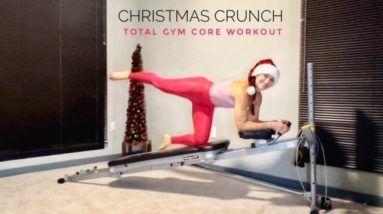
This time of the year we all tend to be rushing, hustling, and in a frenzy to get things accomplished. During this holiday hustle, it’s the perfect time to ensure you make time for your muscles too. So, I have the perfect solution, with “The Christmas Crunch workout” on your Total Gym. It’s tailor-made for those navigating the seasonal rush!
Whether you’re pressed for time, savoring crunchy delights, or ready to conquer a quick workout, this routine is your go-to. Let’s make the most of the final Christmas crunch time with a workout that’s as enjoyable as it is effective!
The Christmas Crunch Workout: 5 Minutes of Festive Fitness Fun Dash on over to your Total Gym and couch your core with this seasonal core circuit. The workout is short, targeted, and easy to follow. Let’s get crunching!
• Set Up: low- med level based on current strength
• Accessory: AbCrunch + timer APP
• Directions: At your own controlled pace, perform the following exercises for 1 minute each. Cycle through the circuit until all exercises are complete. Repeat as many rounds as your time permits.
• Total Circuit time: 5 minutes/ round
1. Plank Tucks (Minute 1)
• Start standing with parallel feet at the bottom base facing the glide board.
• Keeping an elongated spine, squat down and place hands onto the sides of the glide board.
• Open the glide board and glide out into a plank, then ride it back into your low crouching squat position and simultaneously tap the forearms to the glide board.
• Repeat this gliding out and in motion in a smooth and controlled manner.
2. Knee Tucks (Minute 2)
• Open the glide board and assume a kneeing position along with the AbCrunch accessory by grabbing the handles and placing forearms on the pads.
• Keeping the shoulders onto of the elbows, tuck the knees in and out while keeping the core always activated.
• Move with control and utilize your breath.
3. Oblique Tucks (Minute 3) (30 secs per side)
• Maintaining the same position as #2 above, swivel the knees and feet to one side to change the working angle into your obliques.
• Perform the same tucking motion in and out slowly with control.
• Perform 30 seconds per side.
4. Knee Hovers (Minute 4) • Maintaining the same position on the AbCrunch as #2 and 3.
• Keep the knees bent toward the elbows and tuck the toes.
• Hover the knees an inch off the glide board while slowing moving it up and down the rails in a small range of motion. (The upper body maintains stillness while the lower body does the movement).
• Modify: just hover! Lift the knees for a moment off the glide board, then return the knees to the glide board and repeat.
5. Bent Knees / Straight Leg Lowers (Minute 5)
• Lie supine on the glide board with the head towards the vertical column.
• Grasp ahold of the sides or top of the glide board and bend knees to chest.
• Engage the core and begin to curl the lower spine off the glide board, hold for a few seconds, then roll the spine back to repeat.
• Advance: extend the legs and perform the same exercise.
Check out the video to learn how the Christmas Crunch exercises are performed on your Total Gym.
As you wrap up your Christmas Crunch workout, remember that the true gift lies in taking time for yourself amidst the holiday chaos. Embrace the joy of movement and let the energy you’ve cultivated carry you through the festivities.
Wishing you a Merry Christmas filled with health, happiness, and the warmth of the season.
Stay Merry, Stay Active, and spread the holiday cheer!
Maria
Let’s Connect!
IG | FB | YouTube: @groovysweat
www.mariasollonfitness.com
The post Christmas Crunch Workout appeared first on Total Gym Pulse.