




Top Home Gym Flooring Choices for Carpet, Concrete, and Beyond (2023)
Whether you’re on the cusp of starting your home gym or worried about your equipment’s lifespan due to your lack of proper flooring, you’re not alone. And while aesthetics certainly play a part, the wrong flooring can be a serious hazard. It can damage your gym equipment or your floor, or worse, increase your risk of injury.
Before starting my home gym, I spent hours researching and sifting through several options, trying to find the best home gym flooring that could withstand heavy weights, high-intensity cardio workouts, and everything in between.
This article compiles that exhaustive research, coupled with my experience training on different types of flooring in commercial gyms, to guide you through the maze of choices and help you invest in a flooring solution that’s right for you.
How We Chose the Best Home Gym Flooring
We chose the best home gym flooring options by doing a careful analysis of various factors. It was important to us that we give many options based on different exercise styles, including bodyweight training, yoga, CrossFit, and powerlifting.
We also wanted to make sure our choices reflected a range of budgets to accommodate those who want the best value. That said, we included some higher-end brands (like Second Skin) for those who are willing and able to pay more for higher quality and more durability.
Finally, we made sure to include different types of flooring for the many home workout environments that home gym owners would have (concrete, carpet, and hardwood) to ensure the list represents the best options out there.
Our Top Picks for the Best Home Gym Flooring
- Best Home Gym Flooring Overall: Rubber Flooring Inc. 8mm Strong Rubber Roll
- Best Rubber Flooring for Home Gyms: Second Skin Stomp Roll
- Best Home Gym Flooring Over Concrete: Rogue Power Platform
- Best Home Gym Flooring Over Carpet: Second Skin Stomp Mat
- Best Home Gym Flooring Over Hardwood: REP Fitness Floor Mat
- Best Budget Home Gym Flooring: Tractor Supply Co Stall Mats
- Best Interlocking Tile Flooring for Home Gyms: ProsourceFit Exercise Puzzle Mat
- Best Carpet Tile Home Gym Flooring: Five Diamond Feather Peel and Stick Carpet Tiles
Best Home Gym Flooring Overall: Rubber Flooring Inc. 8mm Strong Rubber Roll
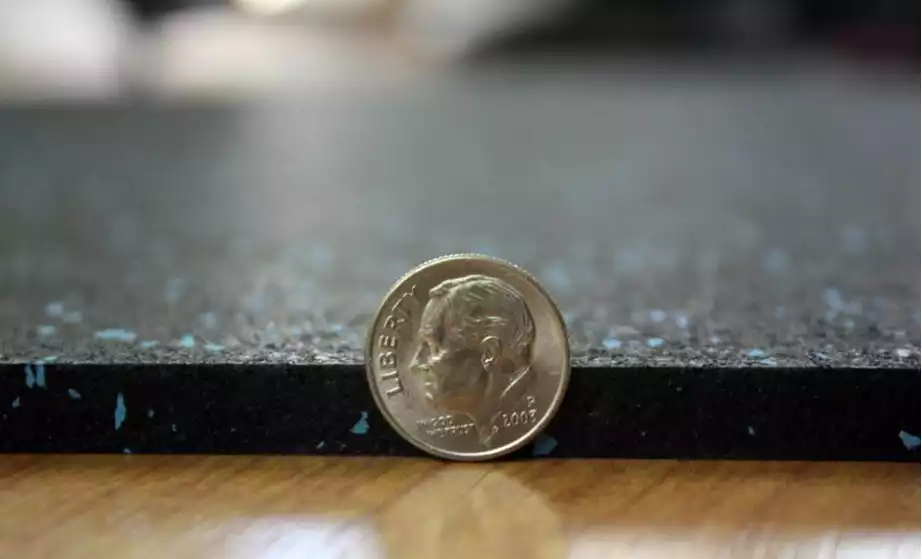
Rubber Flooring Inc. 8mm Strong Rubber Roll
- Material: Recycled rubber buffings
- Dimensions: 4′ W x 15′ to 100′ L
- Thickness: Eight millimeters (5/16 inch)
- Suitable for: General weight training, HIIT
Check Price
Pros
- Free custom-cutting to any length over 15 feet (rounded to the nearest foot) with 20 color fleck variations available
- Five-year warranty on standard color options and a 25-year warranty on the Biggie Smallz
 colors
- 30-day money-back guarantee
- USA-made
- Eco-friendly and made mostly from recycled rubber materials
Cons
- May have a rubber odor when it first arrives
- DIY installation may be challenging for some
- The rolls may curl or shift slightly over time
When it comes to outfitting your space with the best home gym flooring, the Rubber Flooring Inc. 8mm Strong Rubber Roll stands out as the ideal choice.
Unlike most flooring rolls that come in preset increments only (like 15, 50, or 100 feet), the 8mm Strong Rubber Roll can be ordered in one-foot increments starting at 15 feet. If your space is precisely 17 feet in length, for example, you can order that exact amount. Rubber Flooring Inc. will even custom-cut it for free and give you a couple of extra inches on each roll just in case.
This feature is underrated. With other companies, custom cuts aren’t available at all, so you’d be forced to buy a single 15-foot roll and leave two feet of your floor incomplete, or pay for two 15-foot rolls to cover the entire workout space just to be stuck with a bunch of leftover material.
The roll is available in 20 different color variations, from classic Black to Lipstick Red, so you can add some pizzazz to your rubber gym flooring.
The 8mm Strong Rubber Roll is made in the USA, which is appealing to those who want to support the American economy and value the higher standards that American manufacturing must meet. Rubber Flooring Inc. offers a five-year warranty on standard colors and an impressive 25-year warranty on its Biggie Smallz colors, which is one of the best warranties I’ve ever come across for rubber gym flooring. Plus, the company offers a 30-day money-back guarantee for customers in the United States and Canada.
It will most likely emit a rubber odor at first since it’s mostly made from recycled rubber. The smell can be unpleasant, but to reduce it, you can air out the rubber roll and/or clean it with a mild soap and water solution before installation.
The installation might be a hurdle if you have no DIY experience. I did find the video in the company’s “Install Info” helpful, but you’ll still need a good understanding of how to use basic tools (measuring tape, t-square, and utility knife) and fundamental construction principles. If you have no experience in this field, calling a professional would be a smart decision.
Lastly, the rubber roll may curl or shift slightly over time with drastic temperature changes or if heavy things get dragged across it — like a fully loaded bumper plate tree. To prevent this, you can use double-sided tape to secure the rubber roll sticks to the floor.
Best Rubber Flooring for Home Gyms: Second Skin Stomp Roll
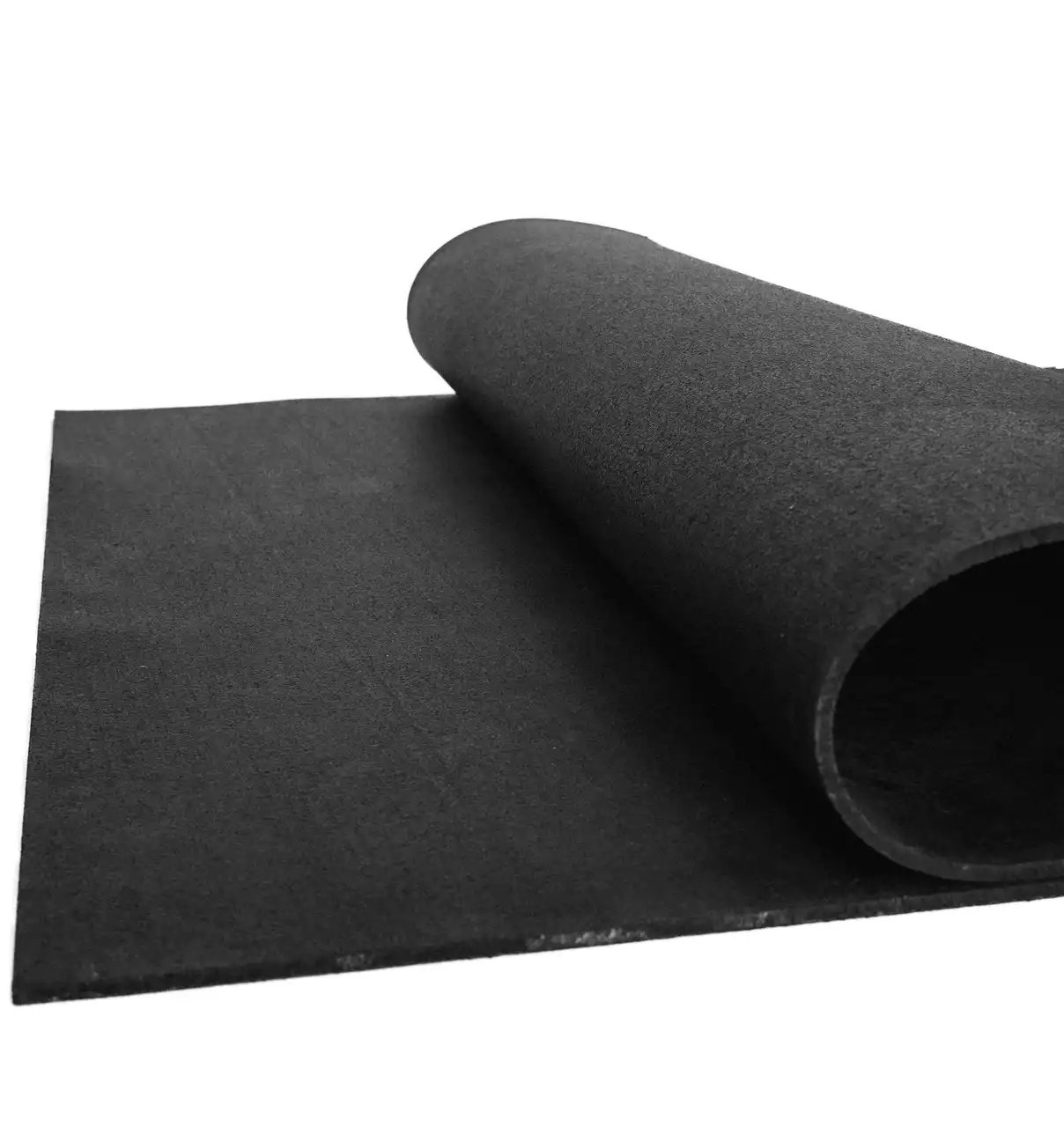
Second Skin Stomp Roll
- Material: Recycled rubber
- Dimensions: 4′ W x 15′, 25′, or 50′ L
- Thickness: ¼ inch, eight millimeters, ⅜ inch, ½ inch, or ¾ inch
- Suitable for: General fitness, HIIT, powerlifting, and Olympic weightlifting
Check Price
Pros
- Five thicknesses that are suitable for low- to high-impact activities
- Includes noise-reducing technology
- Has a mild odor
- USA-made
- Made from recycled rubber materials
Cons
- Only available in black
- Custom cuts cost extra
- DIY installation may be difficult
If you are looking for rubber flooring that can reduce noise and vibration from your home gym equipment, you may want to consider the Second Skin Stomp Roll.
Second Skin is originally known for auto and audio soundproofing, but many of its products are also used in gyms due to their excellent noise and vibration dampening. This distinctive feature makes the Stomp Roll a solid choice for home gyms where quieter workouts are essential due to shared living spaces or the sleep schedules of young children.
With five different thicknesses to choose from, you’re almost guaranteed to find one that’s suitable for your exercise style. The quarter-inch thickness is great to place under any of the best treadmills or for bodyweight training, while the ¾-inch thickness is ideal for general weight training and HIIT. If powerlifting, CrossFit, or Olympic weightlifting is more your style, the ¾-inch thickness can provide enough protection for your floor when placed on top of plywood like on a lifting platform.
Despite being made from old tires, the Stomp Roll’s product page claims an “extremely mild odor.” I can’t confirm the strength of its smell but if true, this is a significant advantage over the many rubber flooring options that tend to off-gas unpleasant odors for weeks after installation. For those with asthma or other respiratory conditions (even just a sensitivity to scents in general), having near-odorless flooring can make a difference.
If adding flair to your rubber gym flooring is important to you, you’ll be disappointed to see that the Stomp Roll is only offered in black.
Furthermore, unlike the Rubber Flooring Inc 8mm Strong Rubber Roll mentioned previously, custom cuts of the Stomp Roll cost extra. Custom lengths are “available on request” and one customer even left a review saying, “I had a very custom project… They cut my pieces exactly as I asked for at a very fair price!”
While it’s great to know that you can get custom lengths other than the default 15-, 25-, and 50-foot lengths, I would be more impressed to see them offered at no extra charge.
The Stomp Roll’s installation process is simple but requires some basic DIY skills and understanding. If you’re not comfortable with self-installation, help from a professional may be necessary but will add to the overall cost. Keep this in mind, especially if you prefer a hassle-free setup.
Best Home Gym Flooring Over Concrete: Rogue Power Platform
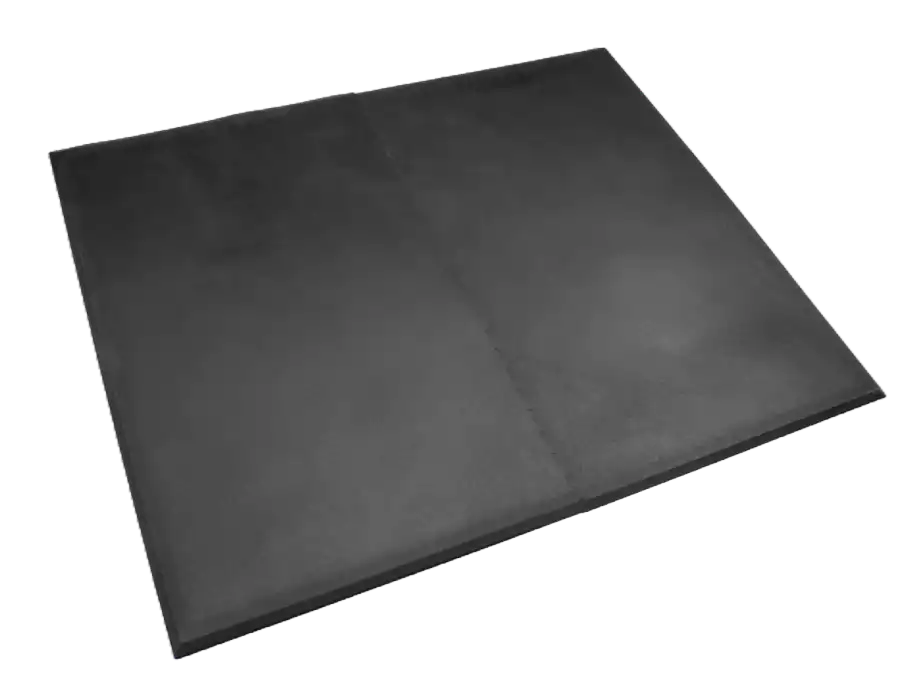
Rogue Power Platform
- Material: Recycled rubber
- Dimensions: 90” W x 72” L
- Thickness: ¾ inch (19 millimeters)
- Suitable for: General weight lifting, HIIT, CrossFit
Check Price
Pros
- The diamond-pattern top gives a good grip even when slick
- Can be used indoors or outdoors
- The ¾-inch thickness and waffle-pattern impact zones minimize noise and vibrations
- Easy installation due to the interlocking design
- Made in the USA
- Eco-friendly
Cons
- The fixed size might not suit all gym spaces and trimming it might damage the interlocking mat system
- Expensive compared to budget-friendly alternatives
- Potentially unstable with extremely heavy weights
The Rogue Power Platform is an excellent flooring choice for anyone with a concrete floor because of its durable rubber construction and waffle-pattern impact zones. The diamond-pattern top layer also gives it a better grip even in slick conditions, which is great for those who might prefer to have their home gym outside and work out in humid conditions.
RELATED: The Dangers of Outside Workouts
The ¾-inch thickness provides serious durability, making it ideal for general weight lifting, HIIT, and CrossFit. The waffle-pattern impact zones dampen noise and vibrations, which helps keep your concrete floor protected and your neighbors happy.
While it might seem extra-wide, the 90-inch width ensures that every weight plate on your favorite Olympic barbell will be supported with three inches on each side to account for occasional sideways movement. The default 72-inch length is surprisingly roomy and can accommodate two barbell setups for you and your workout partner when doing controlled exercises like deadlifts or rows.
The mats feature a modular, loose-lay interlocking system and sections with beveled edges. Installation is fairly straightforward with no adhesive required. For those not super DIY knowledgeable, this is a big relief.
However, its 72″ x 90″ footprint may not suit all spaces, and trimming it might damage the interlocking mat system.
If you’re into Olympic lifting, the Power Platform isn’t the best choice. At 72” long, this is the minimal length you should accept for weightlifting. While it technically could work, your feet could land beyond the perimeter of the platform during a split jerk if you have long legs. In the event of a bailed lift, it’s only a matter of time before a failed snatch or clean and jerk lands off the platform and damages your floor. A better option for Oly lifting is the Rogue 8′ x 8′ Oly Platform.
The Power Platform is also more costly at $399 compared to budget-friendly alternatives like 4′ x 6′ horse stall mats from Tractor Supply, where a single mat can be found for around $60. Two horse stall mats would total roughly $120 and, when joined together, would offer a bigger platform for less than half the cost.
Finally, the platform might be less stable with ultra-heavy weights due to the rubber material. After all, there’s a reason why lifting platforms usually have a centerpiece made out of wood — it’s more firm than a rubber surface. While this would probably be unnoticeable with light to moderate weights, it’s worth pointing out for those who want to lift heavy.
Best Home Gym Flooring Over Carpet: Second Skin Stomp Mat
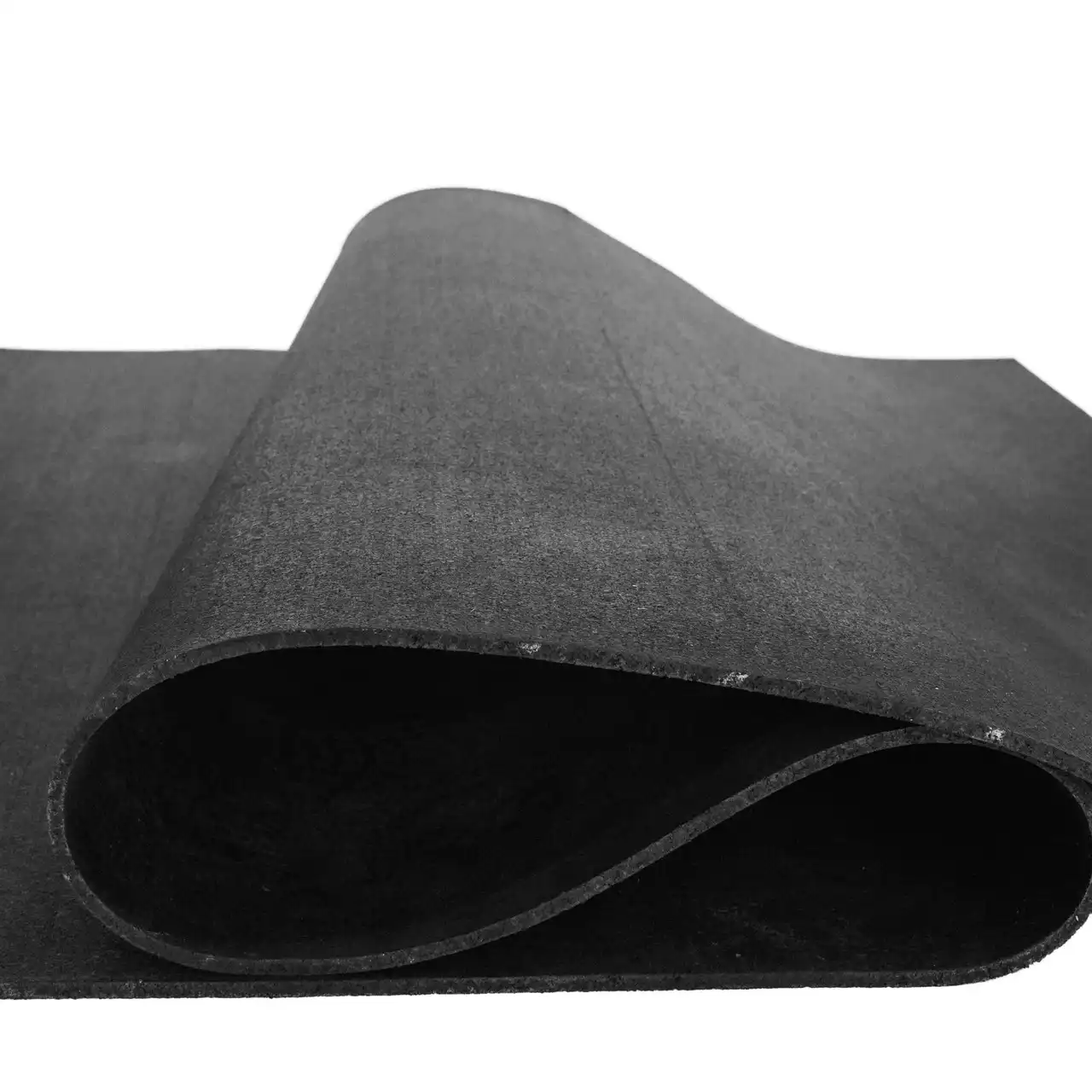
Second Skin Stomp Mat
- Material: Recycled rubber
- Dimensions: 4′ W x 6′ L
- Thickness: ¼ or ½ inch
- Suitable for: Bodyweight training, general weight lifting, HIIT
Check Price
Pros
- Shock-absorbing properties to protect your floor from damage, whether it’s from a treadmill or barbell
- Includes noise-reducing technology
- Installation is a breeze
- No adhesive needed
- USA-made
- Eco-friendly
Cons
- No ¾-inch thickness
- Costly
- Even when weighed down by heavy equipment, these mats can shift slightly over time
The Stomp Mat offers several advantages that make it the most appealing choice and the best home gym flooring option to place over carpet. With its shock absorption capabilities, it safeguards your carpet fibers from getting torn up while also protecting your existing subfloor from damage.
The ¼-inch mat weighs 30 pounds (13.6 kilograms) and provides excellent noise reduction, making it a great option for supporting standalone exercise equipment like a high-quality rowing machine or treadmill. The weight of the machine on top of the mat tends to keep it in place. The ½-inch thick mat, on the other hand, weighs 60 pounds (27.3 kilograms) and offers even more sound isolation and flooring protection.
The Stomp Mat lacks a ¾-inch thickness option. This limits its suitability for powerlifting-style training because it may not be able to handle significantly heavier weights. It’s also not a great choice for Olympic lifting or CrossFit because the thinner options won’t be able to withstand repeated weight drops from overhead.
Additionally, it’s relatively costly compared to budget options. The ¼-inch mat is priced at around $99.99, and the ½-inch mat costs around $179.99. A ¾-inch horse stall mat from Tractor Supply Co. costs about $60, offering more thickness at a lower price.
Because it’s a mat instead of a roll, installation is a breeze. Simply lay it over your carpet, and place your equipment on top or get lifting.
You technically don’t need adhesive, but double-sided flooring (carpet) tape or rubber adhesive applied around the edges of the mat is a wise choice. Even when weighed down by heavy-duty cardio machines, these mats can shift slightly over time. If using multiple mats, you can also place mending plates under the mats where their seams join to keep them from separating over time.
Best Home Gym Flooring Over Hardwood: REP Fitness 3′ x 4′ Floor Mats
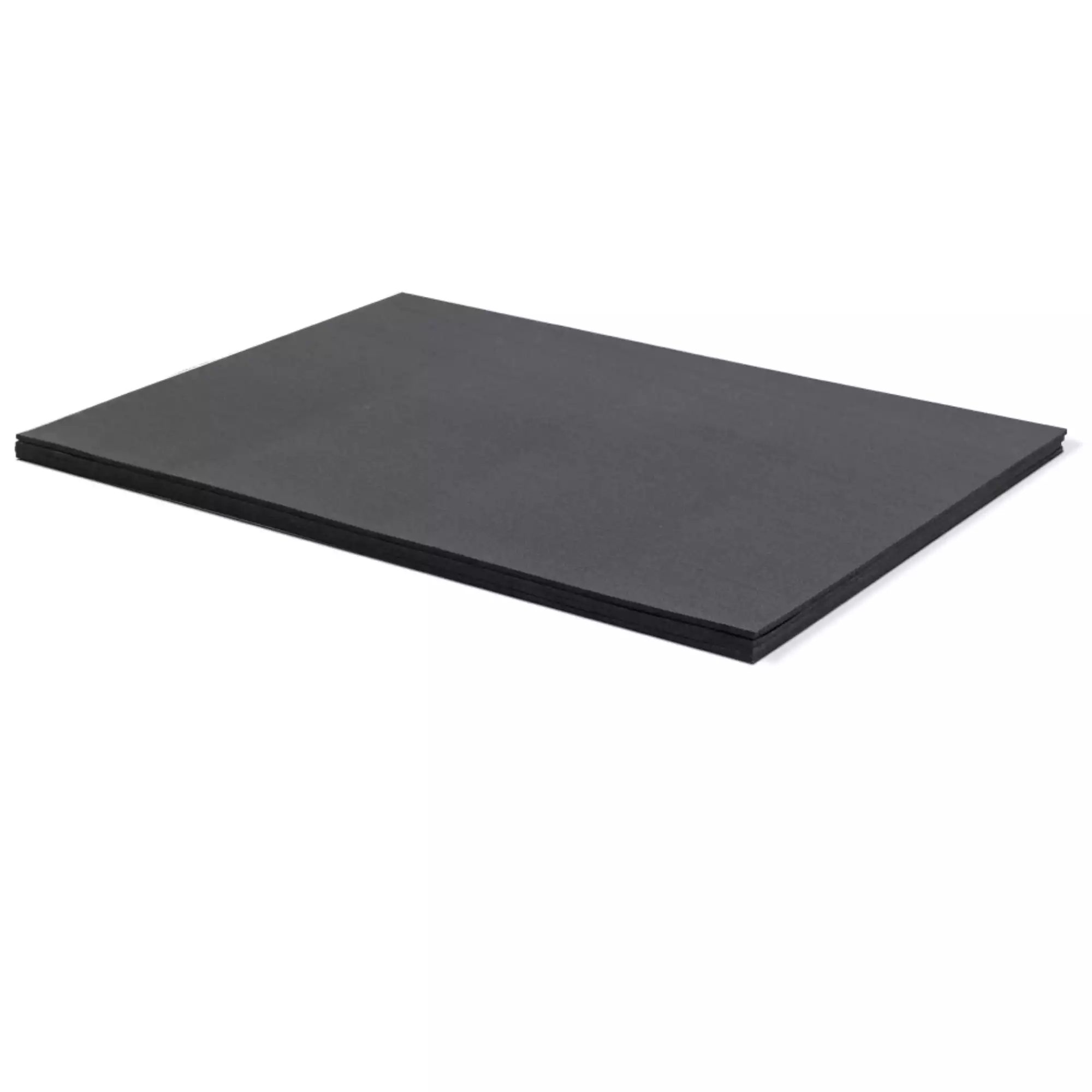
REP Fitness Floor Mats
- Material: Rubber
- Dimensions: 3′ W x 4′ L
- Thickness: ⅜ inch
- Suitable for: General weight training, HIIT
Check Price
Pros
- Smooth top makes floor exercises like sit-ups and push-ups more comfortable
- Textured bottom helps prevent the mats from slipping
- ⅜” thickness can help protect your hardwood floors from general weight training
- No odor
- USA-made
Cons
- The mats have a ½-inch tolerance, so small gaps between mats can happen
- Roughly the same cost as horse stall mats, but only half the size
- Not thick enough to protect your floors from heavy lifts or dropped bars.
The biggest feature that stands out to me with the REP Fitness 3′ x 4′ Floor Mats is the non-grooved, textured bottom. Horse stall mats have slots or grooves on the underside for improving drainage. This is great for livestock and industrial applications but serves very little purpose in a home gym. Instead, a fully flat underside lets the entire mat have complete contact with your floor. In addition to the textured underside on REP’s floor mat, this combo ensures that the mat doesn’t slip, and we think this makes it the best choice to put over your hardwood floor.
REP Fitness went a step..


Can Late-Night Snacking Lead to Weight Gain?
If you’re cooking a late dinner or often feel snackish before bedtime, you may wonder, “Does eating at night make you gain weight?”
Short answer: When you eat is not as important as what you eat or how much you consume. Your body doesn’t store more fat at night, and your metabolism does not slow down in the evening hours.
“In general, there’s no set cutoff for eating food,” says Krista Maguire, R.D., C.S.S.D., senior nutrition manager for BODi. But you do still need to choose healthy snacks and be mindful of portions.
Before you reach for that midnight snack, here’s what you need to know about late-night eating and weight gain.
Busting the “Eating Late Causes Weight Gain” Myth

There’s a long-held belief that eating after a certain hour contributes to weight gain, but that may not be entirely accurate.
A 2011 study compared two groups of participants. One group followed a conventional weight-loss diet, while the other group consumed most of their carbohydrates at dinner.
The surprising results: Over the course of the six-month study, the group that ate the carb-heavy dinner reported greater weight loss and body fat mass reductions.
And more research suggests the “eat late, gain weight” adage applies to large quantities of food, but not to small meals consisting of nutrient-dense foods.
“If you’ve already consumed a large amount of food during the day, late-night eating may just be excess calories that could lead to weight gain,” Maguire says. “This is especially true if you’re consuming foods with no nutritional value — think potato chips, soda, or candy.”
But if you’re eating mindfully, Maguire adds, there can definitely be some benefits to eating at night.
A higher-protein snack with high-fiber carbs before bedtime may help reduce exercise-induced muscle soreness, prevent hunger pangs in the night, and possibly help with healthy blood sugar control.
Bottom line: “If you’re eating at night, don’t go about it mindlessly,” Maguire says. “Eat with purpose.”
Does Meal Timing Matter?

There are some potential benefits to planning your meals around when your body needs certain nutrients, a.k.a. timed nutrition. For example:
- Eating a healthy breakfast may keep you from feeling ravenous and overeating when lunchtime rolls around.
- A small pre-workout snack with 15 to 20 grams of carbohydrates — like half a banana — can give you the energy you need to power through a workout.
- Regularly timed meals throughout the day can help you maintain a healthy metabolism and energy levels.
To understand why eating late at night won’t automatically lead to weight gain, it’s important to understand how your body processes calories.
When you eat, your body works hard to convert food into the energy you need for everything from walking, thinking, breathing, building muscle, losing fat, and even sleeping. This process is known as the “thermic effect of food” (TEF).
Protein is the most metabolically expensive macronutrient — you burn up to 30 percent of the calories you eat from protein during the digestion process.
That’s one of the main reasons why protein (or taking a protein shake supplement) can be helpful for weight loss. The more protein you eat, the more calories you burn.
But there’s no clear link between meal timing and TEF.
So while you may have heard that eating first thing in the morning would lead to your metabolism working harder and burning more calories, the reality is that your body doesn’t care when or how often you eat — as long as you’re not adding excess calories.
So instead of wondering how many meals you should eat in a day and when to eat them, focus on what you’re eating and whether you’re being mindful of your portions.
Should You Eat at Night?

It depends on why you’re eating.
Many people eat at night out of boredom or because of stress or anxiety. Mindless eating and emotional eating can both turn a nighttime snack into a calorie bender.
Want a simple way to gauge whether or not you need that late-night grub?
“The true test of hunger is to ask, ‘If you could eat some veggies right now, would you?’” Maguire says. “If the answer is yes, you’re probably hungry.”
Otherwise, you may just be craving a snack or eating out of habit or boredom.
It’s also important to make sure late-night eating doesn’t interfere with your sleep habits.
Research suggests consuming carbohydrates at night may make it easier to fall asleep, but eating a big meal too close to bedtime may disrupt your sleep cycle and can lead to heartburn for some people.
That can ultimately get in the way of your weight loss goals.
Research suggests lack of sleep can torpedo weight loss by slowing your metabolism, increasing your appetite, and decreasing the number of calories you burn.
In a study at Wake Forest University, researchers found that people under 40 years of age who slept five hours or less each night gained nearly 2.5 times more abdominal fat than those who logged six to seven hours.
So if you’re a night eater, that’s fine — just make sure you’re choosing healthy foods, staying within your calorie goals for the day, and getting enough sleep each night.
The post Does Eating Late at Night Make You Gain Weight? appeared first on BODi.


SELF CARE MOTIVATION || girl get up + shower routine + diy lash extensions + cooking + bible study||



5 Essential Dental Care Tips for Preschoolers to Keep Their Smiles Bright and Healthy
Preschoolers are children between the ages of three and five years old who are in the early stages of learning and development. During this stage, they are developing their primary teeth, also known as baby teeth, which will eventually fall out and be replaced by permanent teeth.
However, this does not mean that dental health should be neglected. In fact, tooth decay is the most common dental disease among preschoolers, with one out of ten two-year-olds already having one or more cavities.
As a result, it is important for parents and caregivers to be aware of dental health tips for preschoolers to prevent dental diseases and ensure their children’s overall health and well-being.
Promoting dental health in preschoolers is crucial for establishing good oral hygiene habits early on. This saves your kid from developing teeth or gum problems later in life. In this article, you will find out some dental health tips for preschoolers that you should observe for your little one.
5 Top Dental Health Tips For Preschoolers
Here are the basic dental health tips for preschoolers that you should observe on your little ones to ensure they grow with healthy teeth and gums.
1. Brush twice a day using a low fluoride toothpaste
Once your child’s first tooth erupts, brush their teeth using a soft-bristled toothbrush and a small smear of fluoride toothpaste. Brush your teeth twice a day, in the morning and before bed. You are to help them until they reach five or seven years.
Also, the method of brushing is essential for preschoolers. Brush their teeth in small circular motions, covering all surfaces. Make it a fun activity by using a timer or playing their favorite song for the duration of brushing (around two minutes), or else they will always struggle with you, especially in the early times.
However, it is advised to begin cleaning your child’s mouth even before their first tooth appears. Gently wipe their gums with a clean, damp cloth after feeding to remove bacteria.
2. Limit sugary snacks and drinks
Another essential dental health tip for preschoolers is to limit their consumption of sugary snacks and drinks. Reduce the consumption of sugary snacks and drinks, especially between meals. Excessive sugar can contribute to tooth decay. Encourage healthy alternatives like fruits, vegetables, and water.
3. Encourage drinking water
Another essential dental health tip for preschoolers is that they should be encouraged to drink tap water throughout the day. Tap water supply usually has fluoride, which will help keep their tooth from decay.
If the tap water at home is not fluoridated, talk to your dentist about fluoride supplements or treatments to help protect your child’s teeth against cavities and other dental problems that affect preschoolers.
Additionally, water helps wash away food particles and neutralize acids in the mouth. Also, for kids aged two and above, you can introduce them to plain milk as it is very healthy.
4. Eat a lot more healthy snacks and meals
Healthy snacks and meals have a role in enhancing and preserving the dental health of preschoolers. Expose the preschoolers to healthy foods such as vegetables, fruits, lean meat, grains, fish, cereals, dairy, and eggs.
Also, fruits and vegetables are good, and dairies like milk, yogurt, and cheese are good sources of calcium and are beneficial to the teeth.
Also, preschoolers watch and copy what you do as a parent. So it’s important to role model healthy eating for your children. They learn about food by watching their parents and other family members.
5. Visit the dentist regularly
Schedule regular dental check-ups for your child. The dentist can monitor their oral health, provide professional cleanings, and address concerns or issues. Every child is different, and some may require additional dental care. Consult a pediatric dentist for personalized advice tailored to your child’s needs.
Conclusion
If you want your preschooler to grow up with good oral health and healthy teeth and gums, you must observe all the health tips for preschoolers listed above. If their dental health is not managed adequately as babies and kids, they might develop complications later as young teens and adults.
The post 5 Top Dental Health Tips For Preschoolers first appeared on You Must Get Healthy.
The post 5 Top Dental Health Tips For Preschoolers appeared first on You Must Get Healthy.



Get Fit in a Flash: 8 Quick and Effective Core Exercises for Seniors
Ab workouts aren’t limited to athletes and the under-30 crowd! As a matter of fact, seniors rank as one of the top groups who should be doing core strengthening exercises regularly.
The reason? Targeting your midsection with sculpting and strengthening exercises is crucial to staying healthy and active. Your core is more than just the visible ab muscles you see on display in popular fitness magazines. It’s made up of all the muscles in your trunk, which assist in nearly every movement you make.
Here are the benefits of working your core as often as you can:
- Improves posture
- Reduces back pain
- Improves balance
- Helps with everyday activities
- Improves coordination
The following 8 moves are some of the top core exercises for older adults. Aim to do these exercises daily to keep your core muscles strong and healthy.
Perform each move for 5-10 reps (per side), and you’ll get a great core workout in less than 10 minutes.
1. Seated Forward Roll-Ups  Photo Credit: Get Healthy U
Here’s how to perform a seated forward roll-up:
- Sit in a chair with your legs extended, heels on the floor, and feet flexed towards your face. Extend your arms in front of you. Keep an upright posture; don’t slouch or lean back in the chair.
- Begin curling your chin to your chest. Exhale as you roll the entire torso up and over, keeping your legs straight, abs engaged. Reach down towards the toes.
- Once you can’t reach any further, inhale as you begin to roll back up to the starting position, one vertebra at a time.
- Repeat moving slowly. Avoid using momentum; try to use your abdominals to lift and lower.
2. Seated Side Bends  Photo Credit: Get Healthy U
Here’s how to perform seated side bends:
- Sit with knees bent and feet flat on the ground. Bend your right arm to bring your right hand to the right side of your head. Allow your left arm to hang at your side. Keep an upright posture; don’t slouch or lean back in the chair.
- Inhale. As you exhale, bend gently at the waist to lower your left arm toward the floor. Keep your chest open and pull your right elbow back to feel a stretch in your right side.
- Inhale to return to starting position. Repeat.
3. Seated Leg Lifts  Photo Credit: Get Healthy U
Here’s how to perform a seated leg lift:
- Sit in a chair. Your left knee should be bent with your left foot flat on the ground, and your right leg extended. Keep an upright posture; don’t slouch or lean back in the chair.
- Engage your core to raise your right leg. Lift your leg as high as you can without letting your back collapse. Hold briefly before returning your foot to the floor.
4. Seated Leg Taps  Photo Credit: Get Healthy U
Here’s how to perform seated leg taps:
- Sit in a chair with knees bent and feet flat on the ground. Keep an upright posture; don’t slouch or lean back in the chair.
- Hold onto the bottom of your seat for support. Engage your abdominals and extend both legs out in front of you, tapping the floor with both feet.
- Reset by pulling your legs under your chair, allowing your feet to rest on the floor. When you’re ready, repeat.
5. Seated Half Roll-Backs  Photo Credit: Get Healthy U
Here’s how to perform a seated half roll-back:
- Sit in a chair with knees bent and feet flat on the ground. Lift your arms in front of your chest to create a circle. Keep an upright posture; don’t slouch or lean back in the chair.
- Keeping your feet on the floor and your arms joined in a circle in front of your chest, begin to round your back. As you round your back, think about scooping your abdominals.
- Once you can’t go any further, engage your abs as you slowly roll back up to the starting position.
6. Forearm Plank  Photo Credit: Get Healthy U
Here’s how to perform a forearm plank:
- Lie face-down on the floor with your forearms on the ground. Your elbows should be directly under your shoulders and hands flat on the ground, elbow-width apart.
- Engage your core to prepare. Then, press down through your forearms to raise your body off the floor until you’re supported by your forearms and toes.
- Keep your body in a straight line from your head down to your feet. Pull your navel into your spine and squeeze your glutes to keep your hips from dropping toward the floor.
- Hold for 30 seconds or 1 minute if you’re more advanced. (Or as long as you can!)
Modification: Drop down to your knees if you can’t keep your hips in line with your shoulders, or you feel pressure in your lower back.
7. Superman  Photo Credit: Get Healthy U
Here’s how to perform a superman:
- Lie on your stomach with your legs long. Extend your arms overhead. Draw your abdominals up and away from the ground, and pull your shoulders down away from your ears.
- Engage your abs, back muscles, and glutes to lift your arms and legs simultaneously off the ground. Keep your gaze on the floor.
- Release back to the starting position with control.
8. Glute Bridge  Photo Credit: Get Healthy U
Here’s how to perform a glute bridge:
- Lie on your back with knees bent and feet flat on the floor, hip-width apart.
- Engage your abs and squeeze your glutes to lift your hips to a bridge.
- Hold briefly and return your glutes to the floor with control.
9 Tips For Joint Health | Keep Your Joints Healthy As You Age  Photo Credit: Shutterstock
Keeping your joints healthy is key to staying mobile and experiencing less pain as you age. Although you may not be able to prevent all joint injuries or arthritis, there are many things you can start doing today to improve your joint health!
9 Tips For Joint Health | Keep Your Joints Healthy As You Age
Power Walking For Beginners  Photo Credit: Shutterstock
With countless studies proving the health benefits of power walking, learning how to do it will keep you moving well into the future.
Power walking is one of the most maintainable workouts a person can add to their life, so if you haven’t tried it yet, how about starting now?
Power Walking For Beginners
14 Health Benefits of Cucumbers (And a Few Refreshing Recipes)  Photo Credit: Depositphotos
From healthy skin to improved memory, check out the top 14 health benefits of cucumbers!
And if you’re lucky enough to have a load from your garden or farmers market on hand, you’ll definitely want to check out some of our favorite cucumber recipes, too.
14 Health Benefits of Cucumbers (And a Few Refreshing Recipes)
