

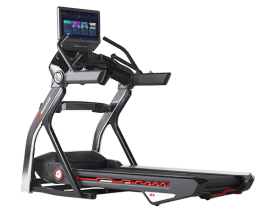
2024 Bowflex Treadmill 22 Review: Achieve Your Fitness Goals with This Powerful Machine
Much like Columbus, who discovered America while searching for India and said, “Close enough,” your hunt for the best treadmill may leave you feeling lost, confused, and ready to settle. But despair not, those with a few extra bucks to spend may find their destination in the Bowflex Treadmill 22, a high-end splurge that can support those with serious goals looking to tackle sprints and hills.
This treadmill’s HD touchscreen allows you to follow along with trainers, explore the world via scenic routes, track your workout stats, and even access streaming services to view movies and TV shows. With a top speed of 12 miles per hour, 20 percent incline, and -5 percent decline capabilities, you can also up the ante with hill sprints. The $2,499 price tag is a hefty one, but the Treadmill 22 is a hefty machine that can support the cardio goals of fitness fanatics — and entertain them along the way — across daily workouts.
Bowflex Treadmill 22

Bowflex Treadmill 22
The Bowflex Treadmill 22 features 12 miles per hour max speed, a serious -5 to 20 percent incline, and a generous 60-inch running deck. The 22-inch HD touchscreen provides access to the JRNY app where you can take workout classes or stream content from streaming providers like Hulu, Amazon, or Netflix.
Shop Bowflex
About Our Expert:
This article has been reviewed by Amanda Capritto, CPT, CF-L1, CES, CSNC a certified personal trainer, certified nutrition coach, and CrossFit Level-1 Trainer. She reviewed the research we cite to help ensure we’re providing helpful, accurate descriptions and recommendations.
Main Takeaways
- You’ll have access to train hard with 12 miles per hour max speed and -5 to 20 percent incline capabilities.
- The 22-inch touchscreen is integrated with the JRNY app — an additional $19.99 a month — giving users access to workout programming.
- JRNY also lets users stream entertainment from apps like Netflix, Hulu, or Prime Video.
- The steel frame supports users up to 400 pounds, but weighs a whopping 336 pounds, making it difficult to move around.
Bowflex Treadmill 22 Highlights
- Price: $2,799
- Max Speed: 12mph
- Max Incline: -5%-20%
- Dimensions: 70″ H x 85″ L x 39.6″ W
- Weight: 336lbs
- Weight Capacity: 400lbs
- Warranty: 15-year frame, 5-years mechanical parts, one-year electronics, touchscreen, and labor
If you’re looking to invest in a home treadmill to take your training to the next level, the Bowflex Treadmill 22 is a worthwhile consideration. This machine is a tank, with a 400-pound user weight capacity that makes it suitable for cardio fiends of many shapes and sizes. The 12 miles per hour max speed and a -5 to 20 percent incline can supplement your cardio with heart-pounding hill sprints.
Certified personal trainer and our expert reviewer Amanda Capritto assessed qualities to look for in the best treadmills for tall runners. “For running and especially sprinting, you’ll want a deck… 60 inches long. As for width, 20 to 22 inches is ideal in order to accommodate arm motion while running and potential side-to-side movement that can occur when sprinting.” The Bowflex Treadmill 22’s spacious 22-inch by 60-inch tread deck provides enough length for tall runners and enough width to comfortably power through your sprints.
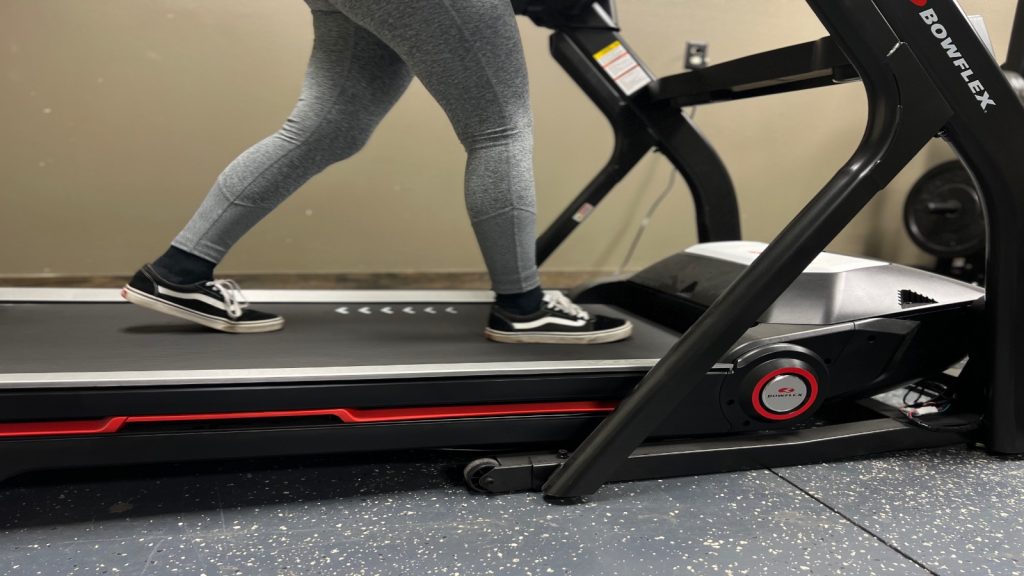 Our BarBend Tester walks on a Bowflex Treadmill.
While many high-end treadmills provide touchscreens with access to apps like iFIT or Peloton, the Treadmill 22 is integrated with JRNY, a fitness app that pairs workout programming with access to apps like Netflix, Hulu, Max, Disney+, and Amazon Prime Video. The only catch is that you’ll have to keep up with your JRNY subscription in order to stream on the treadmill’s 22-inch display.
Our biggest qualm with this treadmill is its 336-pound weight and 85-inch by 40-inch footprint. That’s a heavy machine that’s nearly 10 inches longer and 5 inches wider than many of the high-end treadmills we’ve tested. While there are folding capabilities, we prefer to get our workout on the treadmill rather than from trying to maneuver this goliath of a machine around.
Pros
- JRNY integration allows users to access workout programming and entertainment apps like Netflix via the 22-inch touchscreen.
- The max speed of 12 miles per hour and -5 to 20 percent incline offer a substantial amount of training versatility.
- The treadmill’s steel frame can support users up to 400 pounds — roughly 50 to 100 pounds more than most treadmills.
Cons
- Bowflex won’t tell consumers what motor sizes they use for their treadmills.
- At 336 pounds, this treadmill is nearly 40 pounds heavier than other high-end treadmills with screens we’ve tested.
- Despite its folding mechanism, the 85-inch by 40-inch footprint may make this treadmill unsuitable for apartments or small homes.
Training With the Bowflex Treadmill 22
While we haven’t gotten our hands on the Bowflex Treadmill 22 yet, we have tried and tested over 40 of the most popular treadmills and took note of how this machine stacked up against the competition. We’ve also rigorously tested the Bowflex Treadmill 10, which provides similar training capabilities, mechanical parts, folding mechanics, and belt deck design. The primary difference is the 22-inch screen on the Treadmill 22 compared to the 10-inch screen on the Treadmill 10.
JRNY Interactive Programming
At $11.99 a month or $99 for a full-year subscription, JRNY is one of the most affordable training apps for treadmill running. With a subscription, users get access to scenic routes, in-studio classes with personal trainers, and adaptive workouts that adjust your workout based on your ability. Whether you’re looking for how to run a faster mile or just want something to help you start a new routine, the JRNY provides. However, “JRNY doesn’t have as many offerings as iFIT does,” noted our tester who gave this dynamic programming a 3 out of 5.
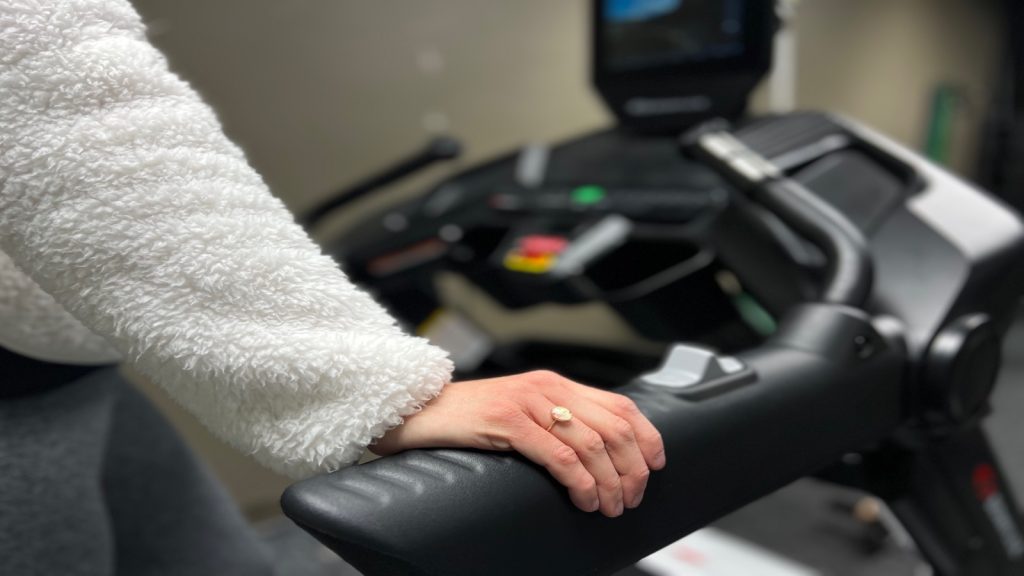 Our Tester’s hand resting on the handle of a Bowflex Treadmill
You’ll also be granted access to some of your own subscription services, like Hulu, Prime Video, or Netflix so you can stream your favorite shows or movies from the 22-inch screen.
If you like to cry while you run, may I suggest the first season of Michael Chriton’s “ER” (the same Chriton who brought us, “Jurassic Park”)? Perhaps the serotonin you get from exercise will help to balance out how grim and upsetting (in a good way!) that season is.
Speed and Incline Control
The 20-percent incline, -5 percent decline, and max speed of 12 miles per hour allow users of any fitness level the ability to climb, walk, sprint, or jog at the intensity that’s right for them. The incline range, in particular, is impressive, as it’s the largest range we’ve seen on any folding treadmill.
This range of training capabilities is great for those looking to mimic outdoor terrain or incorporate hill sprints. Walking at an incline activates different muscles than on flat ground and can also reduce knee pain. (1) Our expert reviewer and certified personal trainer Amanda Capritto notes, “If you plan to use your treadmill to train for outdoor events such as a marathon or a hike, incline is essential.”
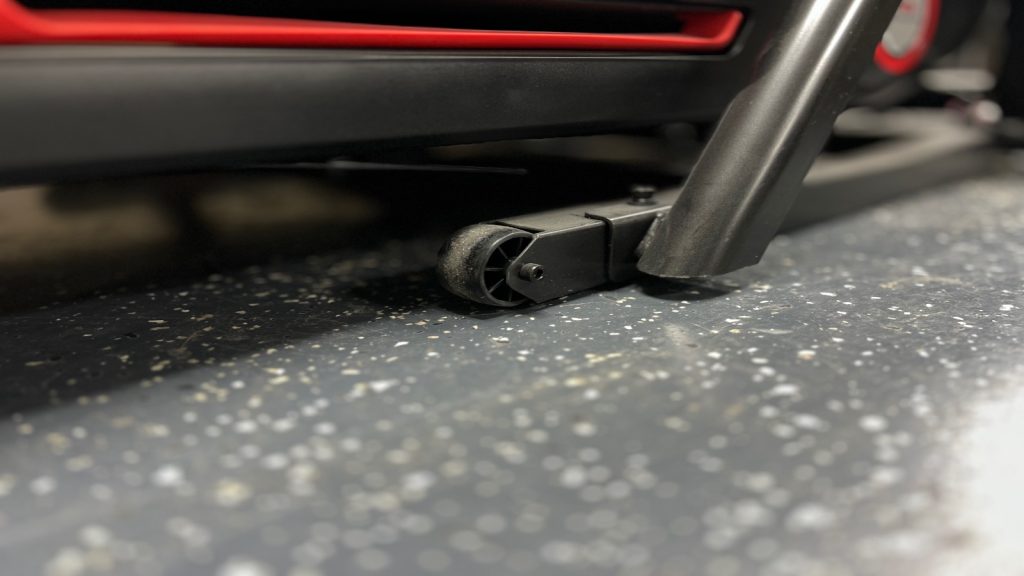 A close up view of the wheel on the base of a Bowflex Treadmill
A max speed of 12 miles per hour allows users to pick up their workout to a 5-minute mile pace, providing ample resistance for HIIT workouts or sprint trials. Speed and incline adjustments can be made in three different locations: there are quick-adjust buttons on the bottom of the console, and speed and incline buttons located on the arms and beside the heart rate monitor hand grips. The customizations on the Treadmill 10 scored a 4 out of 5 for a smaller incline range.
Rumor has it that the Treadmill 22 has a 4.0 HP motor. If the rumors are true, this is less robust than the 3.0 CHP motors we like to see for more serious runners. I even called customer service to verify the motor size and was told Bowflex doesn’t share this information. Certified personal trainer and our expert reviewer Amanda Capritto noted, “Ideally, a running treadmill will have a powerful motor with at least 3.0 CHP.”
Belt Deck
The 22 by 60-inch deck is spacious enough to accommodate taller runners or those with long strides. “This treadmill deck is really comfortable to use. Because of how wide and long it is, I had a ton of space to move freely and never felt like I was close to falling off,” said our tester when trying out the identical Treadmill 10 running surface. Both models also utilize Bowflex’s ComfortTech deck cushioning, which works to absorb shocks to help reduce joint pain. We scored the Treadmill 10’s adjustability and ergonomics a 4.5 out of 5.
Conveniences
This treadmill has tons of storage space, with water bottle holders and a media shelf. Bluetooth connectivity makes tracking your workout with apps like Zwift or Strava simple. And we also like that it has a built-in fan with multiple power levels.
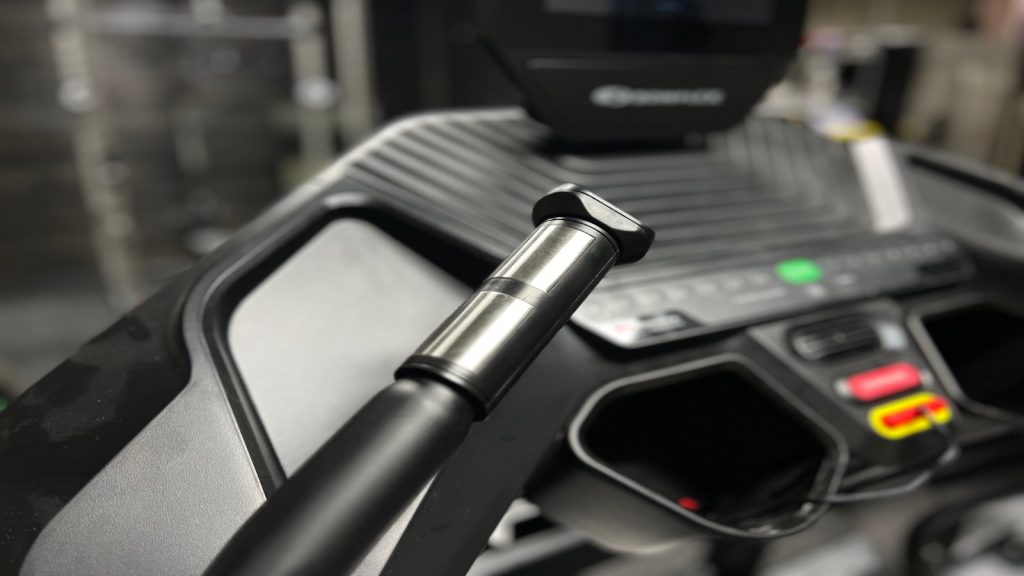 Close up view of the heart beat handle on a Bowflex Treadmill
Plus, you can keep track of how hard you’re training with the heart rate sensors on the handrails, which can help you maintain a fat-burning heart rate zone. Of course, you could also utilize the included Bluetooth armband heart rate monitor.
What to Consider Before Buying the Bowflex Treadmill 22
There are many factors to consider before pulling the trigger and bringing a treadmill into your home. When scanning models, you’ll want to have a budget range in mind, the amount of floor space you can dedicate to a machine, and the type of training you’d like to use your treadmill for.
Price
The Bowflex Treadmill 22 costs $2,799, which lands between the $2,000 to $3,000 average range for a high-end treadmill. It certainly earns its price point with its max speed of 12 miles per hour, 20-percent incline, -5-percent decline, 22-inch HD touchscreen with JRNY integration, and 400-pound weight capacity, but before emptying your wallet it’s worth asking if this level of versatility and stability aligns with your needs.
If you’re not one to engage with dynamic programming, you could save a few bucks by opting for a more utilitarian machine that eschews a screen entirely. The same goes for this treadmill’s impressive incline and decline range — if you’re more interested in endurance than hill training, you can certainly find a more budget-friendly model with a more modest range. But if you’re in the market for a top-of-the-line model that can support your training goals (and entertain you at the same time), then we think this model is absolutely worth the price.
[Related: The 8 Best High-End Treadmills]
Footprint and Portability
Only you can know how much floor space you have available for a treadmill, but we can provide you with detailed dimensions so that you can take some measurements to help envision how a treadmill will fit in your home.
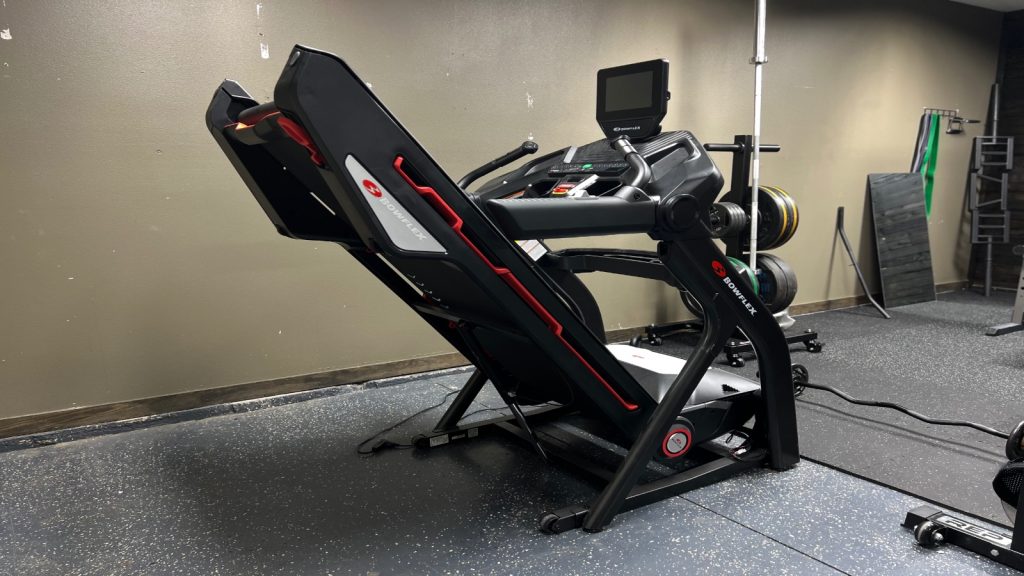 A view of a folded up Bowflex Treadmill..
The Bowflex Treadmill 22 takes up 85 by 40 inches of floor space. When folded, you’ll save 40.5 inches, as the 85-inch length folds up to 44.5 inches. Folded or unfolded, the 70-inch height remains the same. Folding and unfolding this treadmill is easy with the SoftDrop folding system, which uses hydraulics to assist in lifting and lowering the belt deck.
[Related: The 8 Best Folding Treadmills of 2024 (Expert Tested)]
Training Modality
With impressive speed and incline capabilities, this machine was built for hikers training for their grand adventure, athletes looking to train for endurance races, or those looking for some hill work or sprint intervals to increase their speed.
If you’re a cardio fiend, then the Treadmill 22 delivers. If you’re more in the market for a jogging treadmill, then this machine may be overkill. Before scooping it up, ask yourself: Will you be cranking up that incline to 20 percent? Will you be sprinting at 12 miles per hour? Consider your own fitness goals, then assess whether the Treadmill 22 aligns with them or if a less expensive machine can still check your boxes.
Bowflex Treadmill 22 Vs The Competition
The chart below highlights some comparisons between the Bowflex Treadmill 22 and its competition.
When comparing the Bowflex Treadmill 22’s specs to similar products, the price paid for a screen size of 22 inches is nearly $200 cheaper than the NordicTrack 2450 or the Peloton Tread. Additionally, the warranty for both the Bowflex 22 and the 10 are more substantial than Peloton or NordicTrack’s.
You’ll also have access to more affordable programming with the JRNY app ($11.99 a month), which costs nearly $30 less than Peloton’s All-Access ($44 a month) or NordicTrack’s iFIT membership ($39 a month). Of course, there’s a reason Peloton and NordicTrack are so well-renowned in the dynamic programming space — their virtual classes are among the best we’ve taken — so if you’re looking for immersion in your fitness classes, those apps are worth the cost.
The dimensions are where the Bowflex Treadmill 22 doesn’t impress. At 85 inches long, it’s nearly 17 inches longer than the Peloton and 6.5 inches longer than the NordicTrack. As for width, it’s also about 4 to 7 inches wider than the competition. While you may save some cash if you opt for the Bowflex Treadmill 22 over the Peloton Tread or NordicTrack 2450, you’ll be losing out on more space-saving designs.
Places to Buy the Bowflex Treadmill 22
The Bowflex Treadmill 22 can be purchased directly through the Bowflex website.
Warranty
Your purchase comes with a 15-year frame and motor warranty, 5 years for mechanical parts, one year for electronics and HD touchscreens, and 2 years for labor. Shipping is free, although they will not ship to P.O. boxes or international destinations.
Company Information
Bowflex started over 30 years ago with at-home gym equipment. Over the years, they’ve expanded to become one of the most popular fitness manufacturers, with treadmills, ellipticals, spin bikes, home gyms, and a variety of innovative free weights.
If you need to speak to someone in customer support, you can reach them at 1-800-618-8853. In my experience, I was able to speak with a living, breathing, real-life-not-a-robot customer support agent within 2 minutes of calling.
In Conclusion
The Bowflex Treadmill 22 is stable, sturdy, and built to withstand a beating. Featuring a max speed of 12 miles per hour, a -5 to 20 percent incline, and a generous 22-inch by 60-inch running deck, the treadmill provides the space and versatility for high-intensity training and longer endurance runs.
The 22-inch touchscreen display allows you to access content to keep you entertained from apps like Netflix, Max, and Hulu. However, access is limited to those who subscribe to JRNY, which provides training programs at a reasonable $11.99 monthly subscription. All in all, If you’re looking to invest in a treadmill to support serious training, and floor space isn’t an issue, the Bowflex Treadmill 22 is a worthwhile consideration.
FAQs
How much does the Bowflex Treadmill 22 cost?
The Bowflex 22 costs $2,799. However, you’ll also want to consider a JRNY membership to have access to streaming workout programming and your favorite shows. This subscription is one of the most affordable options we’ve seen at $11.99 a month or $99 for an annual membership.
How much horsepower does the Bowflex 22 have?
Bowflex hasn’t released this information, but rumor has it that this treadmill has a 4.0 HP motor. However, the solid 15-year motor warranty should put your mind at ease about any problems down the line.
Does Bowflex make a good treadmill?
Bowflex has been in the business for the last 30 years, so they know treadmills and they know what consumers are looking for. Bowflex makes some of the most sturdy and durable treadmills on the market. While their footprints are often large and cumbersome, they’ll prove to be sturdy machines that can last as long as you can.
References
- Haggerty, M., Dickin, D. C., Popp, J., & Wang, H. (2014). The influence of incline walking on joint mechanics. Gait & posture, 39(4), 1017–1021. https://doi.org/10.1016/j.gaitpost.2013.12.027
The post Bowflex Treadmill 22 Review (2024): A Big Machine to Support Big Goals appeared first on BarBend.

Meal Timing 101: Understanding the Basics and Importance for Health and Fitness Enthusiasts
The human body operates efficiently when it consistently receives energy from carbohydrates, fats, and proteins through the diet. That’s why regular meals and evenly spaced snacks throughout the day are essential to provide the body with the necessary nutrients for optimal functioning. This sustained energy intake enables you to engage in various daily tasks actively. However, the demands of daily life present challenges in following fixed mealtimes, and there are days when you might even skip a meal.
While a strict meal and snack schedule is not necessary, maintaining a consistent eating pattern throughout the day can offer benefits. Ideally, people rely on hunger cues and the body’s signals to determine when to eat. However, if eating patterns have been irregular or if one has become accustomed to skipping meals, hunger cues may not be reliable initially.
Beyond merely consuming food, the timing of your meals profoundly influences various aspects of your well-being. This article will explore the timing of the three main meals of the day, breakfast, lunch, and dinner, emphasising the potential advantages of following consistent meal timings.
The Benefits of Regular Meal Timings
People are leading increasingly hectic lives, resulting in disorganised daily schedules and giving rise to various lifestyle-related ailments. Irregular meal timings and an increase in the consumption of unhealthy, processed foods adversely impact digestion and disrupt the body’s metabolism cycle. It, in turn, contributes to issues like obesity and heart problems. Therefore, adopting consistent and balanced meal patterns is not only necessary but also beneficial for several reasons, including:
Manage Blood Sugar Levels
For people with diabetes, maintaining stable blood sugar levels is a primary goal. Establishing a daily routine for meals and insulin intake significantly reduces the likelihood of blood sugar fluctuations. However, prolonged gaps between meals can lead to noticeable dips in blood sugar levels.
Skipping meals and lacking meal structure can disrupt the balance between food intake and medication, leading to poorly controlled blood glucose levels. Eating at regular intervals ensures that carbohydrates are distributed evenly throughout the day, contributing to better blood glucose control.
The timing of meals for people with diabetes should be personalised, taking into account factors such as age, gender, living situation, work hours, medication, and more. HealthifyMe acknowledges this need and provides access to certified nutritionists who offer tailored recommendations based on a thorough assessment of individual health goals and nutritional requirements.
Maintain Circadian Rhythms
Consistent meal schedules go beyond managing blood sugar fluctuations. The right nutrients, a proper sleep cycle, and disciplined meal timings all contribute to the body’s cyclic rhythm. Aligning your eating patterns with your circadian rhythms, the body’s internal clock regulating wakefulness and sleep, has automatic health benefits. For example, a study shows that scheduled meals synchronise peripheral circadian rhythms, which could benefit people with circadian rhythm disorders.
Allows Ideal Gap Between Meals
Typically, the body takes 3-4 hours to digest a meal properly. Therefore, you need to consume meals every 3 to 4 hours to optimise digestion. It can also prevent overeating, reducing the risk of bloating or indigestion. Additionally, combining scheduled eating with meal planning supports a balanced diet and ensures optimal metabolism throughout the day. Scheduling your meals and snacks, coupled with adopting a healthy diet, can optimise your digestive health and prevent the onset of cardiovascular disease, type 2 diabetes, and obesity.
The Best Time to Eat Your Meals
Planning meals with the right balance of nutrients can contribute to good health, provided you consume those meals at the appropriate times. Some people have breakfast at 8 am, while others regularly have their first meal well into the noon. The question arises: which time is right? As it turns out, the right mealtime schedule is not a one-size-fits-all approach.
Different people have varying approaches to eating, and the meal plan that suits you may not be suitable for another (and vice versa). Moreover, genetics also play a role in how the body regulates circadian rhythms, which interact with mealtimes. Therefore, discovering the best mealtimes for you may require some trial and error.
Since there is no universally optimal mealtime schedule, consider the following approach to see if it works for you.
Breakfast
It’s advisable to consume breakfast within 1-2 hours of waking up in the morning. This action breaks your overnight fast and supplies your body with the necessary fuel to kickstart the day. When you start a day filled with activities like work meetings or morning workouts without providing fuel, your body operates in a fasting state. It can lead to increased feelings of tiredness or reduced energy. Furthermore, the body may compensate by triggering heightened cravings later in the day. Therefore, it’s crucial to aim for some form of nourishment, even if it’s a small portion, in the morning.
Lunch
After the initial morning meal, people often feel the need to eat again every 4-5 hours. For example, if you ate breakfast at 8 am, eat lunch between 12 pm and 1 pm. The hunger cues at lunchtime depend on what you had for breakfast and how balanced it was.
Lunchtime also requires a substantial energy boost to maintain an active metabolism for the following hours of the day. Therefore, it’s advisable to focus on lean proteins like chicken and fish or plant-based options such as lentils and chickpeas, combined with complex carbs, healthy fats from avocados or olive oil, and fibre-rich vegetables and whole grains.
Delaying lunch, especially when busy or occupied with other tasks, can be tempting. However, waiting until late afternoon may lead to overeating or choosing less healthy options. Suppose you had breakfast at 8 am; you might experience intense hunger by the time you sit down for a late afternoon lunch. In such a state, if a plate of fries or chips is placed in front of you, you may be tempted to consume the entire plate.
Dinner
A good rule of thumb is to avoid going more than three to four hours without eating. Suppose you have lunch around noon. In that case, it’s advisable to have a snack around 4 pm and dinner between 6 and 7 pm.
Some people find an earlier dinnertime beneficial. For instance, if you are prone to acid reflux or heartburn after eating, an earlier dinnertime may be better. Additionally, people with type 2 diabetes may benefit from an earlier dinnertime, as later dinners can contribute to blood glucose complications. Moreover, experts recommend waiting three to four hours after having dinner before going to sleep.
Snacks
One of the common reasons for overeating at dinner is not eating enough earlier in the day. Maintain a consistent schedule for dinner, ensuring there is no more than a four to five-hour gap between lunch and dinner. For some individuals, incorporating a snack between lunch and dinner might be necessary.
The optimal times for snacking are 10-11 am, 3-4 pm, and 8:30-9 pm. Consider having a snack whenever you go more than four hours between meals or after engaging in intense exercise.
The choice of your snack is also crucial, as not all snacks are equal. Opt for snacks that are rich in fibre and protein, as this combination will keep you feeling satisfied for a longer duration. It’s also essential to practise mindful eating, even during snacking.
How to Time Meals for Pre- and Post-Workout Nutrition
The optimal times to eat before and after a workout vary based on the type of exercise you intend to engage in. High-intensity workouts or intense cardio sessions may require more precise meal timing, whereas activities like walking or yoga offer greater flexibility.
In terms of pre-workout meals, consuming food an hour or two before exercising helps provide fuel for your muscles. It’s crucial to allow enough time for your meal to begin digesting before starting any high-intensity activities.
As for post-workout meals, eating within 2 hours of completing a session can aid in replenishing energy and electrolytes and repairing any muscle protein damage incurred during exercise. In other words, you should experiment and determine the time frame that works best for your body.
HealthifyMe Suggestion
Here are some tips to help you plan meals and stick to meal timings. Create a Meal Schedule: Set specific times for breakfast, lunch, dinner, and any snacks in between. Consistency helps regulate your body’s hunger cues. Plan Ahead: Take time to plan your meals for the week, including snacks. This reduces the likelihood of spontaneous, unhealthy choices. Balance Your Plate: Aim for a balanced meal with a mix of carbohydrates, protein, healthy fats, and vegetables. This helps keep you satisfied and provides essential nutrients. Meal Prep: Spend some time prepping ingredients or meals in advance to save time during busy weekdays. Be Flexible: While it’s good to have a plan, be flexible and forgiving if things don’t always go as planned. Adapt and adjust as needed.
The Final Word
Beyond the basic act of consuming food, the timing of meals significantly influences overall well-being. Amidst today’s fast-paced lifestyles, irregular meal patterns and unhealthy food choices contribute to various lifestyle-related issues. Thus, adopting consistent and balanced meal patterns becomes crucial for managing blood sugar levels, maintaining circadian rhythms, and allowing an ideal gap between meals.
Combining scheduled eating with meal planning ensures a stable energy source and optimal metabolism throughout the day. However, the best time to eat varies among individuals, and there’s no one-size-fits-all approach. By considering factors like personal preferences, genetics, health, and lifestyle, you can create a mealtime schedule that promotes overall health and well-being.
Disclaimer: The purpose of this article is just to disperse knowledge and raise awareness. It does not intend to replace medical advice from professionals. For further information, please contact our certified nutritionists Here.
Research Sources
Meal Timing, Meal Frequency and Metabolic Syndrome
When to Eat: The Importance of Eating Patterns in Health and Disease
Meal Timing Regulates the Human Circadian System
Timing of Breakfast, Lunch, and Dinner. Effects on Obesity and Metabolic Risk
Frequently Asked Questions (FAQs)
Q: How important are meal timings for overall health, and do they impact weight management?
A: Consuming meals at regular intervals plays a vital role in regulating metabolic rate, preventing energy fluctuations, and maintaining a steady metabolism. Timely meals also contribute to stabilising blood sugar levels, avoiding spikes and crashes. It’s essential to acknowledge that while meal timings can impact weight management, lifestyle factors such as exercise and diet choices play a significant role.
Q: Is there an ideal time to eat breakfast, and how does it influence daily energy levels?
A: A balanced breakfast with a mix of carbs, protein, and healthy fats provides a steady energy release, helping sustain energy levels until the next meal. However, the ideal time to eat breakfast can vary based on personal preferences, lifestyle, health conditions, and daily routine. Some people prefer to eat shortly after waking up, while others may opt to skip breakfast. The key is to listen to your body’s signals and choose a breakfast time that aligns with your needs.
Q: Are there specific recommendations for the timing of lunch and dinner for optimal digestion?
A: Individual preferences and schedules vary, so the ideal time is subjective. While there is no one-size-fits-all approach, a general guideline is to have lunch approximately 4-5 hours after breakfast. Ideally, have dinner 3-4 hours before going to sleep.
Q: Can late-night eating affect weight gain, and should there be a cut-off time for meals?
A: Late-night eating can affect weight gain. However, it mainly depends on factors such as total daily caloric intake, meal composition, and overall lifestyle. Plus, the impact of late-night eating on metabolism varies among individuals. There is no universal “cut-off time” for meals. Still, it is better to avoid large, heavy meals late at night.
Q: How does the timing of meals relate to workout routines and fitness goals?
A: Strategically timed meals, especially pre- and post-exercise nutrition, help to optimise performance. People with higher physical activity levels, like athletes, may need more frequent meals to fuel their energy expenditure.
Q: Are there benefits to spacing meals evenly throughout the day, or is intermittent fasting effective?
A: Both evenly-spaced meals and intermittent fasting can be effective. The choice between them depends on individual preferences, lifestyle, and health goals. Intermittent fasting or time-restricted eating patterns often align better with weight management objectives. However, regular meals may support better blood sugar control, especially for people with diabetes or insulin sensitivity.
Q: Do meal timings vary based on individual factors, such as age, activity level, or health conditions?
A: Yes, meal timings can vary based on individual factors such as age, activity level, and health conditions. Children and adolescents require more frequent meals and snacks to support their growth and energy needs. On the other hand, older adults may benefit from evenly spaced meals. Diabetic people may need to follow specific meal timings to manage blood sugar levels. Lifestyle preferences can also influence meal timings.
Q: Can skipping meals or irregular eating patterns have adverse effects on metabolism?
A: Skipping meals can cause fluctuations in blood sugar levels, resulting in fatigue, irritability, and difficulty concentrating. In the long run, this practice may contribute to the onset of insulin resistance. Additionally, prolonged periods without food can lead to the breakdown of lean muscle mass, mainly if protein intake is insufficient.
Q: How does meal timing affect blood sugar levels, especially for individuals with diabetes?
A: Consistent meal timing prevents significant fluctuations in blood glucose. Spacing meals evenly helps prevent hypoglycemia (low blood sugar) episodes. Avoiding prolonged periods without food helps also prevent extreme drops or spikes in blood glucose levels.
Q: Are there specific guidelines for snacking between meals, and how does it impact nutrition?
A: Mindful snacking between meals can be part of a balanced diet. Fruits, vegetables, nuts, seeds, yoghurt, and whole-grain products are good options. They help maintain energy levels and keep you feeling satisfied. However, be mindful of portion sizes to avoid excessive calorie intake.
NordicTrack EXP 10i Treadmill Review: The Ultimate Guide for Fitness Enthusiasts (2024)
NordicTrack has consistently made some of the best treadmills on the market, so of course we got our hands on the EXP 10i, one of the most compact treadmills NordicTrack offers. Updated from the EXP 7i, this treadmill provides a 2.75 CHP motor which powers up to 12 percent incline and 10 miles per hour max speed. We’ve tried and tested over 40 of the most popular treadmills and took note of how this machine stacked up against the competition for this NordicTrack EXP 10i review.
Our team here at BarBend is filled with certified personal trainers, former D1 athletes, and marathon racers who rated the treadmills they tested on a scale of 1 (not great) to 5 (we love it) across categories such as adjustability, workout experience, portability, and more. With iFIT streaming capabilities and a compact footprint, runners and walkers looking for interactive programming won’t have to compromise on floor space. Coming in at a mid-level price of $1,599, we think the EXP 10i would be a great treadmill for beginners or joggers just getting back into a routine after some time away.
NordicTrack EXP 10i

NordicTrack EXP 10i
The NordicTrack EXP 1oi is ideal for walking, sprinting, and everything in between. This one is durable and sturdy for high-intensity training but can also go up to a 12% incline for those who like to climb.
Shop NordicTrack
About Our Expert:
This article has been reviewed by Amanda Capritto, CPT, CF-L1, CES, CSNC a certified personal trainer, certified nutrition coach, and CrossFit Level-1 Trainer. She reviewed the research we cite to help ensure we’re providing helpful, accurate descriptions and recommendations.
Main Takeaways
- With a 12-percent incline and a max speed of 10 miles per hour, you are covered for walking, hiking, jogging, or running.
- Integration with the iFIT fitness app gives you access to thousands of live and on-demand classes on its 10-inch HD touchscreen.
- The 55-inch running deck may be too short for taller runners or those with longer gaits.
NordicTrack EXP 10i Treadmill Highlights
- Price: $1,599
- Max Speed: 10mph
- Max Incline: 0%-12%
- Dimensions: 59.7″ H x 70.8″ L x 34.9″ W
- Weight: 230lbs
- Roller Size: 1.9”
- Weight Capacity: 300lbs
- Warranty: 10-year frame, 2-years parts, 1-year labor
High-end treadmills with tech gadgets and gizmos often come with footprints not suitable for apartment dwellers or those lacking a spare room. NordicTrack took this to heart, developing their EXP series with compact profiles and folding capabilities. Our team appreciated the workout experience, footprint, and incline capabilities of this $1,599 treadmill, which is a more compact version of NordicTrack treadmills like the NordicTrack Commercial 1750 ($2,299) and NordicTrack Commercial 1250 ($1,599).
 Our BarBend tester Jake Herod testing out the EXP 7i, which has a nearly identical build.
The 2.75 CHP motor can power your training intensity up to a 12-percent incline and a top speed of 10 miles per hour. When assessing the best treadmills for running for BarBend, certified personal trainer Amanda Capritto noted that this motor size can support high-intensity workouts. “[Look for] a 2.75 to 4.0 CHP for running and sprinting, and a 2.5 CHP or higher for jogging,” she said.
If you’re looking for dynamic programming that immerses you in scenic locales with hands-free adjustments to speed and incline, the NordicTrack EXP 10i’s iFIT integration provides. We’re huge iFIT fans here at Barbend, and the 10-inch HD touchscreen gives you access to travel the world with your trainer as they lead you through a workout.
iFIT programming is often seen with higher-end treadmills which come with larger footprints and higher costs. However, the EXP 10i is NordicTrack’s most compact treadmill at just over 17 square feet.
With a 70-inch length, the EXP 10i is about 10 inches shorter than the NordicTrack 1750 and 8.5 inches shorter than the NordicTrack 1250. However, this compact profile comes at a cost. “For running, and especially sprinting, you’ll want a deck of 20 inches wide by 60 inches long,’ says Capritto. The 55-inch running deck falls short, making this treadmill a tough recommendation for taller runners or those with longer strides. For those of average height, however, 55 inches should be able to support your gait.
Pros
- iFIT integrated programming gives users access to thousands of scenic on-demand classes for walking, running, hiking, and more.
- The 12-percent incline and max speed of 10 miles per hour provide plenty of variety and challenge for walkers and runners alike.
- EasyLift offers hydraulic-assisted lifting and lowering when you want to open or fold up your treadmill.
Cons
- iFIT has a $39 monthly membership fee after a one-month free trial.
- The 55-inch running deck may be too short for taller runners or those with longer strides.
- The powerful 2.75 CHP motor isn’t terribly quiet, according to our tester, and adjusting the incline made even more noise.
Training With the NordicTrack EXP 10i Treadmill
The 12-percent incline and max speed of 10 miles per hour allow users to jog, run, walk, and hike at a variety of intensities. A workout fan, Bluetooth connectivity, and water bottle holders also provide users with the amenities they need to focus on their pace. Plus, with iFIT-integrated training, you can access cardio, strength, and mobility classes on the 10-inch HD screen.
 Heavy duty wheels on the NordicTrack EXP series treadmills.
However, more advanced runners may take issue with the 55-inch running deck, the 2.75 CHP motor, and the 1.9-inch rollers, which are 0.35 inches smaller than the 2.25 to 2.5-inch rollers we recommend for running treadmills.
[Related: The 8 Best High-End Treadmills]
iFIT Programming
One of our favorite aspects of this treadmill is its compatibility with iFIT programming. The $39 per month iFIT subscription gives you access to more than 17,000 fitness classes that pair trainer-led instruction with scenic and immersive backdrops. You’ll also be able to create your own routes with the treadmill’s Google Maps integration.
Kate Meier, Barbend editorial member and certified personal trainer, loved the SmartAdjust feature offered by iFIT. Instead of noodling around on the center console, the EXP 10i can automatically adjust your speed and incline based on the demands of your class or scenic ride.
Meier noted, “I was taking a class where the trainer went uphill, and my treadmill’s auto-adjust feature upped the incline and slowed my speed so I felt like I was there, climbing the hill with them.” Dynamic programming scored a 5 out of 5.
 Jake Harod jogging on a NordicTrack EXP series treadmill.
It’s worth noting this treadmill has no pre-loaded programming, so without iFIT, you’ll only be able to use the treadmill in manual mode. However, there is a media holder where you can prop up a phone and tablet to catch up on your true crime docs while you work out.
Incline Capabilities
The 12-percent incline on the NordicTrack EXP 10i holds its own against some of the best incline treadmills, which tend to reach pitches between 12 to 15 percent.
“People training for outdoor events with hills and natural inclines can benefit from incline treadmills, as can anyone who wants to build stamina and muscular endurance in the legs,” notes certified personal trainer Amanda Capritto.
We did, however, find the motor to be touch noisy during runs. “I was surprised at how loud it was when I would change incline or speed,” said our tester, a certified personal trainer. “Also, the motor took longer to make those adjustments than what I’ve experienced with other, higher-end treadmills from NordicTrack.” Regardless, workout experience scored a 4 out of 5 with our tester.
Console
Moving on a treadmill isn’t always conducive to navigating complicated display consoles, but the EXP 10i provides an intuitive design. Speed and incline settings can be toggled with just one touch, or you can opt to make micro-adjustments in the form of half increments to create the exact training intensity you want. We also appreciated the flat surface of the console, which made wiping down our sweaty paw prints that much easier.
The 10-inch HD touchscreen — 3 inches larger than the touchscreen display on the EXP 7i — provides typical training metrics like calories burned, elapsed time, speed, and distance. You’ll also be able to tilt the screen should you need to adjust for a more ergonomic eye-line to watch iFIT’s programming both when on the machine or when taking strength or yoga classes like off to the side. Tech capabilities scored a 4.5 out of 5.
 The touchscreen on a NordicTrack EXP series treadmill.
Although this treadmill doesn’t come with heart rate sensors, it is compatible with external heart rate monitors like the SmartBeat, which utilizes ActivePulse technology that can control your speed and incline to maintain an optimal heart-rate zone. SmartBeat is worn around your upper arm and syncs your data with iFIT. NordicTrack sells this device for $99.
Belt Deck
The EXP 10i brings an impressively compact package to consumers, but with that smaller footprint comes a smaller running surface. The 20-inch by 55-inch running deck will likely be fine for the average runner, but taller athletes and those with longer strides will want to try out a 55-inch deck at their local gym before setting one up in their home.
Our tester didn’t have an issue with the deck length. In fact, they had a very cozy experience. “The Runners Flex cushioning provided noticeable shock absorption, which provides a bit of comfort and can help reduce the impact on your joints,” they noted. Other NordicTrack treadmills with Runners Flex technology have even made it on our list of the best cushioned treadmills.
What to Consider Before Buying the NordicTrack EXP 10i Treadmill
There are dozens of factors to consider when shopping for a treadmill. As you peruse the internet, keep in mind your budget, what sort of training modality you’ll use your treadmill for, and the amount of floor space you have available.
Price
The NordicTrack EXP 10i comes out to $1,599. This is a relatively affordable price point for a treadmill with a 12-percent incline, a max speed of 10 miles per hour, and a 10-inch HD touchscreen capable of streaming iFIT classes. Plus, it’s one of the cheapest NordicTrack treadmills on the market by about $700 to $2,900. However, you’ll also want to factor in the monthly $39 subscription fee for iFIT membership.
You’ll get to try out iFIT free of charge for one month, and after that, you’ll have the option to cancel or subscribe for $39 a month, $396 a year, $699 for two years, or $899 for three years. Paying for longer memberships saves you some cash compared to paying a monthly fee — saving you $72 for a year subscription, $237 for a two-year subscription, and $505 for a three-year subscription.
Footprint and Foldability
The EXP 10i measures 70.8 inches long by 34.9 inches wide by 59.7 inches tall. That’s about 17 square feet, which is roughly 5 square feet smaller than the average high-end treadmill. This is a folding treadmill — a neat feature you don’t often see on treadmills with screens — and it shrinks from 70.8 inches to 39 inches when folded.
[Related: The 8 Best Folding Treadmills of 2024 (Expert Tested)]
 Jake is shown using the assisted lowering ability in these NordicTrack EXP series treadmills.
With those dimensions in hand, certified personal trainer Amanda Capritto recommends you measure — nay, “triple-measure” — your home gym to ensure you’ll have plenty of space for it among your dumbbells and resistance bands.
Fitness Goals
Are you looking for a machine to support runs and HIIT workouts? Or do you want a treadmill that can help you stay active with some brisk walks and jogs? The EXP 10i can support both, but advanced runners may be disappointed by the treadmill’s max speed of 10 miles per hour, which comes out to about a 6-minute mile pace. Serious sprinters may want a treadmill that can reach speeds of 12 miles per hour.
NordicTrack EXP 10i Treadmill Vs. The Competition
There are countless options on the market, so we drew up a comparison chart to help you get a sense of how the EXP 10i stacks up to the competition.
When comparing the NordicTrack EXP 10i’s specs to similar products, we find that the main draw is the footprint. The machine is both shorter (or comparable) in height, length, and width than the Horizon 7.4 AT, ProForm Pro 2000, Sole F63, and NordicTrack Commercial 1250. On average, users will save 7 inches in length, one inch in width, and 6 inches in height when opting for the EXP 10i over the competition.
The EXP 10i’s 10-inch touch screen is average for iFIT-compatible machines at this price point, but larger and more advanced than the LCD screens that come with the Horizon 7.0 AT and the Sole F63.
Where the EXP 10i gets left in the dust is with its 10-miles-per-hour max speed — every other treadmill can reach speeds of 12 miles per hour. However, 10 miles per hour provides access to a 6-minute-mile pace, so we think the average consumer will find that suitable for their training.
Places to Buy the NordicTrack EXP 10i
You can buy the NordicTrack EXP 10i directly from the NordicTrack website, as well as online retailers like Dick’s Sporting Goods, Lowe’s, Target, Bed Bath & Beyond, and Walmart.
Warranty
NordicTrack provides a 10-year warranty on the frame and motor, a 2-year warranty on parts, and a 1-year labor warranty. You can also purchase a 3-year extended warranty for about $180, extending the parts warranty to 5 years and the labor warranty to 4 years. For $260, there’s a Maintenance Plan that includes a 10-year frame warranty, 3 years parts, and 3 years labor.
Company Information
NordicTrack was founded in 1975 in Chaska Minnesota by Edward and Florence Pauls after Edward invented the NordicTrack ski machine in their garage. Over the last 49 years, NordicTrack has become a leader in the fitness equipment space, producing some of the best ellipticals, exercise bikes, rowing machines, and more. Should you need to reach customer support, you can call 1-888-308-9616.
Final Words
The NordicTrack EXP 10i provides a connected entry-level machine for the cardio enthusiast’s home gym, with a noteworthy 12-percent incline, 2.75 CHP motor, compact footprint, and iFIT streaming capabilities. The 55-inch deck and max speed of 10 miles per hour, while below the standard we like to see on running treadmills, were still sufficient enough to help our testers work up a sweat.
 Jake is shown lifting a NordicTrack EXP series treadmill.
If you’re new to running or trying to get back into treadmill workouts after some time away, we think the NordicTrack EXP 10i is right for you. Its sturdy build and cushioned belt should offer a bit of comfort, while its access to iFIT workouts can help provide motivation and structure. As one of NordicTrack’s most compact treadmills, it’ll also be a better fit for apartment dwellers or those in small spaces. However, if you’re a serious runner who’s looking for larger incline and speed capabilities, you may want to look elsewhere.
FAQs
What does the NordicTrack EXP 10i cost?
This treadmill will cost $1,599. But we recommend going into this purchase with the desire to use iFIT training, since much of the treadmill’s tech functionality is tied to this subscription. The iFIT subscription will cost you a monthly fee of $39 after a free trial during your first month of use.
Can you use NordicTrack EXP 10i without iFIT?
NordicTrack makes some of the best treadmills with iFIT connectivity. You don’t have to have an iFIT membership to use this machine, though the fitness app’s library of classes and AutoAdjust capabilities unlock much of the EXP 10i’s potential. Without iFIT, you’ll be able to run in manual mode, but you won’t have access to any programming, as it has no preset workouts.
Is NordicTrack EXP 10i good for beginners?
Yes! The NordicTrack EXP 10i is an excellent option for beginners. With a max speed of 10 miles per hour and a 12-percent incline,..

Highly Anticipated CrossFit Open Workout 24.2 Showdown: Justin Medeiros Takes on Colten Mertens
The 2024 CrossFit Open is fast approaching. While the details for each of the three workouts that comprise the Open won’t be announced until their respective live announcements on the CrossFit Games YouTube channel, the elite athletes that will tackle the Open workouts first are raising the anticipation.
Workout 24.1 will feature Jeffrey Adler, Brent Fikowski, Alex Gazan, and Alexis Raptis on Feb. 29, 2024. One week later, on March 7, 2024, workout 24.2 will feature the head-to-head clash of two-time Fittest Man on Earth® Justin Medeiros and four-time CrossFit Games athlete Colten Mertens.
View this post on InstagramA post shared by CrossFit Games (@crossfitgames)
[Related: TYR Sport and CrossFit Games Athlete Dani Speegle Release Limited Edition CXT-1 Trainer]
Justin Medeiros
Medeiros made his CrossFit Games debut in 2020 and has had a remarkable career thus far. His four Games appearances comprise three podium finishes, including back-to-back wins in 2021 and 2022.
Medeiros’ career-best Open finish worldwide was third place in 2022. His average Open rank since 2019 is 51.5 — a mark of consistency. After a 13th-place finish at the 2023 CrossFit Games — the lowest rank of his Games career — Medeiros is expected to return with a renewed fire in 2024.
Colten Mertens
Mertens made his CrossFit Games debut in 2018, ranking 19th overall. He has competed at the Games every year since 2021, ranking 31st in 2021, 32nd in 2022, and a career-best 18th in 2023.
Mertens has competed in the Open every year since 2017 and has steadily improved his worldwide rank each year. From 2017 to 2023, he progressed his worldwide Open rank year-over-year from 5,923rd to 434th to 403rd to 108th to 18th to fourth to third. If Mertens can continue this progression, he should be a favorite to return to the Games in 2024 and challenge for a top 10 rank.
More CrossFit Content
- Haley Adams Will Compete in the 2024 CrossFit Season
- “I’m So Excited” — Inside the 2024 Adaptive CrossFit Season With WheelWOD’s Kevin Ogar
- YouTuber Will Tennyson Learns the Clean & Jerk the Hard Way From CrossFit Games Champion Mat Fraser
Feature image: @crossfitgames on Instagram
The post CrossFit Open Workout 24.2 Will Feature Justin Medeiros Vs. Colten Mertens appeared first on BarBend.

Fitness Enthusiast Delaney Wallace Shatters IPF Raw Total World Record, Lifting an Astounding 842.5 Kilograms at the 2024 Sheffield Championships
The International Powerlifting Federation (IPF) raw total world record in the 83-kilogram class has fallen. On Feb. 10, 2024, Delaney Wallace was one of 12 male athletes who competed at the 2024 Sheffield Powerlifting Championships in Sheffield, UK.
Competing against athletes of various weight classes, Wallace’s goal was to score as high a percentage of his weight class’s world record to top the Sheffield leaderboard. Ultimately, three male athletes shattered their weight class’s IPF raw world record, one of which was Wallace, who exceeded Russel Orhii‘s previous world record by 1.5 kilograms.
Below is Wallace‘s full eight-for-nine performance that comprised his new IPF total world record of 842.5 kilograms:
2024 Sheffield Powerlifting Championships Results — Delaney Wallace, 83KG
Wallace weighed in officially at 82.7 kilograms. The weights below are in kilograms:
-
Squat
- 282.5
- 297.5
- 305
-
Bench Press
- 192.5
- 202.5
- 207.5
-
Deadlift
- 310
- 330
- 335
- Total — 842.5 kilograms — IPF Raw World Record
[Related: Taylor Atwood’s “World Champion Mindset” When Lifting Heavy In Training]
View this post on InstagramA post shared by Delaney Wallace (@dlaneywallace)
[Related: Wascar Carpio (59KG) Raw Deadlifts 273 Kilograms in Prep for 2024 Powerlifting America Raw Nationals]
The men’s 83-kilogram class is among the most stacked in professional powerlifting. Wallace’s new IPF total world record is a monumental feat, as Orhii has been a dominant force in the division on the IPF stage for years. Wallace scored a £5,000 award for eclipsing the IPF world record.
Wallace also won £7,500 for his overall bronze medal finish. Despite breaking the IPF total world record in the 83-kilogram class, Wallace broke it by a smaller percentage than Gustav Hedlund and Jonathan Cayco, both 93-kilogram lifters, who broke their class’s IPF total world record.
2024 Sheffield Championships Results Women
- Agata Sitko (69KG) — 600 Kilograms, 109.3%
- Prescillia Bavoil (69KG) — 585 Kilograms, 106.6%
- Carola Garra (69KG) — 582.5 Kilograms, 106.1%
- Evie Corrigan (52KG) — 481 Kilograms, 103.2%
- Brittany Schlater (+84KG) — 710 Kilograms, 102.4%
- Sonita Kyen Muluh (+84KG) — 708 Kilograms, 102.1%
- Karlina Tongotea (76KG) — 610.5 Kilograms, 101.8%
- Jade Jacob (57KG) — 519.5 Kilograms, 101.4%
- Natalie Richards (57KG) — 516.5 Kilograms, 100.8%
- Tiffany Chapon (47KG) — 431.5 Kilograms, 100.7%
- Amanda Lawrence (84KG) — 647 Kilograms, 100.3%
- Noemie Allabert (52KG) — 447.5 Kilograms, 97.3%
Men
- Gustav Hedlund (93KG) — 895 Kilograms, 100.8%
- Jonathan Cayco (93KG) — 890.5 Kilograms, 100.6%
- Delaney Wallace (83KG) — 842.5 Kilograms, 100.2%
- Gavin Adin (93KG) — 887 Kilograms, 99.9%
- Panagiotis Tarinidis (66KG) — 702.5 Kilograms, 98.9%
- Timothy Monigatti (74KG) — 789.5 Kilograms, 98.7%
- Carlos Petterson-Grifith (93KG) — 875 Kilograms, 98.5%
- Anatolii Novopismennyi (105KG) — 925.5 Kilograms, 98.5%
- Carl Johansson (74KG) — 785.5 Kilograms, 98.2%
- Kyota Ushiyama (66KG) — 690 Kilograms, 97.1%
- Jesus Olivares (+120KG) —1,152.5 Kilograms, 96.6%
- Tony Cliffe (120KG) — 925 Kilograms, 94.5%
Looking outside the IPF, the all-time world record total in the 83-kilogram class is significantly heavier. Per Open Powerlifting, the current all-time raw total world record belongs to Jawon Garrison, who achieved 915.5 kilograms at the 2023 WRPF The American Pro 2.
More Powerlifting News
- How to Train Powerlifting Once Per Week (And Make it Count)
- 2024 Paris Paralympic Games Medals Revealed
- Zahir Khudayarov Squats 460KG for a Double in Wraps
Featured image: @dlaneywallace on Instagram
The post Delaney Wallace (83KG) Sets IPF Raw Total World Record of 842.5 Kilograms at 2024 Sheffield Championships appeared first on BarBend.
Unleashing Taylor Atwood’s Unbreakable Mindset: Mastering Heavyweights during Training
Taylor Atwood has dominated the 74-kilogram class in the International Powerlifting Federation (IPF) for years. A three-time world champion, Atwood set the squat and total world records at the 2019 IPF Classic World Championships (CWC).
At the 2021 United States Powerlifting (USAPL) Raw Nationals, Atwood posted a historic performance that included a 303-kilogram (668-pound) squat and a 340.5-kilogram deadlift for an 838.5-kilogram (1,849-pound) total to top the IPF rankings with 123.42 GL points*.
Since then, Atwood has been hard at work in the gym, focused on regaining his position atop the pack with a “World Champion mindset.” On Jan. 31, 2024, Atwood took to his YouTube channel to share what constitutes a “World Champion mindset,” and chatted with world-champion French team members about their mindsets before a heavy lift:
https://www.youtube.com/watch?v=ZUAgha2fWHk&ab_channel=TaylorAtwoodVideo can’t be loaded because JavaScript is disabled: Implementing a World Champion Mindset to Lift Heavy Weights | Heavy Squats and Deadlifts (https://www.youtube.com/watch?v=ZUAgha2fWHk&ab_channel=TaylorAtwood)
*The GL point formula is an attempt to compare the achievements of lifters of different body weights.
Atwood talked first to 66-kilogram world champion, Panagiotis Tarinidis amidst a group training session with members of Team France. Tarinidis expressed the feeling of being surrounded by greatness when training amongst such an accomplished team. That spurred him on to be part of that greatness and manifest his potential.
Two-time world champion Lya Bavoil was in the midst of a monster squat session of eight sets of two repetitions at 190 kilograms (419 pounds). Her motivation rises to meet the harder challenges:
The more I am challenged physically, the easier it is mentally.
Counterintuitively, Bavoil said that often, each set seems easier than the last as she fine-tunes her mental approach.
The third world champion that Atwood chatted to was Tiffany Chapon. Chapon, still a Junior, has been Open world champion three times and holds the Open world records in the 47-kilogram class in the squat, bench press, and total. Chapon shared that she visualizes the lift, knowing she is capable of it.
View this post on InstagramA post shared by Taylor Atwood (@t_atwood)
Bavoil, Tarinidis, and Chapon will all compete at the 2024 Sheffield Powerlifting Championships in the UK. Tune into SBD Apparel’s YouTube channel on Feb. 10, 2024, to see how their varying mindsets help them in competition.
Atwood is preparing for Powerlifting America (PA) Raw Nationals in Reno, NV, on March 15, 2024. There, he will face off against Austin Perkins for the first time since 2021. Atwood was victorious in that encounter but Perkins has performed extraordinary strength feats in training since.
Featured image: @t_atwood on Instagram
The post Taylor Atwood’s “World Champion Mindset” When Lifting Heavy In Training appeared first on BarBend.
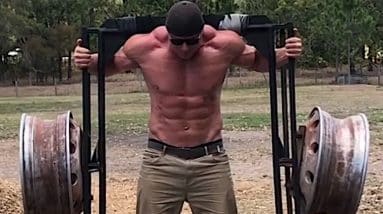
Tom Haviland Has the Potential to Become the World’s Strongest Man, According to Fitness Expert Mitchell Hooper
Australian social media sensation Tom Haviland stands at a colossal 6’8″ and is working toward a body weight of 400 pounds while maintaining a visible six-pack. Unlike his contemporaries, Haviland avoids the limelight, training at his home gym and outdoors without putting his face on camera.
Haviland’s training videos received the attention of podcaster Joe Rogan, who argued that Haviland might be the strongest man in the world. Haviland has trained with the 12-time Australia’s Strongest Man champion Derek Boyer but has never competed in a pro strongman contest.
On Jan. 30, 2024, the reigning World’s Strongest Man (WSM) champion Mitchell Hooper published a video on his YouTube channel wherein he compared Haviland’s best lifts to his own to determine if Haviland could outperform him if Haviland competed at the 2024 WSM contest, scheduled for May 1-5, 2024 in Myrtle Beach, SC. Check it out below:
https://www.youtube.com/watch?v=jj1BbcmUNfg&ab_channel=MitchellHooperVideo can’t be loaded because JavaScript is disabled: Could Tom Haviland Win World’s Strongest Man? (https://www.youtube.com/watch?v=jj1BbcmUNfg&ab_channel=MitchellHooper)
“Haviland is not just a great deadlifter and bench presser; I’ve seen him do everything,” Hooper said. “I can’t pick out one thing he can’t do really well.”
7 Lifts Comparing Haviland vs. Hooper
Below is how Haviland and Hooper stack up across seven lifts:
1. Yoke Walk
In one of Haviland’s Instagram posts, he carried a 1,200-pound homemade yoke on his shoulders. Hooper has lifted up to 1,350 pounds on the yoke, surpassing Haviland’s best.
Hooper highlighted that Haviland’s equipment was not as stable, implying that Haviland could likely achieve higher numbers with a better kit. However, Hooper concluded that he would likely outperform Haviland in a yoke event in a strongman contest.
2. Bicep Curls
Haviland has a 235-pound barbell biceps curl personal best. Hooper admitted he cannot curl anywhere close to Havliand’s PR, conceding this lift to tie the comparison one to one.
3. Zercher Carry
Haviland performed a 626-pound Zercher carry for two sets of 30 seconds of continuous walking.
“This is basically Conan’s wheel. For context, the WSM weight of the Conan’s Wheel is 440 pounds (200 kilograms),” said Hooper. “I’ve gone up to 500 pounds on the Zercher [carry], and this is another 100 pounds and some off pounds on top of that.”
View this post on InstagramA post shared by Mitchell Hooper (@mitchellhooper)
Hooper called it a “big 50/50” chance on whether he could match Haviland’s personal best on the Zercher carry. Hooper assessed lift three as a draw.
4. Stone to Shoulder
Haviland has lifted a 275-pound stone-to-shoulder, walked five steps, performed a set of squats, moved it to the other shoulder, and repeated for another set.
“I find it hard just to stabilize while standing [with a stone on the shoulder], never mind squatting,” Hooper said. “But at 120 to 125 kilograms, I think it would be manageable for me.”
Hooper ended this comparison in a draw as well. Predicted record after four lifts: 1-1-2.
5. Deadlift
Haviland pulled a 926-pound deadlift without a suit or a specialized deadlift bar. Hooper hoisted a 981-pound deadlift at the 2023 Arnold Strongman Classic, which Hooper won, suggesting a close comparison but leaning towards a draw due to the conditions of Haviland’s lift. Predicted record after five lifts: 1-1-3.
6. Squats
Haviland performed a 692-pound squat for multiple reps. Hooper’s best squat is about 810-815 pounds for a double in knee sleeves, making this another close comparison that Hooper suggests yet another draw. Predicted record after five lifts: 1-1-4.
7. Clean to Zercher Catch and Squat
Haviland has successfully completed a Zercher catch and squat with weights up to 485 pounds. Hooper accepted he could not clean 485 pounds, indicating Haviland would outperform him in this lift.
 Image via @tom_haviland on Instagram
“Haviland has got head-to-toe strengths,” Hooper said. “I can’t pick out a thing where I go like, ‘he’s not even close.’” Hooper’s predicted record against Haviland after seven events: 1-2-4.
Hooper concluded that if Haviland were to fully commit to training for the World’s Strongest Man competition, Haviland would not only Haviland contend for the Finals, but potentially win the coveted title.
Hooper’s next strongman contest will be the 2024 Arnold Strongman Classic, slated for March 1-2 in Columbus, OH, where he will defend his title against former ASC and WSM champs Martins Licis and Hafthor Björnsson. Two-time WSM winner Tom Stoltman and 2020 WSM Oleksii Novikov are the other top contenders in the lineup.
Featured image: @tom_haviland on Instagram
The post Mitchell Hooper Thinks Tom Haviland Can Win the World’s Strongest Man appeared first on BarBend.

Cydney Gillon Reveals Expert Contest Prep Tips for Natural Bodybuilders
Seven-time reigning Figure Olympia champion Cydney Gillon knows how to tune a physique to compete at the top of the sport. While most bodybuilders who compete on the Olympia stage are enhanced, contest prep can be similar for natural athletes.
On Jan 23, 2024, Gillon shared seven contest prep tips for natural bodybuilders on her YouTube channel based on her nearly two decades of experience in the sport. Learn them below:
https://www.youtube.com/watch?v=nllG6YP4YRk&ab_channel=CydneyGillonVideo can’t be loaded because JavaScript is disabled: 7x Mrs. Olympia, Cydney Gillon, shares tips for bodybuilding competitors who want to prep naturally (https://www.youtube.com/watch?v=nllG6YP4YRk&ab_channel=CydneyGillon)
[Related: Nick Walker Will Enter the 2024 New York Pro Bodybuilding Show]
Natural vs. Enhanced Bodybuilding Coaching
“If you bring it, you bring it, and that’s the person who will win,” said Gillon early in the video. Determination is critical for success in competitive bodybuilding for both natural and enhanced athletes. Gillon affirms that selecting the right coach to help achieve one’s physique goals is a top priority. For example, coaches who know how to build muscle naturally to the target body composition will benefit natural bodybuilders.
Per Gillon, one size doesn’t fit all. Patience is required for effective physique gains. Recognizing weaknesses and being objective about them can help maintain a healthy mentality for the years required to achieve bodybuilding success. Gillon’s running training lasted for four years to establish a base of conditioning and power to support her bodybuilding training before entering competitions.
Gillon acknowledged genetics’ role in bodybuilding as it pertains to muscular development — another nod toward why proper coaching and strategic programming are necessary to offset any genetic shortcomings an athlete might have.
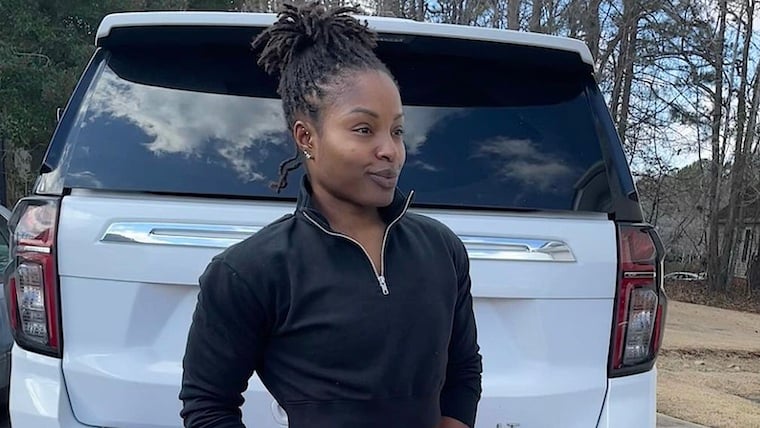 Image via @vytamin_c on Instagram
[Related: Rubiel “Neckzilla” Mosquera Is Out of the 2024 Arnold Classic]
Supplementation, Sleep, & Stress
Gillon said many factors play equally valuable roles in contest prep. In addition to training, proper supplements for recovery, getting enough sleep, reducing stress, and balancing gut health are all critical for performing at 100 percent.
Creatine is Gillon’s number one supplement for recovery, followed closely by hydration and glutamine to support her running and cardio volume. Gillon consumes amino acids early in the off-season and tapers them off a few weeks before a show to refine her aesthetics. For physiological and mental stress, Gillion relies on herbal supplements like ashwagandha, Rhodiola Rosea, and adaptogens.
Gillon built the requisite muscle in the correct proportions for Figure competitions using amino acids and creatine in combination with correct coaching, recovery, and supplementation.
Contest Prep Length
Some athletes achieve better results from a long-term prep of a year or longer; others see results six months or fewer. Depending on how one feels mentally during a diet or with ramped-up cardio, adding or shaving prep months between shows can impact metabolism and body composition.
Cutting & Bulking Tips
Gillon implored athletes to avoid crash diets when cutting before competition. She believes that crash diets create too challenging of an environment for the body to maintain the muscle roundedness that looks good on stage.
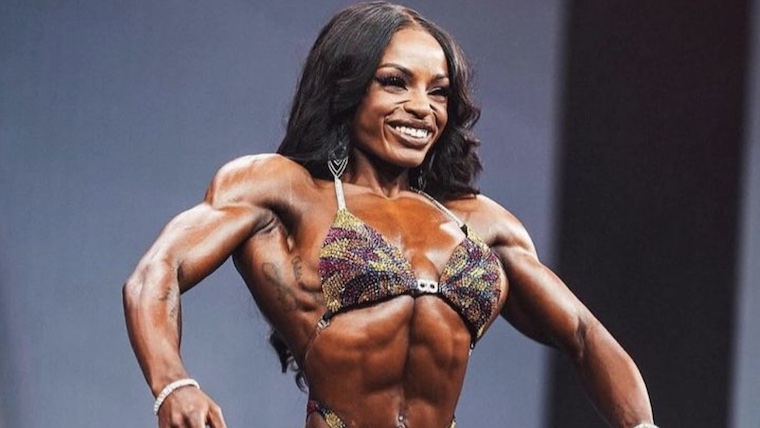 Image via @vytamin_c on Instagram
Additionally, excess cardio can flatten certain body parts, like the glutes. Therefore, she recommends keeping cardio brisk, not blistering, especially when cutting calories. The type of cardio can also impact the body. Steady-state cardio might not create enough energy expenditure, while HIIT might be too exhausting. Gillon urged not to exert the body into a catabolic state (when the body breaks down its muscle; opposite of anabolic).
Losing body fat at a prep’s end is the goal. Supplementation and the proper cardio/diet (read: calories in vs. out) are the most significant contributing factors. For Gillon, BCAAs and EAAs worked best during a cut.
Post-show, Gillon recommends reverse dieting — gradually increasing caloric intake to boost metabolism. Adjusting gradually can help correct hormone imbalances created by aggressive dieting and cutting.
Gillan’s closing IP was to be goal-focused rather than gratification-focused.
More Bodybuilding Content
- These Are the 10 Best Dumbbell Exercises for Bodybuilding
- How to (Properly) Combine Powerlifting and Bodybuilding Training
- The Ultimate Guide to Building Your Own Bodybuilding Workout Plan
Featured image: @vytamin_c on Instagram
The post Cydney Gillon’s Contest Prep Tips for Natural Bodybuilders appeared first on BarBend.
Master the Art of Glute Kickbacks for a Bootylicious Behind
If you’ve been on board the bigger butt train, certain lower body exercises stand out. Squats, deadlifts, lunges, and hip thrusts have the center stage. But when you’re likely too tired for another set of squats, the glute kickback is ready to target your backside — without the added strain of another heavy barbell.

Here’s how this glute accessory exercise can up your gains.
How to Do the Glute Kickback
The glute kickback is a cable-based exercise that allows you to specifically target your glutes. It is performed using a few different implements or specialty pieces of equipment, but the simple cable machine serves as the standard. Here’s how to perform the glute kickback.

- Step 1 — Place the ankle strap on the cable machine carabiner and adjust its height to the lowest position
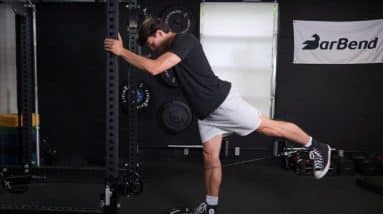
- Step 2 — With the ankle strap around your ankle, face the cable machine and lightly hinge to stabilize. Place most of your weight on the non-working leg. This is your starting position.
- Step 3 — Using your hands and free leg to brace, press into the machine to create a counterforce to your kickback. Brace your core, tighten your legs, and secure your grip on the cable machine as stability points.
- Step 4 — Keep your working leg long, with only a subtle bend at the knee. Squeeze your glute on the working side as you drive your leg backward against the resistance.
- Step 5 – Once your glute has fully contracted, slowly lower back to the starting position. Perform for repetitions.
Coach’s Tip: Start your sets with your non-dominant side, which is often your weaker side. This way, you’re setting a movement standard that you can accomplish evenly.
Glute Kickback Variations
The glute kickback is a great way to isolate your glutes as much as possible and pepper in much-needed training volume without taxing your lower back under a barbell.
If you’re searching for some variations on the glute kickback, a few great choices are the donkey kick, a machine glute kickback, or a 45-degree cable kickback.
Donkey Kick
https://www.youtube.com/watch?v=SJ1Xuz9D-ZQVideo can’t be loaded because JavaScript is disabled: Donkey Kicks (https://www.youtube.com/watch?v=SJ1Xuz9D-ZQ)
[Read More: 10 Glute Exercises You Can Do at Home]
Why Do It: This bodyweight glute exercise is a way to isolate your glutes without weight. You’ll get the added bonus of a balance challenge and solid mind-muscle connection.
Equipment Needed: You don’t need anything except yourself and possibly a yoga mat here.
- Begin in the quadruped position (on the floor on your hands and knees).
- Brace your core and tighten your back to stabilize your position.
- Squeeze your right glute, raising your right leg into the air. Lower it back down to the starting position and repeat with the left leg for repetitions.
Glute Kickback Machine
https://www.youtube.com/watch?v=NLDBFtSNhqgVideo can’t be loaded because JavaScript is disabled: Machine Glute Kickback (https://www.youtube.com/watch?v=NLDBFtSNhqg)
[Read More: Better Glutes, Better Pulls: How Should We Approach Glute Training For Powerlifting]
Why Do It: Here, you’ll have a machine to brace your body against. Take advantage and up the weight with this isolation exercise so that you can focus as much as possible on the activation of your gluteal muscles.
Equipment Needed:
- Line up in the machine with your working foot flat against the footpad and your hands or shoulders braced against the pads provided.
- Squeeze your hands and engage full body tension to provide stability.
- Drive your working leg backward by pressing through the full foot. Extend the leg until you feel a complete glute contraction.
- Slowly lower back to the starting position and repeat for repetitions.
45-Degree Cable Kickback
https://www.youtube.com/watch?v=6_FiVpo8OzcVideo can’t be loaded because JavaScript is disabled: Cable 45 Degree Kickback (https://www.youtube.com/watch?v=6_FiVpo8Ozc)
[Read More: The 15 Best Cable Exercises for Hypertrophy, Strength, and Stability]
Why Do It: These cable glute kickbacks keep your leg at 45 degrees. Keeping your leg this way will bring your hamstrings and calves more into the movement, and it also targets your gluteus medius a little more than the usual variation.
Equipment Needed: This move just needs a cable machine and ankle strap.
- Set up your cable machine the same way you would a standard glute kickback.
- Brace against the machine and stabilize your body. Drive your working leg backward at an approximate 45-degree angle.
- Fully contract the working glute to complete each repetition. Slowly lower back to the starting position and repeat for repetitions.
Glute Kickback Alternatives
If your cable machine is out of commission or you’re simply looking for some alternatives to play with, we’ve got some great alternatives for you. The best exercises here will give your glutes fantastic stimulation while allowing different angles than your major lower body exercises.
Resistance Band Abduction
https://www.youtube.com/watch?v=NeO0w4Jv4rsVideo can’t be loaded because JavaScript is disabled: Banded Seated Hip Abduction (https://www.youtube.com/watch?v=NeO0w4Jv4rs)
[Read More: Best Resistance Bands for Glutes of 2024]
Why Do It: Many athletes do moves like this one to warm up for squats, and with good reason. Train yourself to resist unintended, overexaggerated collapsing of your knees inward during loaded squats and other knee-and-hip focused moves.
Equipment Needed: You’ll need a plyo box or a weight bench, along with a mini resistance band.
- Take a seat on the edge of a bench or a box. Wrap a resistance band around your knees.
- Slightly hinge forward and brace in this position. Engage your core and pre-tighten your legs.
- Drive your knees out against the band resistance. Keep squeezing until your glutes feel fully contracted. Return to the starting position under control and repeat for repetitions.
Machine Hip Abduction
https://www.youtube.com/watch?v=G_8LItOiZ0QVideo can’t be loaded because JavaScript is disabled: How To Use The Seated Hip Abductor (Outer Thigh) (https://www.youtube.com/watch?v=G_8LItOiZ0Q)
[Read More: Are You Leaving Glute Gains On the Table? Try This Two-Move Finisher]
Why Do It: Since you’ll be seated and braced against the machine, you can afford to up the weight once you’re sufficiently warmed up. You can load heavily without strain on your lower back or overall body.
Equipment Needed: You’ll have to find a hip abduction machine for this one. Otherwise, opt for the banded version, described above.
- Sit down in the machine with your outer legs snug against the pads and your back flat against the backrest.
- Start with the machine in the position that allows your legs to begin as close together as possible.
- Brace your full body and maintain this starting posture. Drive your legs out against the pads until your glutes have fully contracted. Repeat for repetitions.
Step-Up 
Why Do It: You can customize this move to your mobility and fitness level by using a different size step (or plyo box). That way, beginners can take this move to the next level while advanced athletes can also use it to improve mobility and unilateral strength while jacking up the heart rate.
Equipment Needed: Use a step-up platform or plyo box for this one. Dumbbells in your hands are optional.
- Select a box that allows you to get approximately 90 degrees or more of knee flexion.
- Place one foot on the box, brace your core, and tighten your legs.
- Place as much weight as possible on the working leg and step onto the box.
- Lower yourself under control back to the starting position. Avoid letting gravity do the work as much as possible. Repeat for even repetitions per leg.
Who Should Do the Glute Kickback
The glute kickback is often overlooked as a prominent glute exercise, though it shouldn’t be. It has clear benefits for physique enthusiasts but also is extremely helpful for gym newbies and older lifters alike.
- Physique Enthusiasts: If you want to compete in bodybuilding or simply have some jeans you want to fill out, glutes are a must. Outside of big barbell or machine exercises (such as squats or leg presses), the glute kickback has been a fixture for physique enthusiasts for ages. The precision targeting and ability to train with greater frequency cannot be beaten.
- Beginners: There are a lot of transferable benefits that a newcomer to the gym gains from the glute kickback. The central focus is always gaining muscle mass, but the set-up and execution of a good cable-based glute kickback teach a ton about proprioception and discipline. This reinforces proper technique and allows you to chase high-intensity sets through the burn instead of heavy weights.
- Older Lifters: A strong set of hips is a huge asset as you age, and the glute kickback is a lifter-friendly way to keep targeting your glutes. Many of the staple lower body exercises that hit your glutes are also very physically demanding in other ways. The glute kickback provides a low barrier to entry method of stimulating the hips, building proprioception, and confidence for an older or less experienced lifter.
Glute Kickback Sets and Reps
The glute kickback isn’t one that you’re going to do for max load. Since you are using a long lever with your leg, heavier loading would break down your form too quickly. Instead, try using sets and reps for muscle, endurance, or even warming up.,
- For Muscle Mass: Perform 2-4 sets of 10-15 repetitions. Aim for 1-2 repetitions in the tank at the end of each set and rest for 90 seconds to 2 minutes between sets.
- For Endurance: To build endurance, perform 3-4 sets of 15-20 repetitions per leg. Plan for only 30 seconds of rest between sets and aim to feel a vicious burn.
- For Warming Up: To warm up for other lower body exercises, perform 1-2 sets of 15-20 repetitions per leg. Use a 1-2 second pause in the fully contracted position for the best results.
Benefits of the Glute Kickback
The glute kickback builds your glutes, especially when you combine it with a full lower-body workout. It stands out because it also allows for some precision targeting of specific sections of your glutes and deals with significantly less load than the barbell exercises in your program.
Bigger Glutes
Most of the tools in your glute workout box are going to be compound exercises. This means that they may also target your quads and hamstrings, and certainly engage your core. The glute kickback helps to work around these other muscles, making it easier to isolate your glutes as the main target.
Precision Targeting
With more specific isolation comes a better chance at growth. Here, you’ll be more successful in making the glutes your primary muscle without other areas getting in the way and building fatigue.
The glute kickback doesn’t just make it easier to isolate your whole glute — you’re also able to angle the exercise to help load certain regions of your butt. The gluteus maximus, medius, and minimus make up the three major glute muscles and all contribute to your glute kickback.
Choosing specific angles to perform your kickback helps to align with the muscle fibers of your gluteus medius. Your gluteus maximus is the workhorse of force production, but choosing a 45-degree angle for execution helps stress your gluteus medius a bit more too.
Lighter Load
One of the biggest benefits of cable-based exercises is the lighter loads needed to gain stimulus compared to free weights. The glute kickback is no exception. Compared to a squat or a deadlift, the glute kickback needs next to no weight to make it a challenge.
Since you keep your leg long and use precise control to perform your glute kickback, even lighter loads feel heavy. You’ll still get great growth but it also allows you to use way less weight to accomplish the goal.
Muscles Worked by the Glute Kickback
The glutes are the major muscle group worked by the glute kickback. The glutes are broken down into their three distinct muscles; being, the gluteus maximus, the gluteus medius, and the gluteus minimus.
|
Gluteus Maximus |
Gluteus Medius |
Gluteus Minimus |
|
|
|
[Read More: Try These Kettlebell Glute Workouts to Kick Your Butt Into High Gear]
Common Glute Kickback Mistakes
Although the glute kickback is a relatively straightforward exercise, there are still some common mistakes that flare up from time to time. Not bracing properly, adding too much momentum, and improper load selection are the biggest culprits.
Not Bracing Properly
The point of the glute kickback is to target and stimulate the glutes as specifically as possible. This means squeezing your butt, and subsequently, your butt moving the weight. While that may sound silly, the reality is that a lot of lifters move other parts of their body to accomplish the glute kickback.
Anchoring yourself in place with a strong brace and counterforce against the machine (using your arms to lock yourself in a specific position) are key ways to isolate your glutes. Do not allow your lower back to arch, don’t flare your upper back, or sway your hips. Brace up, and only contract your glutes. Movement from your butt should move that pulley, nothing else.
Momentum
Momentum is an issue with nearly every exercise from time to time. And sometimes, a bit of body English toward the end of your set can help you push past failure and add some extra growth potential.
 Credit: Nikolas_jkd / Shutterstock
The issue arises when you accidentally use momentum that you didn’t mean to do, kicking in other areas of lower body strength to get you to the top of the movement without enough challenge to your glutes. Be disciplined, brace up, and only contract your glutes with proper form and a full range of motion.
Too Much Weight
The glute kickback takes advantage of a longer level system than say a leg press. This means that your leg staying relatively locked out keeps the resistance further from the muscle that is moving it. This makes the weight feel heavier and thus you need less of it to perform the glute kickback.
[Read More: Are Squats the Most Effective Exercise for the Glutes?]
This also means the glute kickback is susceptible to form breakdown if you load it too much. This same longer lever amplifies the challenge against your brace, meaning shooting for strength is likely to break you down even faster. Aim for loading schemes that allow you to mainly feel the glute, maintain position, and hit close to muscle failure around 10 to 15 repetitions.
Kicking Into High Gear
The glute kickback has been lurking around gyms since the introduction of cable machines. While some lifters hesitate to add them in, glute kickbacks pair just as well with squats and deadlifts as the dumbbell flye does with the bench press. For added glute gains with less load, a great proprioception builder, and a way to chisel in specific areas of your backside, look no further than the glute kickback.
FAQs
The glute kickback is a great way to add some spice to your lower body routine. Here are answers to any lingering questions.
Are kickbacks good for the glutes?
Glute kickbacks are fantastic for the glutes. Think of them as the dumbbell flye to your bench press or straight-arm pulldown to your dumbbell row. They give you another huge shot of stimulation for glute growth from a different angle and use less weight to accomplish the job. They serve as a fantastic synergist to your squat or hip hinge moves.
Are kickbacks better than squats?
The question of “better” depends on what you want. If you want a glute isolation exercise, then you want the kickback. Searching for a way to build stronger glutes without taxing your lower back or other parts of your lower body? The glute kickback wins that, too.
But if you want an overall strength and mass builder that heavily involves the glutes, the squat takes the cake.
For a well-balanced program, aim to integrate both of them into your workouts. The better philosophy is to integrate them both into your workouts. Generally, you’ll start your day with squats and use the kickback as an accessory move.
What muscles are targeted during the glute kickback?
The glute kickback primarily works your gluteus maximus, medius, and minimus. While this move is by no means a core exercise, you’ll also need to brace through your core.
The post How to Do Glute Kickbacks to Build Your Butt appeared first on BarBend.

Iliza Shlesinger’s Empowering Prenatal Pilates Routine: A Fitness Journey for the Health and Fitness Enthusiast
A Pilates session with comedian Iliza Shlesinger isn’t a quiet event. Class might involve her dog, Tian Fu, jumping on the reformer, or her 2-year-old, Sierra, pulling at the ropes. It will definitely feature Shlesinger’s snide commentary (“I call this move ‘the Sasquatch’”). And these days, it might also include a few pregnancy-induced burps.
Shlesinger first started doing Pilates shortly after Sierra was born, and she quickly got hooked. She invested in her own reformer to regularly train at home with Pilates trainer Alisha Mullally, and began doing mat workouts on her own whenever she was on the road for work. Today, snippets of Shlesinger’s Pilates sessions make almost as many appearances on her Instagram account as snippets of her stand-up.
When she became pregnant again in 2023, Shlesinger says there was no question that she would continue practicing prenatal Pilates, but with a few modifications, in order to stay safe. “I believe a big part of a healthy pregnancy is carrying on with all the things you did before you were pregnant,” she says. She also knows that safely exercising during pregnancy offers a whole bunch of benefits: The American College of Obstetricians and Gynecologists says doing so can help reduce back pain and constipation, and may decrease your risk of gestational diabetes and preeclampsia. One 2018 study even found that those who regularly work out while pregnant spent almost an hour less in labor.
A couple months before her due date, Well+Good filmed an episode of our online video series “Good Moves” with Shlesinger and Mullally at Avenir Pilates in Burbank, California. In it, they demonstrate a feel-good prenatal Pilates routine on the reformer that’s safe for any trimester.
Want to see the whole Good Moves routine? Check out the video below, or follow this link.
Following the “Good Moves” video, we chatted with Shlesinger to learn more about her approach to Pilates, why it’s become an essential part of her prenatal routine, and what she has to say to her skeptics on Instagram.
Question: What made you start doing Pilates after having your first baby?
Iliza Shlesinger: My manager told me that she’d been doing Pilates with this incredible trainer who came to her house. And, you know, once you have a baby, it’s weird: All you want to do is leave the house, but the last thing you want to do is leave the house. So I was introduced to my trainer, Alisha, and we started doing mat Pilates.
Q: What did you like about Pilates?
IS: It was very difficult but also gentle at the same time. And I got to lay down, which was such a plus.
Q: What have been the main modifications you’ve made while pregnant?
IS: There’s no more laying down on my back, and there are no abs to engage. But my trainer’s like, “Doesn’t mean we can’t work your arms!” And you can always work your inner thighs, which feels a little weird because of all the relaxin. Really, my favorite part is beating myself up about how bad my workout is and then having my trainer tell me like, “No, you did great. You’re very pregnant.” And then I’m reminded like, yeah, I’m growing a human. It’s okay that we didn’t do legs and loops today.
I just toured through Europe [and while I was there, tried to practice Pilates]. There was this one guy in France who just looked at me, and in a very French way was like, No, I don’t train pregnant women. I respected that [but] I’ve been doing Pilates long enough that I know how to make my modifications, [so] I signed like a little waiver. And then the bulk of the exercises we did, I just couldn’t do it, but I had too much pride to leave. So I just sat there doing very tiny ankle flexion workouts.
Q: Do you have any favorite prenatal Pilates moves these days?
IS: Anything I can do where I can feel my upper thighs screaming makes me feel like I have some control over what’s going on. And “hug a tree” is always nice because you get to see yourself in the mirror, and I don’t look pregnant in my arms, so that’s always a nice little walk down memory lane.
Anything I can do where I can feel my upper thighs screaming makes me feel like I have some control over what’s going on. —Iliza Shlesinger, on her favorite prenatal Pilates move
I also do a lot of balancing moves. You can see them on my Instagram, and I always get annoyed when people comment that I shouldn’t do it: I’ve been doing Pilates for over a year with a trainer. Plus, she’s [with me when I’m practicing].
Q: Everyone’s an expert on Instagram.
IS: Everyone’s an expert on women on Instagram, for sure. What would we do without the comments section?
Here’s a rule: Don’t tell pregnant women what they can and can’t do. There are women flipping cars and tires in CrossFit who are pregnant just like me. I’m fine.
Q: Do you feel different at all after a Pilates session?
IS: I always love feeling sore the next day. As an “athlete”—please put that in quotes—you always feel like it’s a job well done. You got to a muscle that maybe you had neglected or needed a little extra attention. You never feel bad having done a workout, no matter how short it is. Even if you only get a little bit of sweat, a little bit of your heart rate up, it’s still something.
Q: And how does it affect you mentally?
IS: Any time you can carve out time for yourself, not looking at your phone, it’s always good to come back into the world with fresh eyes, feeling a little exhilarated, having exhausted yourself. The actual only way to get me to not be on my phone is to pay someone to train me. I’m always cognizant of the fact that I paid for the hour, so I try to get every last drop out of it. But we have a lot of fun. We let the dog come in. Sometimes my daughter comes in, and that’s bonus weight on the carriage.
Q: I was going to ask, is that intentional to have your daughter watch you stay active throughout your pregnancy?
IS: Ever since she was little, she would sit in her little baby bouncer and she’d watch. It’s cute—she says the word “Pilates” and she knows that there’s ropes involved and she just wants to be with us. Any behavior you model for your child, they internalize. My mother worked out. She also had a job and she was a single mom for a while who took care of all the gardening and all the maintenance and never talked about it. She just did it. And I think there’s an incredible benefit to women seeing other women naturally just do very strong things because it instills it in you without being demonstrative about it.
Q: Any last thoughts on Pilates you want to share?
IS: I own an Allegra 2 reformer, and I love it. But I also think mat Pilates offers so many benefits. You can do it anywhere. You don’t even need a sports bra. You don’t even need pants on. You can do it in a hotel room on a towel. And trust me, I have.
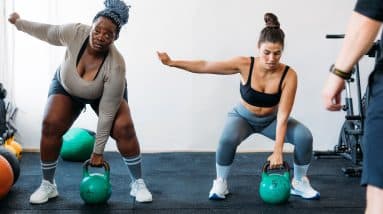
Stop Comparing Your Body to Others at the Gym: Here’s How to Preserve Your Joy and Confidence
You’ve been wanting to try the cardio dance class everyone’s been talking about. You sign up and pick out your cutest gym outfit—ready to slay your workout. But you walk in and you immediately regret it.
The room is full of women seemingly fitter than you. Never have you felt more aware of the size of your body. This was supposed to be a fun and health-giving experience, but it’s become a serious self-loathing session.
If you’ve ever experienced body comparison at the gym, you know it can dissolve your happiness in a blink. But the gym is a place for folks of ALL sizes. So how do you take advantage of the fitness classes and equipment there—without feeling discouraged about your body image?
Studies show that comparing your physique to others lowers your positive body image and increases your odds of developing an eating disorder. Below nutrition and fitness experts, who assist people in their body-acceptance journeys, are offering advice on how to not size yourself up to others when you work out.
5 tips to stop engaging in body comparison at the gym 1. Prepare your mind in advance
When it comes to addressing body image issues around exercise, the work starts before you enter the gym doors, says Rebecca Toutant, RD, CEDS, CDCES, CPT of Nourishing Bits and Bites. Consider your self-talk while working out. Is it negative or positive? Do you already struggle with body acceptance?
Often repetitive negative thoughts about our body aren’t true. Toutant reminds us, “What we ‘see’ in the mirror and in looking at others is not objective truth or fact. Rather, how our brain processes the information is influenced by our emotional state.”
How can you get amped up with positive thoughts before a workout? Start with gratitude for your own body. Affirmations and personal mantras can be repeated to flip negative thinking to positive. Eating disorder specialist Laurie Dunham, RD, CED-S, LD, suggests the following examples:
- “I am thankful for my strong legs that carry me through the day.”
- “I am thankful that my arms allow me to hug the people I love.”
- “I am grateful for a functioning GI system that allows me to properly digest food so I have the energy needed to work and play.”
- “I am enough.”
- “I am strong.”
- “I am more than a body.”
What else can boost your confidence before you walk into the gym? The right playlist! Toutant suggests, “Choose empowering audio. Put on some tunes that leave you feeling strong and confident.”
If that doesn’t feel like enough to help you work through any blocks or limiting beliefs you have about your body, consider seeking out help from a therapist to get to the root causes and address them.
2. Appreciate body differences
The gym presents a display of various body types. The key is to not compare and despair when you see people who look different than you. “There will always be aspects of others we are envious of, but if we can turn that energy into trying to appreciate differences, it can be incredibly beneficial,” Dunham says. “It would be so boring if we all looked the same!”
Studies show that body appreciation is related to better eating habits, fewer body image disturbances, and overall improved mental health. Add to that list enhanced sexual satisfaction and self-compassion and I’d say it’s time to extend a thank you to your body.
Furthermore, your body size does not determine your physical fitness or overall health. “Someone can ‘look’ what society may describe as ‘healthy’ or ‘fit’, but they may be struggling with health or performance,” Toutant points out. Conversely, health is possible at every size—despite what weight stigma would have us believe.
3. Focus on your own fitness
Ever hop on the treadmill next to someone and enter an unspoken competition? Or add on more weight than what’s comfortable to the barbell because someone else can lift that much? Using someone else’s performance as a measuring stick for your abilities is a surefire way to increase your chances of injury and overtraining.
“Your needs and progress are your own,” Toutant says. “Whether or not someone can do more or go faster doesn’t ‘undo’ how far you’ve come. You ARE worthy of belonging right here, right now, as you are. There’s nothing to prove.”
When you feel your gaze wondering to those around you to see how you stack up to what someone else is doing, take it as a sign to recenter yourself and remember why you’re working out in the first place. “Focus on intrinsic goals,” Dunham says. “Think about where you are now and where you want to be concerning strength, flexibility, endurance, and how you feel, both mentally and physically, every day.”
4. Be friendly
Your insecurity may make you feel closed off from others, but gym friends can make all the difference! Resist the urge to withdraw. “Smile. Laugh. Consider eye contact. So many people walk around plugged in, blank stare, and in their own world—often to preserve themselves,” Toutant says. “You don’t need to make best friends, but it’s okay to acknowledge one another.”
While you may think everyone is noticing your imperfections, other gym-goers are not concerned about your body. Instead, everyone is in the same boat. They may even be feeling apprehensive about a new class or gym like you are, which is totally normal.
“Many people feel insecure at the gym,” Toutant says. “There is so much vulnerability in trying something new, re-starting a journey after a pause, moving your body in new ways, your body not feeling the way it used to, seeing unfamiliar faces, and quite literally feeling physically and emotionally uncomfortable. Just know at the end of the day, we’re all human.”
5. Find a place where you feel welcome
Not all gyms are created equal. Every facility will have its own feel. “Find the ‘gym culture’ that aligns with your values,” Toutant suggests. “If you choose to go to a gym rooted in hierarchies and competition, it may not be the best move for feeling better in your body.”
What’s the messaging promoted by the gym? Is it all about body modification or body inclusivity? Look at customer relations. Do the trainers treat everyone the same? Are you greeted kindly?
If you’re not feeling the vibe, find an alternative option for exercising. “Movement can happen anywhere,” Toutant says. “If being in the gym is too much of a distraction or leaves you feeling rough about what you’ve done or are doing, take a break and focus on your own path.”
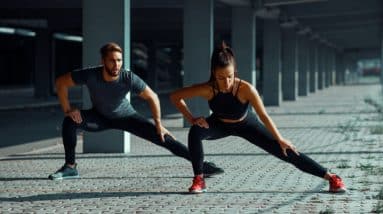
10 Leg Stretches That Will Supercharge Your Lower Body Fitness
If you do it right, leg day is an intense experience. Squatting, lunging, and hinging until you’re a puddle on the gym floor takes up a lot of time and mental real estate. But once you’ve crushed your leg exercises, you’ve got to reassemble yourself — leg stretches can do that very well.
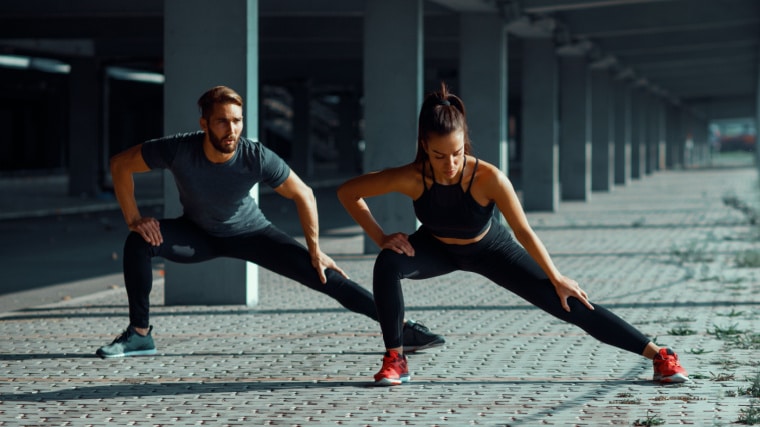 Credit: djile / Shutterstock
Leg day is not just about strength. It’s also one way to stay on top of your mobility, using loaded stretching as a tool to double down on your flexibility. Leg stretches are a massive asset in preparing for a bodyweight leg workout or helping you cool down after the fact. If you’re looking to flex some lower limb knowledge, here are the 10 best leg stretches.
Best Leg Stretches
- Seated Pigeon Pose
- Pigeon Pose
- Half-Kneeling Hip Flexor Stretch
- Couch Stretch
- Adductor Split Stance Stretch
- Frog Pose
- Hurdler’s Stretch
- Standing Toe Touch
- World’s Greatest Stretch
- Calf Stretch
Editor’s Note: The content on BarBend is meant to be informative in nature, but it should not be taken as medical advice. When starting a new training regimen and/or diet, it is always a good idea to consult with a trusted medical professional. We are not a medical resource. The opinions and articles on this site are not intended for use as diagnosis, prevention, and/or treatment of health problems. They are not substitutes for consulting a qualified medical professional.
1. Seated Pigeon Pose
https://www.youtube.com/watch?v=9duW9HncInYVideo can’t be loaded because JavaScript is disabled: Seated Pigeon Pose (https://www.youtube.com/watch?v=9duW9HncInY)
[Read More: Yoga for Bodybuilding: How Getting Flexible Helps You Gain Muscle]
Primarily targeting the glutes, the pigeon pose delivers a very efficient stretch with scalable options for all mobility levels. But the classic, original variation can be tricky to learn.
Enter the seated pigeon pose. This variation allows you to choose the position that best serves your current needs. Use this option to ease into leg stretches and practice pristinely controlled stretching.
How to Do it:
- Sit on the edge of a weight bench with your feet flat on the floor. Aim for your legs to make an approximate 90-degree angle at the knee.
- Place your left ankle on top of your right knee, creating a figure-four position with your legs.
- Keep a tall posture and lightly hinge forward until you feel a stretch across your glutes.
Coach’s Tip: Be sure to maintain square hip and knee positioning. Try not to let your support knee drift off to one side as this diminishes the stretch.
Sets and Reps: Perform 2-4 sets of a 30-second timed hold on each side. No rest is required between sets.
2. Pigeon Pose
https://www.youtube.com/watch?v=1o7awuDGzagVideo can’t be loaded because JavaScript is disabled: PIGEON STRETCH (https://www.youtube.com/watch?v=1o7awuDGzag)
[Read More: How Strength Athletes Can Add Yoga to Their Program]
The classic pigeon pose is the next step in stretching your glutes. Where the seated pigeon pose uses a bench as a support, the classic pigeon pose places you on the floor. This small change increases the mobility demands but also allows for a potentially deeper stretch.
How to Do it:
- Place one leg on the floor with your shin and foot resting underneath your body.
- The opposite leg should be flat on the floor behind the rest of your body.
- Keep your back straight and slightly lean forward, similar to performing a hinge.
- Choose a shin angle on your forward leg that allows you to feel a deep stretch in your glute but isn’t forced into position. Hold for time.
Coach’s Tip: You don’t need to aim for a completely straight left-to-right shin angle for benefits here. Find the shin angle that allows you to feel a mild stretch without discomfort.
Sets and Reps: Hold the pigeon pose for 2-4 sets of 30 seconds. Perform a 30-second stretch on both sides to complete one set.
3. Half-Kneeling Hip Flexor Stretch
https://www.youtube.com/watch?v=0J360jIbhYUVideo can’t be loaded because JavaScript is disabled: Hip Flexor Stretch- Kneeling (https://www.youtube.com/watch?v=0J360jIbhYU)
[Read More: New Study Finds That Stretching Can Directly Create Muscle Growth]
Between training the lower body and the amount of sitting involved in the average lifestyle outside of the gym, your hip flexors are almost certainly tight at some stage of the week.
The hip flexors are a group of muscles that sit at the top of your thigh around your hip crease. While it doesn’t take a hard sell to get most people stretching them (it feels really good), nailing the technique is paramount for the best results.
How to Do it:
- Kneel down on your right knee, making a 90-degree angle on your left leg.
- Keep your hips square and pointed straight ahead.
- Brace your core and prevent any flaring of your ribcage.
- Squeeze your glute on your right leg, pushing your hips forward naturally. Hold this posture by maintaining the glute squeeze.
Coach’s Tip: Keep your torso stacked over your hips on this stretch. Squeezing the glute extends your hip and gives you all the stretch you need in the perfect spot.
Sets and Reps: Perform 2-4 sets of 30 seconds per leg, alternating sides without resting until all sets are complete.
4. Couch Stretch
https://www.youtube.com/watch?v=QiKl5UoiG5cVideo can’t be loaded because JavaScript is disabled: Couch Stretch for Hip Flexors (https://www.youtube.com/watch?v=QiKl5UoiG5c)
[Read More: How to Do the 90/90 Stretch to Squat Heavier and Move Better]
The couch stretch is an advanced version of the half-kneeling hip flexor stretch. Whether you’re using a bench, yoga block, or couch itself, this is a move you should ease into. A deeper stretch or higher pain tolerance isn’t necessarily the name of the game for stretching your legs. Dial in the right spot and you’ll get everything you need from the couch stretch.
How to Do it:
- Kneel down on your right leg with a couch (or bench) placed close behind you.
- Make a 90-degree angle with your left leg ahead of you.
- Place your right ankle or the top of your right foot on the edge of the coach (or bench).
- Flex your right glute and keep your back straight as you feel a stretch develop across the length of your right quadriceps.
Coach’s Tip: Be sure to maintain a stacked torso posture here as well. Do not arch your back or you may begin losing the stretch in the place you’re trying to target.
Sets and Reps: Perform 2-4 sets of 30 seconds per leg here, starting slow and easing into it. There is no need for rest between legs. You can simply alternate once each hold is complete.
5. Adductor Split Stance Stretch
https://www.youtube.com/watch?v=ANue9qDFg90Video can’t be loaded because JavaScript is disabled: Hip, groin and inner thigh – Adductor stretch in standing (https://www.youtube.com/watch?v=ANue9qDFg90)
[Read More: 7 Stretches That Can Help Your Posture]
The adductors are the inner thighs and are often forgotten about when the time comes to stretch the legs. Your quads, glutes, and hamstrings (and even calves!) are usually pretty obvious targets, but your adductors are very important as well.
Something as simple as an adductor split stance stretch is enough to make a difference in your lower leg mobility. Making sure the adductors are properly stretched before or after your workouts may help improve the range of motion on many movement patterns.
How to Do it:
- Take a standing position with your legs set outside of shoulder width.
- Keep your feet pointed straight ahead or subtly pointed out.
- Brace your core and shift your weight more towards your left leg.
- Keep your right leg straight and bend the left knee. Slowly push your right leg towards the floor.
Coach’s Tip: Ease into the adductor split stance stretch. The adductors are often targeted less and hold a lot of tension, so you won’t need much to start feeling them.
Sets and Reps: Perform 2-4 sets of 30-second timed holds per side, switch sides without resting to complete all sets.
6. Frog Pose
https://www.youtube.com/watch?v=0rwSFWC9x3EVideo can’t be loaded because JavaScript is disabled: FROG POSE: BEST STRETCH FOR LOW BACK PAIN AND HIP PAIN RELIEF! (https://www.youtube.com/watch?v=0rwSFWC9x3E)
[Read More: How Deep Stretching Promotes Emotional Release]
You’ll be working on dynamic stretching here. This stretch, borrowed from yoga, is a floor variation of the split stance adductor stretch and thus also stretches your inner thighs.
The frog pose is scalable and more dynamic than the split stance adductor stretch, allowing you to rock back and forth to find the perfect position. The frog pose is also extremely time-efficient as you won’t need to switch sides. One well-executed frog pose stretches both adductors at the same time.
How to Do it:
- Kneel down on your exercise mat and assume a quadruped position (on your hands and knees).
- Widen your leg stance enough that you create a triangle with your legs and the floor. You should place your weight onto the inner portion of your knees.
- Widen the leg stance as much as needed to begin feeling an adductor stretch.
- Using your arms, move yourself forward and backward to find the appropriate stretch across your adductors.
Coach’s Tip: Ease into your frog pose. The adductors are often tight and the frog pose is a very effective position to stretch them. It won’t take much to get started.
Sets and Reps: Hold your frog pose for 2 sets of 30 seconds to 1 minute at a time. You won’t need to switch sides as one frog pose stretches both adductors simultaneously.
7. Hurdler’s Stretch
https://www.youtube.com/watch?v=6LYSIXjuXi8Video can’t be loaded because JavaScript is disabled: Hurdler Stretch (https://www.youtube.com/watch?v=6LYSIXjuXi8)
[Read More: The 9 Best Stretches for CrossFit Athletes to Maximize Performance]
You might remember this one from middle school. The hurdler’s stretch is a simple way to begin stretching out your hamstrings and adductors but allows you to individually target each side. Using your own body as a landmarking tool for progress, reach for your toes and see how quickly your mobility improves each session.
How to Do it:
- Take a seat on the floor, extend your right leg slightly off to one side, and bring your left foot into your right inner thigh.
- Flex your right ankle to the sky to start your stretch, keeping your left foot in contact with your right thigh.
- Keep your back straight as you subtly begin to lean towards your right foot.
- Reach for your right foot and ease into a slight hamstring and adductor stretch.
Coach’s Tip: Once you have mastered the standard hurdler’s hamstring stretch, try rounding your back to move through other commonly stiff areas (for example, the lower back).
Sets and Reps: Perform 2-4 sets of 30 seconds per side. Alternate stretches between legs without resting.
8. Standing Toe Touch
https://www.youtube.com/watch?v=gmLS4RllgoQVideo can’t be loaded because JavaScript is disabled: Standing Toe Touch (https://www.youtube.com/watch?v=gmLS4RllgoQ)
[Read More: Active Stretches Explained — Science-Backed Selections for Optimal Recovery & Performance]
While simply bending over is usually enough to start feeling the stretch, adding a bit of finesse to your technique is a quick way to alter what you’re targeting. Shifting from side to side, or even keeping your back straight or rounded are ways to change the focal point of the standing toe-touch.
How to Do it:
- Take a close foot stance (about hip-width or closer) with your toes pointed straight ahead.
- Bend over and reach for your toes, allowing your back to round and relax into a deep stretch.
- You can also bring one foot into your hand and kick your foot back into your hand — this will provide a good quad stretch.
Coach’s Tip: Initiate with more of a hinge technique for a better hamstrings and glute stretch, or shift to one side for a better stretch into your quadratus lumborum.
Sets and Reps: Perform 2 sets of 30 seconds to 1-minute of the standing toe-touch. If you are emphasizing one side or using a different technique, perform the stretch once on both sides to complete one set.
9. World’s Greatest Stretch
https://www.youtube.com/watch?v=RibEzqNmm4sVideo can’t be loaded because JavaScript is disabled: World’s Greatest Stretch (https://www.youtube.com/watch?v=RibEzqNmm4s)
[Read More: 7 At-Work Stretches to Boost Your Gym Performance]
The world’s greatest stretch is named as such because it hits your adductors, hip flexors, glutes, and thoracic spine all at the same time. While it is taxing in its own right with all the moving parts, it would be hard to find a more well-balanced stretch for your routine.
How to Do it:
- Get into a deep lunge, sending your right leg ahead of your body and sinking into your right hip.
- In this extended lunge position, keep your hips square while you rotate your thoracic spine to face the floor before turning your torso to face the right.
- Switch legs and perform for repetitions, holding each part of the stretch for a few seconds at a time to stretch each muscle.
- Perform even repetitions on your left side and your right.
Coach’s Tip: Start small and work up. The world’s greatest stretch may feel like a workout itself, perform a handful of repetitions per side and rest as needed.
Sets and Reps: Perform 2-5 repetitions of the world’s greatest stretch per side. Hold each stretch sensation for 5-10 seconds before alternating sides. Rest between sides as necessary.
10. Calf Stretch
https://www.youtube.com/watch?v=SAuayeWseq8Video can’t be loaded because JavaScript is disabled: Calf Stretch with wedge (https://www.youtube.com/watch?v=SAuayeWseq8)
[Read More: Try These 8 Tight Calves Stretches to Improve Ankle Mobility]
Don’t neglect your calf muscles. But where many leg stretches take some effort to get into and hold, the calf stretch is a nice way to truly relax as you cool down. Performed either against a wall or with a small wedge, this one takes minimal effort for its benefits.
How to Do it:
- Take a front-to-back split stance with your lead foot placed upon a wedge.
- Flex your front ankle up to start the standing calf stretch. Keep your back leg flat or on the ball of your foot to support.
- Keep your knee on the lead leg slightly bent to prevent hyperextension.
- Lean forward into the lead leg, keeping the ankle flexed up and stretching your calf.
Coach’s Tip: Keep your back straight and perform a hinge technique to get the best stretch in your calf without spilling over into other muscles.
Sets and Reps: Perform 2-4 sets of 30 seconds per leg. There is no need to rest between sets, simply perform all rounds back to back.
Warming Up for Leg Stretches
As much as possible, avoid stretching your muscles cold. You don’t want to sink too deeply into a stretch suddenly before your muscles are acclimatized. Think of it like performing ramp-up sets of back squats — you do some reps with an empty barbell and then gradually get heavier instead of diving right into your working sets.
Something as simple as five to 10 minutes of moderate cardio can improve your stretch session with minimal upfront effort.
A few examples may include:
- Stair Climber: 5 minutes at moderate intensity.
- Exercise Bike: 10 minutes at moderate intensity.
- Elliptical: 10 minutes at moderate intensity.
- Rowing Machine: 5 minutes at moderate intensity.
How to Train for Leg Flexibility
Using both dynamic and static stretching can help enhance your lower body flexibility. Incorporating stretches before or after your leg day during a structured dynamic warm-up or cool-down is the obvious route, but the resistance training session flow itself works well too.
Try performing your lower body exercises (for example Romanian deadlifts or Bulgarian split squats) with tempo training techniques.
https://www.youtube.com/watch?v=B4Bm8QnbapAVideo can’t be loaded because JavaScript is disabled: Joe Yoon: Better Stretching and Mobility (Podcast) (https://www.youtube.com/watch?v=B4Bm8QnbapA)
Controlling the eccentric portion (the lowering half) of each repetition is a way to incorporate loaded stretches into your routine. In combination with your warm-up or cool-down routine, loaded stretches are a powerful way to build and maintain your flexibility.
Selecting Leg Stretches
Your program helps direct which stretches you’ll get the biggest benefit from. Warming up is a great way to identify where you feel tightness and best select the stretches for you. Once you have completed your general cardio warm-up, make sure to take on some lower-load ramp-up sets for your first exercise.
Visual feedback on your technique (from the mirror, film, or a trusted training buddy or certified personal trainer (CPT) can help you figure out what areas you need to work on. You can also simply monitor where you’re feeling tight to..
Krzysztof Wierzbicki Astonishes with Jaw-Dropping 510-Kilogram Beltless Deadlift Off Blocks
Polish powerlifter Krzysztof Wierzbicki is deadlifting unfathomably heavy again. The 110-kilogram lifter shared a video on his Instagram page on Jan. 17, 2024, wherein he pulled a monstrously heavy 510 kilograms (1,124.4 pounds) off blocks in a sumo stance while wearing lifting straps.
While Wierzbicki’s deadlift was not pulled off the floor — meaning that the range of motion from the bottom of the lift to lockout is narrowed — he did not wear a lifting belt. You read that right: Wierzbicki locked out a 510-kilogram deadlift off blocks without any equipment other than lifting straps. Check it out below:
View this post on InstagramA post shared by Krzysztof Wierzbicki (@mr.deadlift)
[Related: Brian Le (66KG) Raw Deadlifts 12.5 Kilograms Over the IPF World Record In Training]
Given that Wierzbicki has pulled the heaviest deadlift ever seen on camera — a 502.5-kilogram (1,107.8-pound) sumo pull in April 2022 — it should not come as a surprise that he is continuing to add weight to the barbell.
However, adding 7.5 kilograms (16.5 pounds) in the context of the heaviest-ever-seen deadlift is surprising. To contextualize, it can’t be contextualized. That range was unfathomable, as it was uncharted territory since no human had ever done it. Wierzbicki just almost (read: off blocks) did it.
For reference, below is the video of that 502-kilogram effort:
View this post on InstagramA post shared by Julian Howard (World’s Strongest Fan) (@worldsstrongestfan)
[Related: Amanda Lawrence (84KG) Squats a 250.5-Kilogram Raw Double]
Wierzbicki did not share his body weight at the time of this remarkable 510-kilogram block-pull. He does, however, appear more muscular than his previous deadlift PR, though camera angles can be deceiving. The 510-kilogram block pull was 4.64 times his 110-kilogram competition body weight.
The closest comparison to this pull is less likely to be found in competitive powerlifting and more likely to be found in the world of competitive strongman. The partial deadlifts performed in strongman are at similar weights; the current Hummer tire deadlift is 549 kilograms (1,210 pounds), locked out by 2020 World’s Strongest Man Oleksii Novikov of Ukraine at the 2022 Shaw Classic.
However, the similarities of Novikov’s record lift more or less end at the weight. Novikov pulled in an equipped conventional stance rather than a nearly raw (straps) sumo stance, and rather than weight plates on the barbell, there were giant treaded wheels intended for a gas-guzzling SUV.
Rauno Heinla holds the all-time 18-inch deadlift world record at 540 kilograms (1,190.5 pounds), scored at the 2023 Tartu Rammumees ja Rammunaine contest in Tartu, Estonia. Similar to Novikov’s lift, Heinla’s was performed in a conventional stance, though only with lifting straps and a weight belt, but with weight plates the size of Vauvillian bicycle wheels.
View this post on Instagram
A post shared by Rauno Heinla (@rauno_heinla)
Wierzbicki is more or less in a league of his own, forging a path into the realm of what is humanly possible with a barbell off the ground. Onlookers can assume Wierzbicki either has the capacity to add more weight to the barbell, eventually remove the blocks, or both.
Featured image: @mr.deadlift on Instagram
The post Krzysztof Wierzbicki Deadlifts 510 Kilograms Beltless Off Blocks In Training appeared first on BarBend.