

Discover the Incredible Benefits of Cycling: Unveiling the Muscles That Get a Workout
If you noticed some extra definition in your lower body since you’ve hopped in the saddle, you might wonder, What muscles does cycling work?
After seeing years of headlines warning that “sitting is the new smoking,” it might require a little suspension of disbelief to consider that you can get in the best shape of your life while largely parked on your butt.
But that’s what cycling, a surprisingly comprehensive workout, can provide.
“Cycling builds muscle and improves endurance,” says John Gardner, an NASM-certified personal trainer. It’s a serious calorie burner, which can help you lose fat and slim down overall.
“While the most difference will appear on the lower body muscles — as most of the pedaling power comes from those muscles — your core can get toned, too,” he adds.
Cycling works your cardiovascular system as well as your lower body. Here’s how.
1. Heart

First, a good bike workout can strengthen the most vital muscle of all.
“Cycling is a cardiovascular exercise, so that means you’re going to burn calories and strengthen your heart and lungs while you do it,” says Melanie Melillo, CPT.
But in terms of the muscle groups you can see, cycling mainly works the lower body, particularly the legs. Cycling indoors with a bike that provides varying resistance can help you focus on these areas.
“When you’re an indoor cyclist, because of the resistance on the flywheel, you’ll shape and tone your legs, creating definition in your quads, calves, and glutes,” says Melillo.
2. Quadriceps

As your legs cycle, you slightly straighten your legs to push the pedal down. That engages the quadriceps, says Gardner. Your quads are the four muscles that line the front and sides of the thigh.
As both hip flexors and knee extensors, they’re super-functional; strengthening them can help support those major joints.
And because the quads comprise the biggest muscle group in your body, building them can have visible benefits.
3. Hamstrings

As you bend your knees and pump away, you work the hamstrings muscles — those on the backs of the thighs — which provide force to push against the pedals, says Gardner.
And if you have clip-in pedals, you place slightly more emphasis on the hamstrings and hip flexors by more actively pulling up with each pedal stroke.
4. Calves

As you pedal downward, the calves power the action, collaborating with the hamstrings and quadriceps to push against the pedal and stabilize the foot, says Gardner.
On the stability front, doctors and trainers often prescribe cycling to people who are recovering from knee injuries or whose knees are bothered by joint disorders like arthritis.
“I highly recommend cycling to my patients,” says Siddharth Tambar, MD, a board-certified rheumatologist in Chicago who specializes in the non-surgical treatment of neuromuscular problems.
“Cycling recruits the gluteus, quadriceps, thigh, and calf muscles. Strengthening these muscles has a stabilizing effect on the knees, decreasing knee instability, weakness, and injury,” Tambar explains.
5. Glutes

When cycling, your hips rotate, which engages the glutes; they allow the pelvis to stay stable on the bike, says Gardner. The motion and resistance can strengthen this aesthetically crucial muscle group.
“The stronger your glutes are, the perkier they are,” says Melillo. “And we all know these days, the more shapely the booty, the better.”
An important note: Don’t shift your butt out of alignment to try to further engage those muscles; that can be dangerous, says Melillo.
“If you stick your butt out further, are you going to get more glute work? No,” she says. “You can actually hurt yourself. The more efficient you get at riding, the more resistance you can turn on, and the stronger you’ll get overall. Your glutes work as much as they need to work when you’re in the proper cycling position.”
6. Core

“Surprisingly, indoor cycling is a complete core workout,” says Karen Maxwell, an ISSA-certified sports nutritionist and master instructor for CycleBar in Denver, Colorado. “Your core stabilizes you; it’s your central place of balance and power. The more still the upper body is and with a tight core, the better.”
Functional Fitness
But cycling’s benefits can be more significant than any individual muscle group. “It’s really about the functional [fitness] that you bring to every other aspect of your life,” says Melillo.
“When you have more muscular endurance in your legs, you’re going to be able to enjoy the rest of your life without fatiguing as quickly. You’ll be that person who, when somebody says, ‘Hey, you want to go for a hike?’ or, ‘Let’s go for a walk,’ you’ll be able to do it because you’ll have that foundation. It brings a lot to just general quality of life,” she explains.
The post What Muscles Does Cycling Work? Here’s What Your Workouts Are Doing for You appeared first on BODi.



Powerlifting Phenom Jesus Olivares Reveals Four Game-Changing Squat Technique Tips for Maximum Weightlifting Performance
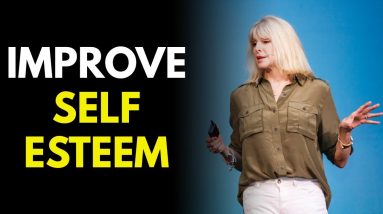
Many lifters that squat in the gym don’t simply want to “train their legs,” they want to get stronger and move serious weight, as well. Jesus Olivares knows a thing or two about squatting a lot of weight. As a matter of fact, he knows at least three things.
Not only has Olivares squatted over 1,000 pounds three times in powerlifting competition — always lifting raw, breaking the barrier twice in the same meet — but he’s willing to share his knowledge with his 138,000 plus followers on Instagram. In a recent post, he shared a total of four tips that he applies to every squat he performs in training or competition.
View this post on InstagramA post shared by Jesus Olivares (@mega.gojira)
More from Breaking Muscle:
- Back Squat vs. Front Squat: Which, When, and Why
- Learn How to Build Strength with Three Key Principles
Find Your Best “Shelf”
When Olivares referred to the shelf, he’s talking about where the bar would be sitting on his upper back and shoulders.
“The “shelf” is the first point of contact between you and the bar. It’s going to determine a lot such as bar placement and bar path … Whatever you decide, I urge [you] to find the perfect combo between stability and comfort, sometimes you can’t have both. So pick whichever you prioritize!”
He went on to talk about three positions that the barbell could be placed on the shoulders — low, mid, and high. Olivares could be considered a low-bar squatter based on his personal lifting style. He explained that the goal should be to flex your back around that placement for comfort and stability.
He also emphasized hand placement so the bar can be kept in place throughout the lift. The goal should be a balance between comfort and stability. You may have to compromise one to emphasize the other, according to the 120-kilogram-plus athlete who holds the All-Time World Record powerlifting total.
Have a Strong, Stable Walkout
Wasting time and energy is counterproductive when it comes to the squat. Lifting the bar from the rack, and then taking several steps to walk it out, and then trying to adjust while the weight settles can not only make the attempt harder, it could lead to injury.
Olivares advocates for a short and sweet pick and settling of the weight before going down into the hole. Take no more than four steps to get into position and make sure the bar is stable on your back.
“This is a game of efficiency and proficiency. Be patient but do not take any more time than what you need … Practice makes improvement.”
If you’re making an attempt in competition, then you don’t have much time to do this. Practicing with lighter weights in training would be a wise move.
Breathe and Brace Correctly
The squat is always associated with leg training, but it really is a full-body movement. Your legs are the primary driver, but Olivares emphasized the importance of a strong and dependable core to transfer power and improve overall technique.
“Bracing isn’t just flexing your abs but also incorporating obliques and mid/low back. The action of engaging your entire midsection is what will protect your low back while also creating the rigidity you require.”
View this post on InstagramA post shared by Jesus Olivares (@mega.gojira)
More from Breaking Muscle:
- The 20-Rep Squat Program for Old School Size and Strength
- How to Eat More for Muscle and Strength Gains
Bonus Tip: Time Your Descent to Explode Out of the Hole
Whether you’re in the gym or on the platform, you don’t want to be under the bar any longer than necessary. Taking a long negative can show control, but it can also zap the body of energy. Olivares isn’t getting paid by the hour when he competes. Even though he wants to be in control throughout the rep, he wants to get down and up as quickly as possible so he builds tightness as he lowers into the bottom position before “blowing up” to rise out of the hold.
” … you feel your internal pressure increase as you go into the hole of the squat and at your lowest and deepest point is where you’ll feel the most pressure. It is at this point where you want to time the reversal of momentum to help you on your way up!”
Jesus Olivares — All-Time Raw Competition Bests (+120KG)
- Squat — 470 kilograms (1036.1 pounds)
- Bench — 272.5 kilograms (600.7 pounds)
- Deadlift — 410 kilograms (903.9 pounds) — IPF World Record
- Total — 1,152.5 kilograms (2,540.8 pounds) — IPF All-Time World Record
Olivares last competed in June 2023 at the 2023 IPF World Classic Powerlifting Championships, where he won the 120-plus kilogram championship with a World Record total of 1,080 kilograms (2,381 pounds), including a 455-kilogram (1,003.1-pound) squat. His personal best competition squat is 470 kilograms (1,036.1 pounds), which he achieved at the 2023 IPF Sheffield Powerlifting Championships in March. As of this writing, there is no word on when he will compete again.
Featured Image: @mega.gojira on Instagram
The post World-Record Setting Powerlifter Jesus Olivares Shares Four Technique Tips to Squat More Weight appeared first on Breaking Muscle.