

2023 Rising Phoenix World Championship Card Features Fitness Model Andrea Shaw as Headliner
Even with the Ms. Olympia being brought back in 2020, the Rising Phoenix Women’s Bodybuilding World Championship is still a very prestigious title within the world of women’s bodybuilding. Jake Wood and the team at Wings of Strength go all out in making this show a contest worthy of the best female bodybuilders in the world. Wood’s team announced the roster of athletes competing in the 2023 contest in Phoenix, Arizona on September 30th in an Instagram post on May 29th, and you can see the full list below.
View this post on InstagramA post shared by Wings of Strength (@wingsofstrength)
- Andrea Shaw*
- MayLa Ash
- Michaela Aycock
- Leah Dennie
- Reshanna Boswell
- Nicki Chartrand
- Desunka Dawson
- Chelsea Dion
- Julia Fory
- Natalia Kovaleva
- Rene Marven
- LaDawn McDay
- Kristina Mendoza
- Sheena Ohlig
- Sherry Priami
- Virginia Sanchez
- Melissa Teich
- Tina Williams
- Angela Yeo
- International Winner
*Defending champion
The last spot on this list is an interesting one. The Ms. International contest’s date has yet to be announced, but the winner of that contest will be invited to compete in this show as well.
Past Champions
Shaw is the defending three-time champion, but this contest goes back to 2015. The past four winners of this show are listed below.
- 2020-2022 – Andrea Shaw
- 2017, 2019 – Helle Trevino
- 2018 – Alina Popa
- 2015-2016 – Margie Martin
Shaw is already the winningest champion in the contest’s short history, but she clearly wants to tack onto that record by winning her fourth championship. She’s also the three-time and reigning Ms. Olympia. The Rising Phoenix show has doubled as a show that gauged how she would fare at the Olympia. This year, the two contests are a mere six weeks apart. The Olympia will be held on Nov. 2-5 in Orlando, FL. Shaw having to peak twice may make this a unique challenge.
That said, Shaw is considered the early favorite to win number four in both the Rising Phoenix and the Olympia. No other past champions are in this lineup, but Ash was the runner-up to Shaw in the Rising Phoenix show in 2022, and Yeo was the Ms. Olympia runner-up. Both ladies are in this contest. Ash has quite of experience under her belt while Yeo is considered a future superstar in the IFBB Pro League. Either competitor could potentially break Shaw’s streak and win the title, $50,000 prize money, and 2023 Ms. Olympia qualification. If they were, how would that affect the Ms. Olympia contest in Orlando?
You can get tickets or learn more about the Rising Phoenix by going to www.wingsofstrength.net .



Elevate Your Workout’s Mental Health Benefits with a Beach, Lake or River Session
Glancing through resort advertisements, you can’t help but notice the overwhelming presence of ocean and coastline beckoning you to leave all your stressors behind. It’s no accident that blue spaces—which include all waterscapes and their environments—are front and center in vacation ads, or that condos with a water view are priced at a premium. Humans feel an ancient and irresistible pull toward the water, and the fields of evolutionary and psychological study have been turning up evidence of how deep and influential this drive can be.
Essentially, blue spaces have the power to improve our mental and physical health and foster meaningful mind-body connections—similar to the way that exercise can. “A blue space setting can increase one’s physical activity levels, boost mood and well-being, and lower stress and anxiety,” says Reena B. Patel, LEP, BCBA, positive psychologist, and licensed educational board certified behavior analyst.
Taking your workouts to the beach, lake, river, or any other space near a natural body of water may provide compounding benefits beyond those you’d get from indoor gym sessions. “While exercise has many physical health advantages, it also plays a beneficial role for our mental well-being, and pairing fitness and movement with blue areas can increase both,” says Patel.
Benefits of blue spaces for mind and body
Researchers have reached the consensus that human relationships to water influence identity; sense of belonging and place; and physical, emotional, and spiritual wellness. Throughout history, waterscapes have been a destination for relaxation, fun, sport, and leisure, while also being considered healing and invigorating. While this has been obvious in so many cultures for thousands of years, science also backs it up.
“Being in natural spaces has been shown to improve well-being by lowering stress levels and reducing symptoms of anxiety and depression,” says Amy Mezulis, PhD, co-founder and chief clinical officer of online therapy platform Joon. “Time spent in blue spaces may help people buffer against the effects of stress by reducing sympathetic nervous system activation, lowering cortisol levels, and expanding the internal ability to access good coping resources.”
So, what does that all mean? A calmer, less stressed version of yourself.
“Sensory input is a key component to cultivating mindfulness, and mindfulness has both direct and indirect mental health effects,” adds Dr. Mezulis. Blue spaces offer plentiful sensory input, such as the color contrasts of water against the landscape and the sounds and smells associated with that water and its movement. “This sensory mindfulness, in turn, supports us in slowing down, grounding in the present reality, and finding a sense of inner peace,” Dr. Mezulis explains.
Combining fitness with blue spaces
It seems that simply existing near water can lead to more movement in your life. In fact, access to blue spaces is associated with significantly higher physical activity levels, according to findings published in The International Journal of Environmental Research and Public Health. The more blue spaces near your home, the more likely you are to be active, which makes sense: In addition to providing opportunities to swim or row a boat, many lakes and rivers are flanked by running and biking paths, while sandy beaches naturally invite active recreation, from surfing to volleyball to long walks (romantic or otherwise).
Interestingly, several studies have found that physical activity is the key ingredient that connects being in natural spaces to better well-being. “People who use blue and green spaces for physical activity have better mental health outcomes than those who do not,” says Dr. Mezulis. Of course, we know that physical activity has major mental health benefits, like lower stress, improved perspective, and a better ability to problem-solve. “Physical activity in a blue space maximizes those benefits,” she adds.
According to Dr. Mezulis, being active in spaces that encourage mental and physical balance likely helps you benefit further from connecting your mind and body. “Any time we want to engage in behaviors that promote our mental health and well-being, two important components are time and intention,” explains Dr. Mezulis. “We can gain the most benefits from blue spaces when we make it a priority to spend time in those spaces with the intention of making that time beneficial for our mental health.”
How to get started
If you want to reap these benefits, intentionally schedule regular time to be in blue spaces and plan physical activity around those opportunities. Maybe it’s taking a walk to a local pond or river, or going swimming in a lake. Even simple strolls alongside streams or brief toe dips into the ocean can have mental health benefits if you bring a reflective mindset with you.
Or, if you’re feeling adventurous, incorporate the water itself into your workout and make exercise more exciting by trying paddleboarding, surfing, or kayaking to add variety.
Above all, be mindful: “Stay present by taking time to appreciate its beauty,” suggests Patel.


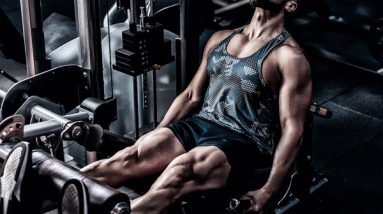
Discover the Effective Feeder Workouts: Unlock the Secret to Building Impressive Muscle Mass
Feeder workouts are quick, high-volume, light weight workouts, that can help increase blood improve muscle size and strength. Coined by bodybuilder Rich Piana, feeder workouts can help improve muscle size by constantly providing or feeding the muscle, with more nutrients, blood flow and oxygen. We’re going to talk more about feeder workouts and how this workout protocol can help you grow more size where you need it.
What Are Feeder Workouts
The theory behind a feeder workout, is that low weight, high volume workouts, performed every day, at 2-3 sets of 20-50 reps can help significantly add more size and strength. For example, performing light weight bicep curls, at 100 reps, every night will provide more nutrients, blood flow and oxygen, thus “feeding” your muscle tissue and help you grow more size.
Do Feeder Workouts Work
According to the principles of muscle protein synthesis, feeder workouts, should in fact, be able to increase muscle size and strength.
Muscle protein synthesis is the biological process of building new protein cells to rebuild and repair muscle tissue, via amino acid utilization. This biological process is a result of intense physical stress, caused by micro-tears and mini trauma done to the muscle tissue during training. Although you’re not using heavy weight in a feeder workout, does not mean it is not intense, or creating micro-tears in the muscle.
Studies suggest that the intensity/workload is negligible on the rate of MPS. MPS is truly controlled by exercise in addition to nutrient intake.
The human body is comprised of 650 skeletal muscles, composed of thread-like myofibrils and sarcomeres which can achieve growth, through the process of repeated muscle contraction. The metabolic change for how muscles grow, is an increase in net muscle protein balance, which is simply the difference between muscle protein synthesis and muscle protein breakdown. An increase in net muscle protein balance, is a direct response to resistance training and nutrition which stimulate anabolic response through muscle protein synthesis [R].
Muscle growth takes place in two different forms, hypertrophy and hyperplasia. Hypertrophy is an increase in muscle size due to an increased in the size of muscle muscle fibers, while hyperplasia is an increase in the number of muscle fibers. Hypertrophy is achieved through increased muscle tension and physical stress, breaking down muscle fiber. Growth is a result from overcompensation to protect the body from future stress [R].
Resistance training places intense physical stress on your muscle fibers, creating microtears and trauma to your muscle tissue, stimulating the muscle building process. The rate at which you build muscle depends on several variables related to resistance training, such as training volume, load, workout intensity, and duration. Maximizing muscle growth through training, will also depend on how many sets and reps you do.
Training for maximal muscle growth requires higher volume training and more intensity, with minimal rest periods. This will essentially force cellular changes which will result in increased muscle growth.
Therefore, feeder workouts, should in fact work, and work very well to induce more changes in muscle size and strength.
RELATED ARTICLE How Do Muscles Grow
The other component to muscle growth, is nutrition. Protein is vital to initiate muscle protein synthesis to rebuild and repair muscle. Protein is comprised of amino acids, which stimulate the muscle building process. This is why you see bodybuilders such as Piana supplement with a protein shake. It’s important to flood your muscles tissue with the fuel it needs to maximize performance. Drinking a protein shake before your workout will help elevate amino acids in your bloodstream at a much faster rate, than food alone. The short rush of amino acids is known as hyperaminoacidemia and stimulates greater amounts of muscle protein synthesis. Having a flood of amino acids post-workout is just as important, as it will help with muscle growth and optimize your post-workout recovery.
If you’re not exactly sure where to start with your nutrition, schedule a free nutrition consultation with a certified nutrition coach at The Swole Kitchen. Take the guess-workout out of your nutrition and get results right away.
Feeder Workouts: Takeaway
Adding feeder workouts to your normal training protocol, or workout split, could in fact help you grow muscle size and strength in acute areas of focus. If for example, you need to grow your biceps, or quadriceps for a more balanced physique, then you can add a feeder workout, with more volume, of 50-100 reps of bicep and leg curls to help grow more size and strength. Rich Piana was one of GOATS in bodybuilding and always had an amazing physique. So, it’s probably worth a shot.
Need Help With Optimizing Your Diet, Nutrition, And Training Plan To Finally Get The Results You’ve Been Waiting For Without Having To Diet At All?
The Swole Kitchen provides 1:1 nutrition coaching, macro coaching, and custom meal plans to help guide you to becoming the best version of yourself. We teach you how to enjoy the foods you love in the right amounts, so you can fit into your favorite pair of jeans, hit your health and fitness goals, and be healthy and happy. We guide you through making sound nutritional decisions and teach you along the way, so you can learn how to take control of your health, and discover what if feels like to live again.

SWOLVERINE IS AN ENDURANCE ATHLETE AND ACTIVE LIFESTYLE BRAND. MADE FOR THE ELITE ATHLETE, AND THE STRONG-WILLED OUR PRODUCTS WERE DESIGNED TO FUEL YOUR ATHLETIC PERFORMANCE. WE PERFORM WHEN YOU PERFORM.
We believe that everyone can optimize not only their athletic performance but their human potential. The way we believe we can optimize performance is through transparency, clinically effective doses, and clinically proven ingredients with evidence-based outcomes. We provide the nutrients you need to power your active lifestyle.