
10 Proven Strategies for Maintaining Optimal Digestive Health
The stomach is an incredibly powerful and vital organ responsible for digesting food through the release of enzymes and digestive fluids. With its muscular and J-shaped structure, it acts as a temporary storage unit for food, breaking it down into smaller components for further digestion in the small intestine.
However, neglecting the proper care of your stomach can lead to a range of painful and uncomfortable disorders such as indigestion, bloating, and burning sensations. These conditions can be debilitating, especially when they occur frequently.
But fear not! There are numerous effective steps you can take to maintain a healthy stomach and prevent these disorders from occurring.
Hence, this article will discuss effective ways to keep the stomach healthy.
1. Drink plenty of water
There is nothing better than taking much water for your body. Drinking less water slows down your digestive system’s creatinine each day to keep your system healthy.
When your urine is odorless and clear, it’s an indication you’re taking enough water.
Drinking a reasonable amount of water is the first step to having an effective healthy stomach. To avoid problems for our stomachs, we must drink enough quantity of water.
Secondly, water eliminates toxins from our stomachs. So it is advisable to take two glasses of lukewarm water for a clear and clean stomach first thing in the morning. It is one of the healthy things to do after waking up.
A person should take at least eight glasses of water or 3.2 litres daily to remain hydrated.
2. Increase your fiber intake
Fiber is essential to your body. Fruits, vegetables, and whole grain products are abundant in fiber.
Eating foods that are rich in dietary fiber increases the weight and size of your stool, as well as softens it.
A bulky stool is easier to excrete, and reduces your risk of constipation. If your stool is loose and watery, fiber can solidify the stool because it absorbs water, hence adding bulk to stool, and maintaining your bowel health.
Furthermore, fiber helps the stomach expel waste products from the stomach and strengthens the walls of the intestine.
Fruits like mangoes, avocados, strawberries, and dried fruits like raisins and prunes give the required fiber and keep the stomach clean and healthy.
3. Eat on time
Eating on time is one of the effective ways to keep the stomach healthy because it promotes regular digestion and prevents overeating, which can negatively impact digestion.
When we go extended periods without eating, we are more likely to eat quickly or eat more than we need at our next meal, leading to discomfort and digestive issues.
Furthermore, eating on a regular schedule can help regulate glucose tolerance, which can impact cognitive function and memory. Overall, maintaining a consistent meal schedule can help prevent stomach upset and promote healthy digestion.
4. Take your time when eating
Another reason for many people’s stomach upset is indigestion. Eating fast or large bites can also create problems in your stomach, making it tougher for your digestive system to process the meal.
This could upset your stomach or adversely impact your digestive system. By chewing food well, you can prolong the delicious taste of the food and aid easier digestion.
Never swallow food whole because food and air can enter the digestive tract together, which could cause stomach disturbance. Eat slowly, and make sure you chew each bite thoroughly. This will lessen stomach bloating and discomfort.
So, before eating, pay attention to the meal’s looks, tastes, and scents on the plate. Avoid eating mindlessly, take your time to sit, and avoid eating on the go, in front of the TV, or working at a desk. Sitting down should be all you need to do. This will allow your body to be at rest and digest mode.
5. Quit smoking
Although you probably understand that smoking negatively affects your lungs, you might be shocked to learn that it’s also unhealthy for your digestive system.
The likelihood of having acid reflux has been proven to be significantly increased if you smoke, and symptoms have been proven to improve once you stop.
Additionally, research has linked smoking to stomach ulcers, a higher need for surgery for gastrointestinal malignancies, and ulcerative colitis.
6. Eat a diet that includes probiotics and fermented foods
Probiotics are thought of as healthy gut bacteria that are found in the digestive tract and aid in proper digestion.
However, since taking antibiotics can cause the probiotics to be destroyed, it is recommended that you consume probiotics through your diet instead, which will also boost immunity while assisting with digestion. You can regularly get a lot of probiotics from low-fat yogurt or curd.
Thus, incorporate probiotics and fermented foods into your diet to promote healthy gut bacteria.
7. Get quality sleep
Getting enough sleep is an important factor in promoting a healthy stomach. During sleep, the body is able to focus on repairing and rejuvenating various systems, including the digestive system.
Lack of sleep can lead to increased stress levels, which can negatively impact digestion and lead to issues like stomach ulcers or acid reflux.
Sleep deprivation can also lead to changes in hormone levels that regulate hunger and satiety, which can cause overeating or poor food choices. It can also lead to decreased physical activity, which can further impact digestion and bowel movements.
8. Reduce your intake of fatty meals.
Limiting your consumption of fatty foods is another approach to improving digestion. These meals are more likely to lead to stomach issues like constipation.
But maintain them in your diet because they are also necessary to how our bodies should work. Consume them sparingly and endeavor to combine them with nutritious foods.
9. Stomach massage
Stomach massage can help keep the stomach healthy by promoting healthy digestion and relieving digestive issues such as constipation, bloating, and indigestion.
You see, massaging the abdomen can relax the stomach muscles, which helps stimulate digestion and improve nutrient absorption.
To add to that, abdominal massage can help reduce stress and promote relaxation, which can further improve digestion and reduce the risk of digestive issues.
10. Limit your intake of spicy, fatty, or acidic foods
It is essential to limit your intake of spicy, fatty, or acidic foods to maintain a healthy stomach. These foods can irritate the stomach lining, leading to discomfort, bloating, and indigestion.
Spicy foods can increase stomach acid production, while fatty foods can slow down digestion and cause acid reflux. Similarly, acidic foods like citrus fruits, tomatoes, and vinegar can also irritate the stomach lining.
When you reduce your consumption of these types of foods, you can effectively prevent stomach upset and promote healthy digestion, ensuring optimal stomach health.
Conclusion
Each type of stomach upset comes with its level of pain and discomfort. But you can avoid that today by simply following the tips aforementioned in this article. Good digestion gives you a feeling of satisfaction after every meal. You must listen to your body whenever the urge to go comes.
Your lifestyle and choice of food are vital for your stomach to function properly. If you ever feel a stomach glitch, visit a doctor. It might not be a complicated issue, but at least to be on the safe side, you know what exactly to do.
The post 10 Effective Ways To Keep Your Stomach Healthy first appeared on You Must Get Healthy.
The post 10 Effective Ways To Keep Your Stomach Healthy appeared first on You Must Get Healthy.
Jamal Browner Dominates Training for World Deadlift Championships, Conquering 410 Kilograms (903.8 Pounds) with 4 Reps
You can count the number of athletes who have verifiably deadlifted 500 kilograms (1,102.3 pounds) with one hand and you’d still have a finger free. Jamal Browner is one member of this highly exclusive strength club. He has lifted that massive amount with his signature sumo deadlift, but he’s recently been working with a conventional stance to prepare for his first strongman appearance.
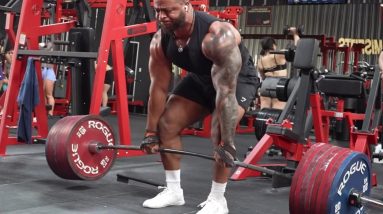
Browner will compete for the first time in the 2023 World Deadlift Championships, which is part of the Giants Live 2023 Strongman World Open on Sept. 2, 2023 in Cardiff, Wales, and he’s been showing signs of steady progress. He offered evidence of his steady strength gains by sharing a recent conventional deadlift of four reps with 410 kilograms (903.8 pounds), which you can see in the Instagram post posted on June 29, 2023.
View this post on InstagramA post shared by Jamal Browner (@jamal_b15)
More from Breaking Muscle:
- Deadlift vs. Romanian Deadlift: Learn the Best Way to Hit Your Posterior Chain
- 7 Tips to Perfect Your Deadlift Form
Browner arrived at the barbell with a relatively close stance and his feet pointed straight ahead and grabbed the bar with the support of “figure-8” lifting straps. As per the rules of strongman competitions, a sumo stance is not permitted, while lifting straps are allowed. This is a significant difference from the powerlifting Browner is more familiar with. The only other supportive equipment he wore was a basic weightlifting belt.
Browner performed the first rep with ease, and followed quickly the second. The third was slightly slower, but he showed no major signs of struggling. He took an extra breath before beginning the fourth repetitions, but when it was completed, he held the lockout for a few seconds before returning the barbell to the floor.
With roughly nine weeks to go before the contest, Browner said in the post caption that he’s feeling good about his training and even felt that he could’ve added up to 10 kilograms to the bar and still performed the same reps with similar effort.
“Strength is trending in the right direction. I think I was good for another 7.5-10kg [16.5 to 22 pounds]. ”
Browner has pulled 435 kilograms (959 pounds) for a single in training as he familiarizes himself with the conventional stance. He has a long history of heavy lifts under his belt, but the recent challenge has been converting to the required conventional stance.
Browner is only the second-ever powerlifter to successfully complete a 455-kilogram (1,003-pound) deadlift at the 2022 United States Powerlifting Association (USPA) Raw Pro in September. Just a few months later, he pulled the same weight for two reps in training without the aid of lifting straps. Both of these were completed with a sumo stance.
View this post on InstagramA post shared by Jamal Browner (@jamal_b15)
More from Breaking Muscle:
- 6 Deadlift Benefits Everyone Should Know About
- Learn How to Build Strength with Three Key Principles
The upcoming deadlift contest will also serve as the opening event for the Strongman World Open contest. The 2022 World Deadlift Championship (WDC) was won by Rauno Heinla, who deadlifted 476 kilograms (1,049.4 pounds) to also set a Masters world record. Heinla will be in the contest to defend that title as well as try to win the overall contest.
2021 WDC champion Ivan Makarov will also be looking for another title. Makarov, himself, recently shared an impressive training update deadlifting the current record — 476 kilograms(1,049 pounds) — for two repetitions.
Even though Browner will be required to use the conventional foot placement, he will also be allowed to use lifting straps as well as a deadlift suit, which could help him greatly in this contest.
Featured Image: @jamal_b15 on Instagram
The post Jamal Browner Pulls 410 Kilograms (903.8 Pounds) for 4 Reps While Preparing for World Deadlift Championships appeared first on Breaking Muscle.
Unlocking Your Full Potential: Embracing a Growth Mindset in Fitness
How you view yourself and other people in the world around you influences all of the things you see, think, and do. This is especially true when it comes to your fitness and how you are able to create new healthy habits around your strength goals. Embracing a growth mindset, rather than a fixed mindset, can have a huge impact on your outcomes and your overall enjoyment in and out of the gym.
Click play to listen right on this page, no app is needed:
Or, listen on your favorite app: iTunes (Apple Podcasts) | Spotify | Stitcher
Want a free week of strength workouts? Click here to get started
Watch the Episode on YouTube Key Takeaways
If You Want to Embrace a Growth Mindset, You Should:
1) Look for examples in your life of times you have shown a growth mindset without realizing it
2) Reframe your challenges as opportunities
3) Collect evidence of your progress on a regular basis
Your Growth is Not Linear
Have you ever thought or said to yourself, ‘I’m just not built to do a pull-up’, or something along those lines? Believing that your qualities or characteristics are set in stone can keep you living in a fixed mindset. This is a common characteristic I see within my community, and it can leak out into other parts of your life and the way you view the world.
By challenging that belief and putting yourself in new and uncomfortable situations, you can stretch yourself and experience the magic that lies in the growth mindset.
Reframing Your Mindset
Strength training and life are about staying in the process and giving consistent effort, regardless of the outcome-based goal. By seeing the value in practice, you can seek out new challenges and experiences that leverage your strengths rather than trying to fix your weaknesses.
We all have days where it’s easier to stay stuck in your fixed mindset. But if you can stretch yourself enough to reframe the way you think about your obstacles, true growth can occur.
Are you ready to ditch your fixed mindset and embrace the growth mindset? Share your thoughts with me in the comments below.
In This Episode
- Why you need to give yourself some grace if you are struggling with mindset (1:44)
- Learn about fixed mindset and why it can hold you back from achieving your goals (3:42)
- Understanding the difference between a fixed mindset and a growth mindset and how it shows up in fitness (6:06)
- What you need to do to nudge past a fixed mindset and develop opportunity (10:25)
- How to leverage the idea of a growth mindset to further your goals in fitness and beyond (14:12)
Quotes
“Whatever you are trying to do, inevitably, challenges in mindset come up.” (2:19)
“As you work towards achieving your goals in fitness, strength, fueling your body in a way that supports performance. You need to do that by showing up consistently and implementing new behaviors; you’ll probably work on forming new habits, which is a great thing, and making different choices. And all of that is influenced by mindset.” (5:00)
“It’s not just about the outcome, it’s about the effort.” (11:32)
“If we don’t ever step up and accept challenges, because we don’t think we can be successful or we don’t think we can win at that thing, its a lot harder to reach our fitness goals.” (13:20)
Featured on the Show
Apply for Strength Nutrition Unlocked Here
Mindset Masterclass
Mindset: The New Psychology of Success by Carol Dweck
Follow Steph on Facebook | Twitter | Instagram | YouTube | Pinterest
I’d really love it if you would take 1 min and leave us a rating and review on iTunes!
Podcast production & marketing support by the team at Counterweight Creative
Support the Podcast
Get 20% off Legion Supplements with code STEPH (20% off your first order, double points on follow-up orders)
Get 10% off GORUCK with code FUELYOURSTRENGTH
Follow Steph on Instagram
Rate and review on Apple Podcasts
Related Episodes
Why You’re Struggling With Motivation To Workout
How To Build An Athlete Mindset Over 40
Growth Mindset in Fitness Transcript
Steph Gaudreau
I’ll never get a pull-up. It’s pointless to even try. If you’ve ever said something along these lines to yourself, this podcast episode is for you. We’re going to be talking about a key mindset shift you need to be aware of, and three ways that you can implement it so you get better results with your fitness. If you’re an athletic 40, something woman who loves lifting weights, challenging yourself, and doing hard shit, the Fuel Your Strength podcast is for you. You’ll learn how to eat, train and recover smarter, so you build strength and muscle, have more energy, and perform better in and out of the gym. I’m strength nutrition strategist and weightlifting coach, Steph Gaudreau.
The Fuel Your Strength podcast dives into evidence-based strategies for nutrition training and recovery. And why once you’re approaching your 40s and beyond, you need to do things a little differently than you did in your 20s. We’re here to challenge the limiting industry narratives about what women can and should do in training and beyond. If that sounds good, hit subscribe on your favorite podcast app, and let’s go.
What’s going on? Welcome back to the podcast. Thank you so much for being with me today. On the show, we’re going to be going over today a very common mindset challenge that I see in my community. And that includes my strength nutrition on lots of members. But also, those of you out on my Instagram, DM’s sending me emails in the IG comment section. This is just so very common. And I hope that by listening to this episode about this particular mindset challenge, getting some insight, and then a couple of tips you can maybe take away, you’ll understand how to keep an eye out for this particular mindset as it may show up in your life.
And just to know that in mid-life, especially I hear from so many of you that now you’re 40 or over and you’re trying to build your fitness, like you’re excited to get in there and lift weights, you’re trying to improve your cardiovascular fitness, whatever you’re trying to do put on some muscle you want to get stronger. And inevitably, challenges in mindset come up because this is a time when your body is changing. Physiologically, maybe there are things going on in your life that are making it challenging, right? A lot of shifts go on in this period of life, and a lot of stressors come on. So how can you gain a little bit of insight into this very common mindset challenge? So this episode is going to be kind of on the shorter side, but still hopefully bring you lots of quality content. And of course, if you’ve missed any of the recent episodes, and you want to keep listening, go ahead and dive back into the archive.
Before we dive in, if you listen to this episode, and you’re like, Okay, I am ready to get to work. I want to take my strength, muscle energy, and performance and take it up a notch, I want to take it to that next level, I want to feel like a badass, but at the same time, do it in a way that works with my physiology as an athletic woman over 40 with coaching and community support. And go ahead and check out Strength Nutrition Unlocked. This is my group program, we’re going to lay out the framework for you and guide you as you implement and really customize it to all the things that you’re doing your preferences, your likes, and the places you want to go with it, then go ahead and get onboard, you can start your process by submitting an application at StephGaudreau.com/apply. We would love to hear from you and see you inside the program.
Okay, so today we’re going to talk about fixed mindset. And I gave you an example at the top of the show, I hear this all the time, you know, I’ll just never get to pull up like why bother trying? And it’s just one, just one tiny example of other types of fixed mindsets that do occur in the realm of fitness. Quick disclaimer, before I go any further, I am not a psychologist, nor am I a mental health professional. I am a sports nutritionist, a strength coach, and somebody who’s worked with 1000s. At this point, women are on topics where mindset does intersect. I also happen to have recently pursued a health mindset coaching certification, so that I can really take my skills in this area to the next level and serve my clients a lot better. So this is really top of mind.
But truly every client that I interact with, whether it’s my strict nutritional locked members, or my one on one client’s mindset is at some point going to come up because as you work toward achieving your goals in fitness and strength, you’re trying to fuel your body in a way that supports performance. You need to do that by showing up consistently and implementing new behaviors. You’ll probably work on forming new habits, which is a great thing and making different choices. And all of that is influenced by mindset. Now there there’s far more to the topic of fixed and growth mindset than I’m going to talk about here on this episode. But suffice to say, it’s worth checking out. And if you want to go a little bit deeper on this topic of mindset, and fitness, I really encourage you to check out the masterclass that I have on this and you can find that at StephGaudreau.com/masterclass.
So what is ‘mindset’, just a quick and dirty definition, here it is your viewpoints on yourself and other people in the world around you that influence all the things that you think, feel, and do. So that’s just a super quick definition. But we know that mindset is studied in psychology, there are so many evidence-based practices out there. And so it’s something that does influence and does intersect your ability to commute, continue to show up, do your training and get into the gym. Let’s then take a quick moment and define what is a fixed mindset versus its partner the growth mindset. So first and foremost, this concept of fixed versus growth mindset originated with psychologist, Carol Dweck, who began studying this in the 1970s.
And then in 2006, she published a book called ‘Mindset, the new Psychology of Success, How We Can Learn to Fulfill Our Potential’. I actually first learned of Carol Dweck’s work when I was a high school teacher. So this takes me back quite a few years to be in the classroom, and really trying to understand how students learn and how we can use the concept of growth mindset to help our students now, it turns out that this concept has now been applied to lots of different areas, including fitness. So what is a fixed mindset? A fixed mindset is the viewpoint that qualities and characteristics are set in stone. And that success, your success is due to things like talent, or the traits that you were born with. And so, as it implies, fixed, means it can’t change. Why this is challenging for people is it can make failures and setbacks seem completely insurmountable.
As you can never improve, you can never get past the setback, or the roadblock that you just encountered, especially if we’re talking about your training in the gym, obviously, that’s the context we’re talking about here. Or that you’re just naturally bad at things that are challenging. So you know, I’ll just never be good at getting a pull-up. Sometimes people will say things like that, you know, it’s never going to happen. Like, no matter how hard I try, it’s just never going to, it’s never going to be something that I can do. So if we have this idea that there is a fixed mindset, where does it show up for people in fitness, I gave the example again, of pull-ups. But here are some more think-about examples that you’ve heard, or things that you’ve said, or pay attention to the language here that you might have heard of. So you might hear people say, I’m just not good at fitness, and I never will be, it’s just not going to happen for me. Right?
My lifting isn’t getting, it’s not improving very quickly, or it’s not getting better fast enough, I’ll never get the hang of this, again, it is a little bit more common, and people who are newer to lifting or newer to fitness or newer to the gym. But that idea that you know, it’s just not happening quickly. And so it’s never going to kick in like I’m never going to get better at this. I’m too old to start lifting weights if I had $1. For every time I’ve seen this or heard this, you know, it’s just too late. I’m 40, or I’m over 40 now and you know, like I missed the boat, I have bad genes or have bad genetics, right? Nobody in my family is athletic. I don’t come from an athletic family or I don’t come from a family that people were good at these sorts of things. You might have also heard things like I’ve tried lifting before, but never really saw. It didn’t do anything for me. Right? I never really saw any benefits didn’t really do anything. It’s just not worth the effort. I heard this one a lot.
Well, Steph is easy for you. You’ve been athletic your whole life. And I haven’t, or, you know, they’re really good at that because they are just naturally athletic. And I’m not therefore I won’t ever be good at that. And this one, I hear quite a bit, that hiring a coach means I’m a failure. And I couldn’t do it myself. So, therefore, I’m not going to take that step. I’m going to keep trying on my own even though it’s, you know, it’s not really getting me anywhere. If I go and hire a coach or a professional somebody to help me with my programming or helped me with my nutrition. It just means I’m admitting defeat or it means I am a failure. Not even that I wasn’t being successful at the behavior change but that I didn’t internalize it as a failure. So, of course, there are tons of other examples. These are just a few.
So the next part of this is what do I do instead? What do you work on instead? Or what is necessary to start nudging past? This very fixed mindset, right? To see the opportunity? So instead, we work on developing a growth mindset. So growth mindset, and a fixed mindset, are the two things that Carol Dweck really describes. And how we can define it or describe it, right? You can think about it is basically going to be the opposite of the things I talked about. But a growth mindset is the belief that you can be successful because you put in effort, you learn from mistakes, or setbacks, and you persevere in the face of challenges. This is huge. And as soon as I started to coach little kids, so I coach little kids jujitsu, there are between the ages of four and seven.
The average age, the average age is like a kindergartner. And some of them are very competitive, which Hello, I definitely see my childhood, and maybe even current self in some of those students, like very competitive, they want to win every game, they get upset when they don’t win. So one of the things I always tell them is, did you try your hardest, we talked about the value of giving effort, and why that really, really matters. It’s not just about the outcome, it’s about the effort. So that’s really huge. And you know, if we think about it, that is one of the characteristics of encouraging a growth mindset. People with growth mindsets, see failures, and setbacks as opportunities for learning. And again, further growth. And this is really important, because sometimes when you have a very fixed mindset, for example, about fitness, you may not even try something because you’re sort of convinced that you’re not going to be successful, right?
You’re, you’re like, This is going to be too hard. And, that’s the great part about fitness is that we know if we stretch ourselves a little bit, that’s where the magic is. The growth literally is in picking up that slightly heavier set of dumbbells, or whatever that thing is. Recently, I was reviewing one of my clients, exercise logs, and she wrote something like, she picked up the 35-pound kettlebells just to see what would happen. And then she’s like, turned out it was too heavy. So I went back down. And I was like, that’s huge, because you went to the next challenging step right? The next challenging Wait, you tried it out, even though it didn’t happen? Yet, right? So you picked up the heavier set of weights to try what would happen and see what would happen.
That right there like taking that challenge on is how we get stronger. If we think about it from a physiological level, or how we become fitter or how we become more we improve our capacity, we improve our endurance, for example, is that we progressively do harder things, we recover from them, of course, and we eat an appropriate amount of food, which is a completely other podcast. As you know. However, if we don’t ever step up and accept challenges, because we don’t think we can be successful, or we don’t think we can win, and that thing, then we may see that artwork, it’s a lot harder to reach our fitness goals. For example, people with a growth mindset see value in practice and effort, as I mentioned earlier, so they see value in attaining the skills not only attaining the outcome, right? So attaining the skill or practicing the skill, making the skill more efficient. And they appreciate the opportunity for feedback as a chance to improve.
This one is really hard, I will admit, sometimes hard for me as well. But they see feedback as a chance to improve not something like a personal attack, right? They seek out challenges and new experiences. So think about in fitness, with your lifting with your cardio with whatever skill you’re trying to acquire, maybe you’re trying to improve your mobility. How can you leverage this idea of a growth mindset to further your goals in these areas? So here are three examples of things to think about. The first one, so what do we do? For like, Okay, I realized I have a little bit of a fixed mindset here, how can I nudge in the direction of a growth mindset? There are so many examples of this, I have only scratched the surface. But here are some takeaways for you. Number one, look for examples in your life where you’ve actually shown a growth mindset.
Because chances are you’re not just only one way or only the other. You’re not only having a fixed mindset about every single thing in your life. Neither do you probably have a growth mindset about everything in your life? It’s all about nudging toward that direction. So is there a challenge? Is there something in your life that you’ve learned? Something you’ve improved, where you have displayed a growth mindset, you have displayed tenacity you have learned from your mistakes, you have noticed the value of feedback from others, you have continued to put in effort, right? You have believed that it wasn’t just something you were born with. So think about an example where you’ve displayed that growth mindset and how can you leverage that? Right? leverage your strengths, not just always try to fix your weaknesses, and reframe challenges as opportunities.
What is the opportunity here? And I think this is really important. And when we have students come into Strength, Nutrition, Unlocked, they go before they even go into anything regarding nutrition, lifting or recovery, right? Any of that we start with mindset. And it’s really about looking for the opportunity, what is the opportunity here to change something. And the third one is to collect evidence of your progress on a regular basis, this could be so many things, but in the context of lifting, it could be something like, Am I recording my workout, so some kind of autoregulation or maybe even taking video of yourself, right video is hugely powerful. And it’s a great way to notice what’s improving, or what’s changing. As you continue, to live, you don’t have to collect data on every single thing.
But it can be really powerful evidence of how you are continuing to actually stay in the process and give consistent effort, not just to get the outcome-based goal, but also to engage in the process, right to keep implementing the behaviors over time. That is really what matters. So if you’re not collecting any evidence of your progress, it can feel like you’re not making any progress, especially if you’re sort of not aware of what your goals actually are. And that’s a whole other conversation altogether.
Alright, let’s summarize this episode, you learn what is a fixed mindset. And what are its characteristics that we defined, what is a growth mindset, we also looked at some ways that a fixed mindset might show up in training or with fitness. And there are so many other examples that we didn’t even touch on with nutrition and recovery and all of the other pieces. And then we also looked at three ways that you can start to lean into this idea of a growth mindset.
Of course, this is not an exhaustive podcast on this topic, but just a little taste. So if you want to go further and get the full masterclass that I did on this topic, then go ahead and check out StephGaudreau.com/masterclass, of course. And if you’re ready to jump right in, you want coaching you’re ready to like, let’s walk and go and do this, then we want to support you in strength nutrition unlocked. That’s our group program where we dive into these topics and more. So go ahead and check that out at StephGaudreau.com/apply.
Finally, hit that subscribe button on your favorite podcast platform. It really does help so much. And also hit subscribe, and the bell for notifications over on YouTube. And stay tuned for the next episode in this little series where we’re going to be talking about the next mindset challenge that is so common for athletic women over the age of 40 who are trying to improve their fitness. Until then, stay strong.

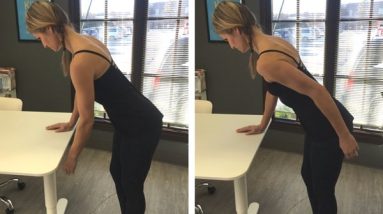
8 Effective Exercises to Alleviate Shoulder Discomfort
Shoulder pain can be very disruptive to your everyday life. And shoulder injuries can be complicated, so you’ll want to understand the shoulder itself and the different possible injuries before you begin with any of our exercises for shoulder pain.
If you have ever injured or hurt your shoulder, you know that lifting grocery bags, carrying a purse or even just trying to open a door can be impossible. But I am here to help!
PLEASE NOTE: These exercises are not prescriptions specifically designed for you. Please see your doctor or physical therapist and find your specific injury and prescription for healing.
Pendulum Swing
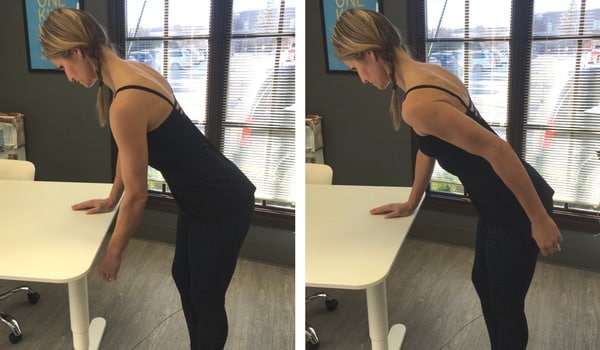 Photo Credit: Get Healthy U
Equipment: None
Repetitions: 2 sets of 10; 5-6 days a week
Prepare your shoulder and warm it up with this move. Lean over a countertop or table, placing the non-injured hand on the table for support. Let your other arm hang freely at your side, then gently begin to swing it forward and back., side to side, and in a circular motion.
Door Jam Stretch
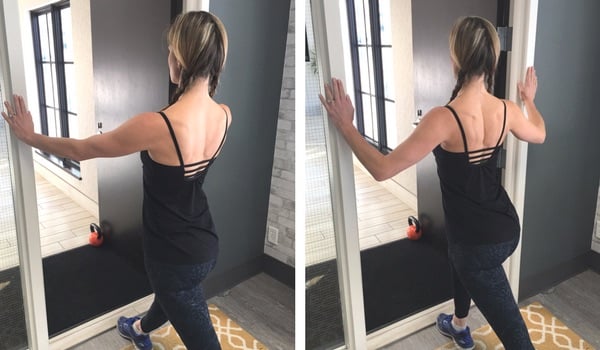 Photo Credit: Get Healthy U
Equipment: None
Repetitions: 5; 5-6 days a week
Stand in an open doorway and grip the hands to the side of the doorway slightly below shoulder height. Put one foot in front and one behind, then lean slightly forward until you feel a light stretch. This is the start position. Now, with your spine straight, shift your weight into your toes until you feel a stretch in your shoulders. Do not overstretch. Pause for a moment, then roll back. Repeat five times.
Chair Shoulder Press-Ups
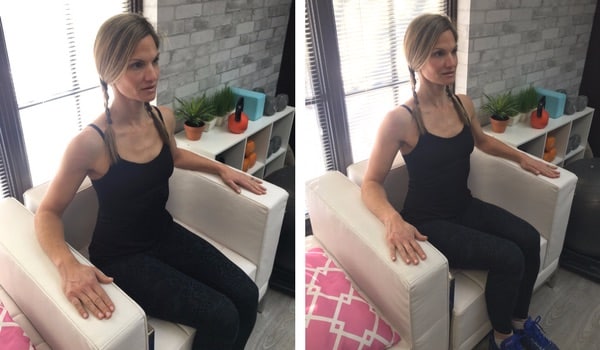 Photo Credit: Get Healthy U
Equipment: None
Repetitions: 5; 5-6 days a week
Sit upright in a chair that has arms. Start by placing your arms on the chair arms and lengthen your spine to sit as tall as possible with your feet on the floor. Use your arms to lift your body slightly off the chair while simultaneously pulling your shoulder blades down behind you. Hold for 5 seconds, then lower back to seated. Repeat five times.
Shoulder Band Pull
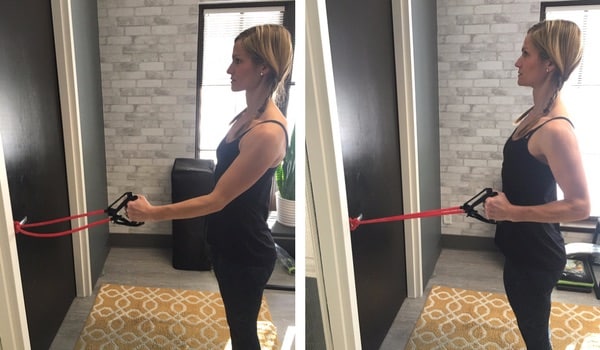 Photo Credit: Get Healthy U
Equipment: Elastic Band or Tubing
Repetitions: 5-8 per arm; 4-5 days a week
Attach elastic tubing to a doorknob at home. Face the door holding the tube with your hand. Gently pull the elastic tubing toward your body with your elbow bent, keeping your arms close to your ribs. Hold for five counts, then slowly release. Keep your shoulder down, and don’t “scrunch.” Repeat five times; switch arms. (good to work both sides!)
Side-Lying External Rotation
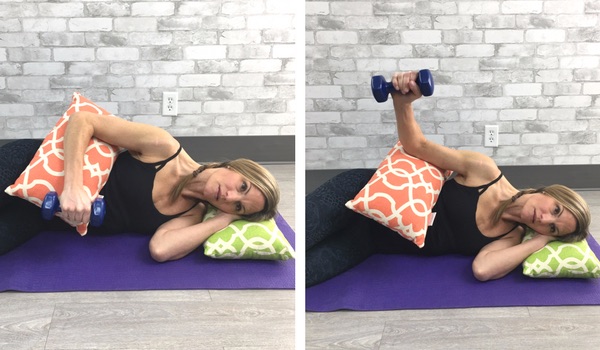 Photo Credit: Get Healthy U
Equipment: light dumbbells
Repetitions: 8-10 per arm, 4-5 days a week
Lie on a firm, flat surface on the side of your healthy arm with a pillow or blanket under your head. Place the hand of your healthy arm under your head and hold the dumbbell in the hand of the injured arm, palm down and elbow bent 90 degrees. Raise the dumbbell slowly until the arm is at a vertical position (a pillow underneath this arm can be helpful for stability), then slowly lower down. (Switch sides if desired – it is good to work both shoulders)
Side-Lying Internal Rotation
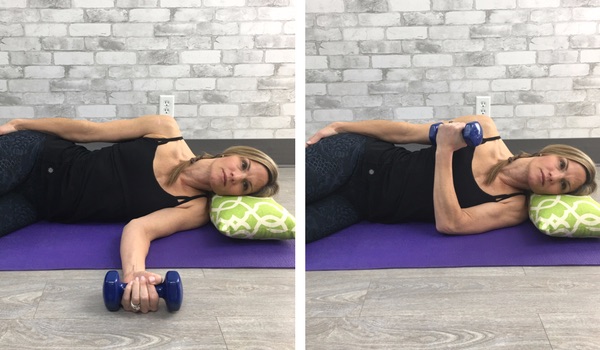 Photo Credit: Get Healthy U
Equipment: light dumbbells (1-2 pounds) or soup cans
Repetitions: 8-10, 4-5 days a week
Lie on a firm, flat surface on the side of your injured arm with a pillow or blanket under your head. Hold the injured arm against your side, elbow bent at a 90-degree angle, and holding a dumbbell. Raise the dumbbell slowly until the arm is at a vertical position, then slowly lower down. (Switch sides if desired – it is good to work both shoulders)
Dumbbell Reverse Fly
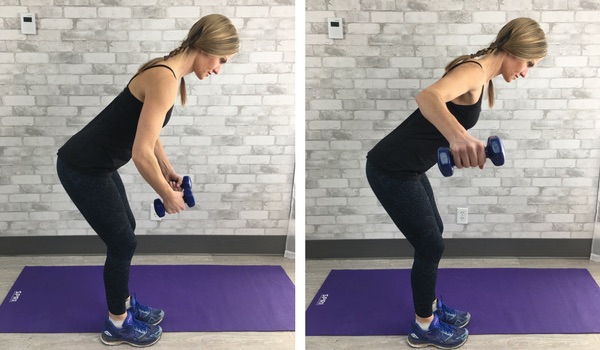 Photo Credit: Get Healthy U
Equipment: light dumbbells (1-2 pounds) or soup cans
Repetitions: 8-10, 4-5 days a week.
Hold 3-5 pound dumbbells and stand with feet hip-width apart, hinge forward slightly from the hips keeping abs tight. Slowly raise your arms, extending them away from the body without shrugging your shoulders. Let elbows lead the way with hands follow. Release down slowly. Repeat ten times.
Wall Push-Ups
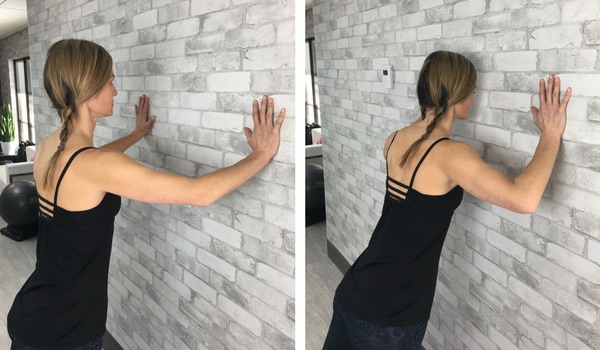 Photo Credit: Get Healthy U
Equipment: None
Repetitions: 8-10; 4-5 days a week
Stand facing a wall with your hands on the wall shoulder-width apart. Slowly perform a push-up, lowering your chest toward the wall slowly, then pressing back. Elbows should angle behind you, not point straight out to the side.
9 Tips For Joint Health | Keep Your Joints Healthy As You Age 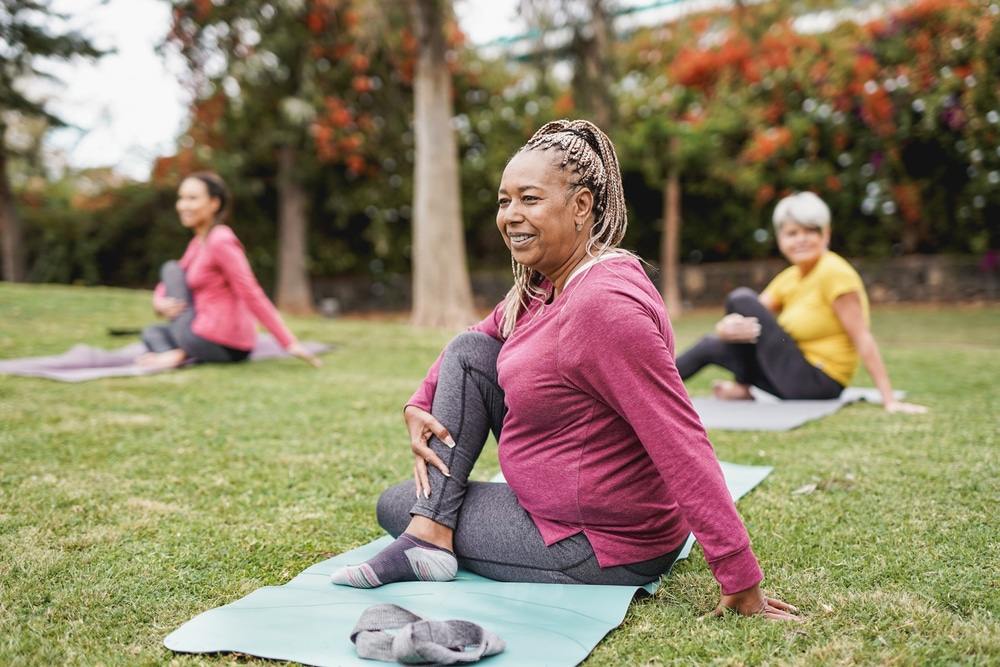 Photo Credit: Shutterstock
Keep your joints healthy is key to staying mobile and not experiencing pain as you age. Although you may not be able to prevent all join injuries or arthritis, there are many things you can start doing today to help keep your joints healthy.
Let’s explore some common causes of joint pain and then delve into 9 keys to keeping your joints healthy and some ideas on what you can do if you’re currently experiencing joint pain.
9 Tips For Joint Health | Keep Your Joints Healthy As You Age
9 Hip-Strengthening Exercises for Seniors  Photo Credit: Shutterstock
As the largest joint in your body, your hips play a central role in healthy aging. These mighty structures enable you to perform a wide range of daily activities, from standing to walking to climbing stairs. So it’s hardly surprising that hip weakness and pain can be debilitating to your everyday life which is these hip exercises for seniors should not be missed. The consequences of weak hips only get worse as you age.
9 Hip-Strengthening Exercises for Seniors

Indulge in the Ultimate Double Chocolate Protein Smoothie to Fuel Your Fitness Journey
Once you’re done crushing the Job 1 + Bike 1 Super Blocks with Jennifer Jacobs, you deserve a drink.
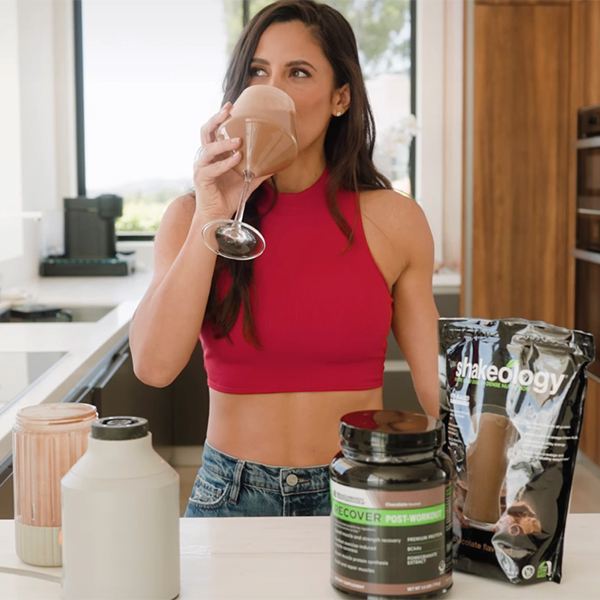
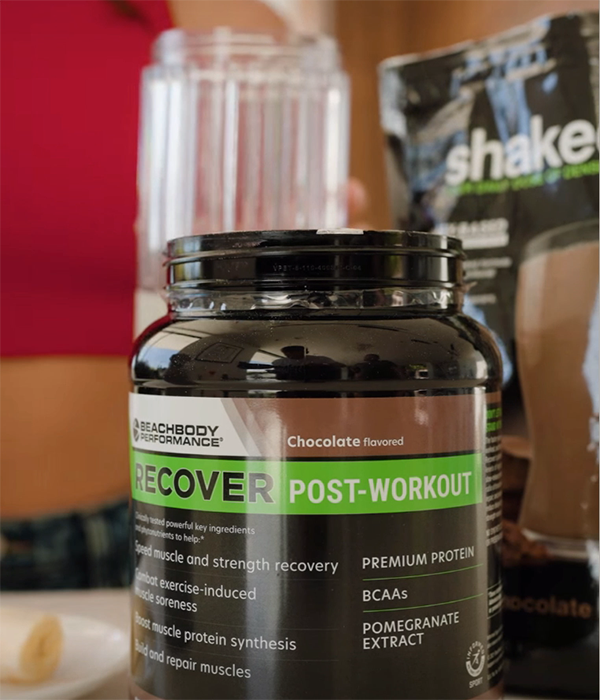
More specifically, JJ’s special Double Chocolate Protein Smoothie, made with Chocolate Shakeology AND Beachbody Performance Chocolate Recover.
(Pro tip: Click here to learn how Recover can help your muscles bounce back after a killer workout.)
Drinking this doubly delicious shake is the perfect way to end every workout in Jennifer’s Super Blocks.
Watch her make it below!

Print The Job 1 Double Chocolate Protein Smoothie
Get a taste of Super Trainer Jennifer Jacobs’ Double Chocolate Protein Smoothie
Course Dessert, shake, Smoothie, Snack
Keyword Chocolate Recover, Chocolate Shakeology
Prep Time 5 minutes
Total Time 5 minutes
Servings 1 serving
Calories 286kcal
Ingredients
- 1 cup / 240 ml water
- 2-3 ice cubes (optional)
- 1 scoop Chocolate Shakeology
- ½ scoop Beachbody Performance Chocolate Recover
- ½ large banana, chopped, frozen
Instructions
-
Place water, ice (if using), Shakeology, Recover, and banana in blender; cover. Blend until smooth; serve immediately.
Notes
Fantastic Fiber (F), Protein Power (P), Quick ‘n’ Easy (QE), Vegetarian (VG)The Nutrition Facts box below provides estimated nutritional information for this recipe.** Total Sugar 18 g, Added Sugar 5 g
Nutrition
Serving: 1serving | Calories: 286kcal | Carbohydrates: 39g | Protein: 28g | Fat: 3g | Saturated Fat: 1g | Cholesterol: 12.5mg | Sodium: 321mg | Fiber: 8g | Sugar: 18g
Container Equivalents
Because Beachbody Performance Recover isn’t being used as post-workout “targeted nutrition” in this recipe, it is counted in the container equivalents.
1 Purple
1½ Red
2B Mindset Plate It!This recipe makes a great breakfast.
View this post on Instagram
A post shared by Daily Dose Of Dense Nutrition (@shakeology)
The post Job 1 Double Chocolate Protein Smoothie appeared first on BODi.

Enhance Your Mobility with These 4 Simple Hamstring Stretches
A few sets of heavy deadlifts and RDL’s will leave your hamstrings sore and extremely tight. Tension in your hamstrings can lead to tight hip flexors, pain in your lower back, and increase your risk of injury. Stretching can help you improve your flexibility, mobility, and help with your athletic performance. We’re going to about a few hamstrings stretches to help loosen your hamstring muscles after your heavy leg day training session.
Hamstring Muscles
The hamstrings are located on the back of the thigh and stretches from your hips to your knees. The hamstrings are responsible for flexion and extension of the knee. Your hamstrings work in unison with your glutes and quadriceps, to provide adequate and fluid movement of your lower body.
Your hamstrings are a collection of three muscles extending from your hips to the back of knees, comprised of the semitendinosus, semimembranosus, and biceps femoris muscles.
Your hamstrings cross two major joints – the hip and the knee, making them more complex than other muscle groups. Together these muscles work to bend your knees, extend the hips, and tilt your pelvis posteriorly. Hamstrings injuries are the most common sports injury, therefore stretching and strengthening your hamstrings can help prevent injuries. Some of the most common injuries are strains, tears, and contusions. These injuries often range from mild to severe, characterized by pain, inflammation, swelling, and restricted range of motion. Therefore, by adding effective hamstring stretches to your training program, can help achieve better functional movement and prevent yourself from strain or injury.
Causes Of Tight Hamstrings
Tight hamstrings can result from a variety of factors, such as poor posture, prolonged sitting, lack of warmups, muscular imbalance, muscle weakness, and poor form while exercising.
Best Hamstring Stretches 1. Inch Worms
Inch worms are a fantastic dynamic hamstring stretch. Dynamic stretches are a controlled movement which adequately preps or warms up your muscles, as opposed to a static stretch, which is achieving a certain range of motion and holding that position. Placing your hands directly in front of your toes, inch worms move from a standing position, and walk your hands no front of you until you’re in plank position. From there you reverse and walk your hands back.
How To Inch Worm
- Start standing with feet hips-width apart.
- Hinge at the hips to fold forward, reaching your palms to the floor in front of you.
- With your core braced and legs straight (but not locked), walk your hands forward to come to a high plank position.
- Pause, then reverse the movement to walk your hands back to your feet and stand to return to starting position
2. Downward Dog
Similar to the inch worm, the down dog is a remarkable and effective hamstring stretch. Down dog is a static stretch that places the hips high and pulls the hamstrings effectively to reduce tightness in your hamstrings.
How To Downward Dog
- Start by standing with feet shoulder width apart
- Place your arms straight down in front of your toes and get on all fours in a tabletop position.
- Walk your hands out and lift hips up and back, gently straightening legs to move into downward dog.
- Bend both knees slightly, reaching your tailbone and pelvis toward the ceiling and belly button tucked
- Hold for 10 seconds, trying to lift and set your heel all the way on the ground
3. Standing Hamstring Scoop
A dynamic stretch, the standing hamstring scoop is a great warm up stretch before heavy lifting or a sweat infused high-intensity interval workout. The hamstring scoop places tension on your hamstrings and is a great stretch to loosen your hamstrings before exercise.
How To Hamstring Scoop
- Stand with your feet hips-width apart.
- Shift your weight into the left foot and extend your right leg slightly forward so your heel rests on the floor.
- Reach your arms diagonally toward your right foot and sit your hips back, and bend left knee until there’s a stretch in the right hamstring.
- Hold for 10 seconds.
- Switch sides, repeat and walk for 10 reps.
4. Seated Single Leg Hamstring Stretch
You probably learned this hamstring stretch in middle school PE class. The seated single leg hamstring stretch is effective and one of the best hamstring stretches to help reduce tightness and tension in the hamstrings, for better flexibility during your workout.
How To Seated Single Leg Hamstring Stretch
- Sitting, stretch one foot in front of you, with the other folded in, foot flat against, your inner thigh.
- If you can, grab your toe with the same arm of the stretched out foot (right with right).
- Breath out and try and get your chest down to your knee and stretch.
- Breath in, release and come back to starting position
- Repeat and hold for 3-5 reps, then switch sides.
Hamstring Stretches: Takeaway
Your hamstrings are the most susceptible muscle to injury. Stretching your hamstrings, is critical to overcome inhibited performance due to muscle soreness, tightness, and tension. The hamstrings are the central connector to several prominent and integral components to your movement, including your hips, pelvis, low back, and knees. Tight hamstrings can create pain and inhibit movement and athletic performance. Stretching your hammies is crucial to adequately warm up and cool down for proper movement and performance.
Need Help With Optimizing Your Diet, Nutrition, And Training Plan To Finally Get The Results You’ve Been Waiting For?
The Swole Kitchen provides 1:1 nutrition coaching, macro coaching, and custom meal plans to help guide you to becoming the best version of yourself. We teach you how to enjoy the foods you love in the right amounts, so you can fit into your favorite pair of jeans, hit your health and fitness goals, and be healthy and happy. We guide you through making sound nutritional decisions and teach you along the way, so you can learn how to take control of your health, and discover what if feels like to live again.

SWOLVERINE IS AN ENDURANCE ATHLETE AND ACTIVE LIFESTYLE BRAND. MADE FOR THE ELITE ATHLETE, AND THE STRONG-WILLED OUR PRODUCTS WERE DESIGNED TO FUEL YOUR ATHLETIC PERFORMANCE. WE PERFORM WHEN YOU PERFORM.
We believe that everyone can optimize not only their athletic performance but their human potential. The way we believe we can optimize performance is through transparency, clinically effective doses, and clinically proven ingredients with evidence-based outcomes. We provide the nutrients you need to power your active lifestyle.


Limitless X’s Jas Mathur Receives World Boxing Council Championship Belt as a Remarkable Accomplishment
In the thrilling arena of professional boxing, the World Boxing Council’s (WBC) Championship Belt is a highly sought-after symbol of excellence. Thousands of passionate boxers worldwide aspire to obtain this prestigious award, yet only an exceptional few manage to attain this elusive honor. The coveted belt represents a culmination of tremendous effort, dedication, and talent – disciplined traits that must be mastered in order to wear this belt. Recently, Jas Mathur, CEO of Limitless X Inc., joined the ranks of these honored champions – an achievement that showcases the unique intersection between business excellence and the spirit of competitive sports.
The Championship Freedom Belt, as it’s fondly known, was presented by none other than boxing legend Floyd Mayweather and Mauricio Sulaimán, the respected President of the WBC. But they weren’t the only luminaries in the room, the esteemed Robert F. Smith, founder, chairman, and CEO of Vista Equity Partners, was a fellow recipient of this prestigious award.
This rare and prestigious accolade shines a spotlight on the exceptional strides Mathur has taken in the industry, recognizing his unwavering and steadfast dedication to pushing the boundaries of what’s possible while challenging and inspiring the rest to follow suit. The achievement is an undeniable sign of universal admiration, applauding him as a true game-changer in the sector.
The World Boxing Council’s 60th-anniversary celebration provided the perfect backdrop for this award. It was a moment not just for reflection, but also for acknowledging the extraordinary. As a part of this ceremony, the WBC celebrated Juneteenth Black History and recognized the visionary leadership of Mathur and Limitless X. The Council applauded their significant contributions to the sporting and business communities, marking a watershed moment in both arenas.
Often seen as the zenith of professional boxing recognition, the WBC is one of four major organizations, alongside the World Boxing Association (WBA), International Boxing Federation (IBF), and World Boxing Organization (WBO), that hold the power to sanction high-profile boxing bouts. The interconnected histories of these four pillars of professional boxing reach back several decades, and their legitimacy is mutually recognized.
The championship belt, resplendent in green and gold, serves as a tangible symbol of excellence and continuous improvement. The WBC emblem embedded in it mirrors a commitment to transparency and advancement, setting the gold standard for industry-wide recognition.
Reacting to this unparalleled honor, Mathur conveyed his heartfelt appreciation with a few words, “This recognition is not just a personal achievement, but a reflection of the incredible team at Limitless X. We continuously strive to redefine the boundaries of what is possible and remain committed to delivering unparalleled experiences that leave a lasting impact on our audiences.”
Limitless X is not any average lifestyle agency. As a creative powerhouse, it specializes in the full spectrum of digital advertising and marketing. With a global ecosystem and unique product and service-oriented businesses within three verticals, the company has made significant strides in the Health & Wellness, Beauty & Skincare, and CBD industries.
This extraordinary honor, according to Jas Mathur by the World Boxing Council, underscores the alignment of Limitless X’s innovative vision with the Council’s ideals of excellence, transparency, and continuous improvement. The Championship Freedom Belt is not merely a token of recognition, but an ongoing challenge – a challenge to maintain high standards and to keep pushing the boundaries of what can be achieved. It’s safe to say, with Mathur and Limitless X, the future is limitless indeed.
M&F and editorial staff were not involved in the creation of this content.
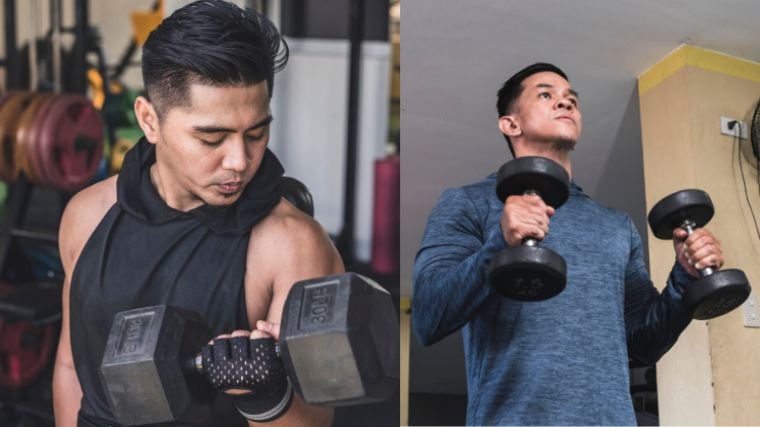
Building Bigger Arms: Comparing Hammer Curls to Biceps Curls
It’s go-time for your upper body. You’re ready to hit your biceps with enough chin-ups and curls to get the best pump you can. But once you pick up the dumbbells, you pause and contemplate: hammer curls versus biceps curls. Which is going to give you the most effective arm gains?
There’s a reason that the dumbbell biceps curl has been a staple go-to for gymgoers for decades. It’s easy to grab a pair of dumbbells, take them anywhere in the gym (but not the squat rack, please), and get a good pump going.
 Credit: MDV Edwards / Shutterstock
But if you’ve been steadily curling for a while, you may consider switching it up with hammer curls. Simply changing to a neutral grip alters the mechanics, muscles worked, and potential outcome of your curls. Here, you’ll learn all about which lift you should choose, and when.
Editor’s Note: The content on BarBend is meant to be informative in nature, but it should not be taken as medical advice. When starting a new training regimen and/or diet, it is always a good idea to consult with a trusted medical professional. We are not a medical resource. The opinions and articles on this site are not intended for use as diagnosis, prevention, and/or treatment of health problems. They are not substitutes for consulting a qualified medical professional.
Table of Contents
- Key Differences
- Key Similarities
- Muscles Worked
- When to Do Hammer Curls
- When to Do Biceps Curls
- How to Do Hammer Curls
- How to Do Biceps Curls
- Benefits of Hammer Curls
- Cons of Hammer Curls
- Benefits of Biceps Curls
- Cons of Biceps Curls
- FAQs
Key Differences
If you use them correctly, both types of curls can help you forge bigger arms. But they’re not exactly the same thing. Changing your grip makes a big difference in emphasis, and therefore in what kinds of results you’re likely to see.
- Hammer curls use a neutral grip with your palms facing each other. Biceps curls use a supinated grip with your palms facing up.
- Because of the grip, hammer curls work your forearms and outer biceps muscles (long head). Although your forearms also contribute, biceps curls isolate your inner biceps muscles (short head) more effectively.
- Since hammer curls require more extensive buy-in from your forearms, they can give your overall arms a thicker appearance. Biceps curls dramatically emphasize your biceps for that rounded biceps look when you flex.
- The neutral grip of the hammer curl allows more of a “rest” at the bottom of each rep. On the other hand, the palms-up position of a biceps curl puts more tension on the biceps at the bottom of each rep.
- Because of this brief rest, the emphasis on a larger amount of muscle mass, and the neutral grip, many lifters can heft bigger dumbbells with hammer curls than biceps curls.
[Related: The 20 Best Biceps Exercises for Greater Growth]
Key Similarities
Changing the grip doesn’t change everything about these lifts. Both are still tremendous accessory exercises that can help bring your biceps to the next level.
- The hammer and biceps curls both increase strength and stimulate hypertrophy in your biceps.
- Both exercises work your pulling muscles, which can carry over to your other lifts.
- Hammer curls and biceps curls are some of the best grip strengtheners that focus on your biceps.
- Both moves help to stabilize your wrists.
Muscles Worked
Both exercises work your biceps brachii muscles. Your biceps brachii consist of a long head and a short head. (1)
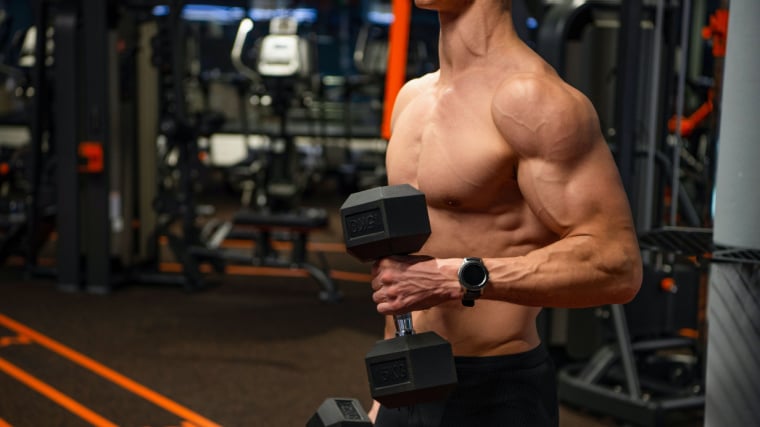
Hammer curls work your biceps brachii and emphasize the long head. They also work your brachialis and brachioradialis muscles. Your brachialis is on your outer upper arm and is your strongest elbow flexor — it’s responsible for bending your arm at your elbow. (2)
Your brachioradialis is located on your outer forearm. You might associate this one with oft-sought-after forearm thickness. It plays a big role in flexing your forearm and elbow — so it’s not just about aesthetics. (3)
 Credit: Just dance / Shutterstock
[Read More: 12 Best Supplements for Muscle Growth of 2023]
For their part, biceps curls specifically work your biceps brachii and focus more on the short head. These muscles work to flex and supinate your forearm. (1)
Your biceps brachii also assist in shoulder stability. Biceps curls can strengthen and grow your inner upper arms — think, being able to keep steady at the bottom of a chin-up. Although your brachialis assists in flexing your elbows, it is not targeted as much as it is in hammer curls.
When to Do Hammer Curls
Deciding when to do each type of curl comes down to what you’re trying to get out of your training. Here are a few situations when hammer curls may be the better choice.
You Want Overall Thicker Arms
Athletes in pursuit of bigger arms need to break out the hammer. Since hammer curls work the muscles on the lateral part of your upper and lower arms, this lift can give your arms an overall thicker, wider, and larger appearance.
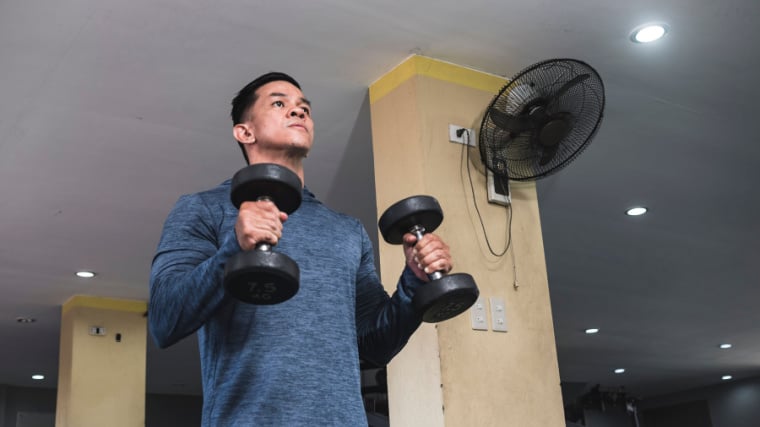
Vary Your Biceps Training
Adding variety to your training program is one way of applying the principles of progressive overload. Performing variations on exercises you’ve been doing for a while can help you break through strength training plateaus, target different muscles, and prevent overuse or injury.
 Credit: MDV Edwards / Shutterstock
[Read More: The 15 Best Triceps Exercises for More Mass and a Bigger Bench Press]
If you’ve been doing classic biceps curls and want to try a variation, try swapping in hammer curls during your next training block.
Recovering From Injury
Biceps curls can be tough on your shoulders and wrists when you go heavy. Switching your grip in hammer curls can spare your shoulders some extra strain while recruiting more muscles to assist your curls.
And if you’re already recovering from wrist, elbow, or shoulder injuries, the neutral grip in hammer curls may be more comfortable than the supinated grip in biceps curls. That’s because it changes the position of your shoulders.
With clearance from a medical professional, you may want to restart your journey with hammer curls. Still, you’ll have to go a little lighter to rebuild your strength.
When to Do Biceps Curls
Biceps curls have been popular for decades for a reason. Here are a few times they might be the optimal choice.
You Want Rounder Biceps
If the upper part of your T-shirt is your biggest concern, standard biceps curls are a solid choice. Biceps curls isolate, target, and build up that classically round peak of your inner biceps.
In addition to dumbbells, you can do biceps curls with a barbell or curl bar. That means you can go a lot heavier with them, potentially increasing your hypertrophy potential.
Improve Your Pull-Up and Chin-Up
If you’re aiming to get your first pull-up or increase your training volume, biceps curls help you purely strengthen your biceps. So if you’re trying to master your first pull-up, biceps curls can be a big help.
[Read More: The One-Month-Long Beginner Pull-Up Program]
Of course, you’ll also have to seriously work on strengthening your back — but you also want your biceps to come in clutch and help you out.
Biceps curls target your biceps to flex your elbows which is one of the joint actions in a pull-up. With biceps curls, you’ll repeat this movement pattern and get your body ready to fully extend your arms under pressure.
You Need Accessibility
Biceps curls are an accessible exercise for older folks, beginners, or anyone returning to exercising after a period of inactivity. You can do them while seated and start with very light dumbbells.
Hammer curls can also be accessible for this reason. But biceps curls are more of an isolation exercise that doesn’t require as much grip strength or use of other muscles.
[Read More: Bodybuilding For Beginners — Your Ultimate Guide for Getting Started in the Gym]
It’s also not just about beginners. Advanced lifters navigating a crowded gym or working out from home can grab dumbbells and grow their arms without much fuss.
How to Do Hammer Curls
Here’s a step-by-step breakdown of how to do your hammer curls with good form to avoid or train through injury and get the most out of your work.
- Inhale to brace your body. On an exhale, curl your weights toward your shoulders by bending your elbows and maintaining a neutral grip.
- Squeeze your biceps and hold for a moment at the top.
- Slowly lower down and focus on eccentric arm training by controlling the lowering portion. You’ll be lengthening of your biceps, brachialis, and brachioradialis.
- Maintain core tension throughout the lift. Try to use control and not momentum. Repeat for your desired number of reps and sets.
What You Need
You will only need yourself and a pair of weights. Dumbbells are generally the most accessible way to perform hammer curls. But you can also use resistance bands, kettlebells, or a cable machine.
Setting Up
Grab your weights. Stand tall with your feet shoulder-width apart. Extend your arms fully straight by your sides. Hold your weights with a neutral grip and palms facing each other. Stand with your hips tucked, glutes squeezed, and abs engaged. Keep your shoulders depressed, spine neutral, and chest up.
How to Do Biceps Curls
Follow these steps to hit your biceps curls with good form.
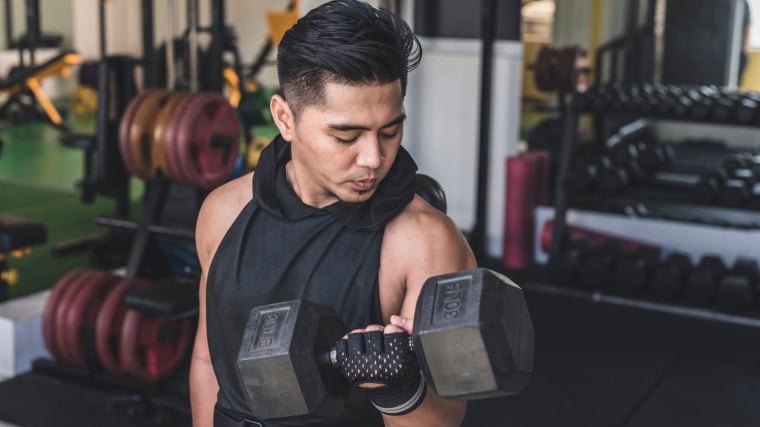
- Inhale to brace and then exhale as you curl your weights up towards your shoulders, flexing at your elbows and keeping your palms face up. Keep your wrists neutral throughout the movement.
- Squeeze your biceps at the top and hold.
- Lower your weights slowly and feel the stretch through your biceps as you straighten your arms. Keep your wrists neutral and don’t let your weights pull them into extension.
- Keep your shoulders depressed, wrists neutral, and core engaged. Move with control and try not to be led by momentum. Repeat for your desired set and rep range for your goal.
What You Need
You just need yourself and a pair of weights for hammer curls. Use dumbbells, kettlebells, or a cable machine. You can also do barbell curls or do the move with an EZ bar.
Setting Up
Choose your equipment and grab it. Stand tall with your feet shoulder-width apart. Extend your arms fully straight and keep them close to your body.
 Credit: MDV Edwards / Shutterstock
Hold your weights with your palms facing up. Stand in a line of tension with your hips gently tucked. Squeeze your glutes and engage your core. Depress your shoulders, maintain a neutral spine, and keep your chest slightly up.
Benefits of Hammer Curls
Some of the best biceps exercises have an extra-special oomph for other muscle groups. The hammer curl is one of these, as it packs an extra wallop for your forearms. Here’s how these neutral-grip curls can help you out.
Builds Brachialis and Brachioradialis
Hammer curls uniquely target your outer arm muscles on your upper and lower arm. This is beneficial for aesthetic goals as it can help give your arms a larger, thicker, and wider appearance. This also gives you a more balanced look when you are growing your arms than solely targeting your inner biceps.
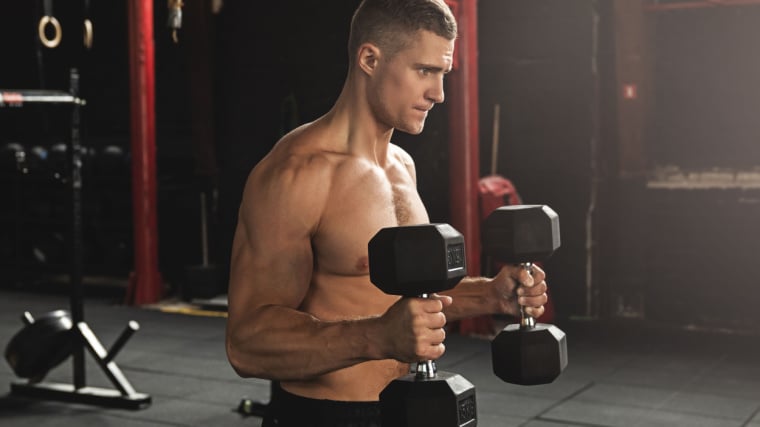
Potential to Lift Heavier
Hammer curls and biceps curls are both single-joint exercises, but hammer curls recruit more muscles to perform the joint action. If you use dumbbells in both hammer curls and biceps curls, you may be able to lift a bit heavier over time with hammer curls. That’s because your outer arm muscles are assisting in the lift.
 Credit: BLACKDAY / Shutterstock
[Read More: How to Deadlift 500 Pounds (and More)]
Hefting more weight can lead to the potential to build muscle and strength in your program over time.
Increase Functional Grip Strength
Hammer curls can build more functional grip strength than biceps curls. Because you’re using a neutral grip, the movement pattern is similar to grabbing, lifting, and carrying objects like heavy groceries.
Having strong forearm muscles can carry over to activities of everyday life, as well as other sports, athletic activities, and heavy lifts.
Cons of Hammer Curls
Though it can be a functional exercise with aesthetic benefits and the potential to grow, it can be really tough for some folks to start.
Tough on Grip
On the flip side of hammer curls being great to improve your grip strength, they also require a lot of grip strength to be able to do them properly in the first place. If your forearm muscles haven’t been worked much before, your grip may give out even before your biceps do.
You may want to start with a pair of lighter dumbbells than you expect. But with patience and consistency, you’ll be able to reap the benefits of grip strength.
Won’t Grow Round Biceps Alone
Hammer curls target your outer arms, which will indeed help round off your biceps. But they’re not enough on your own. Hammer curls don’t emphasize and tax your inner biceps as much as biceps curls. You’ll need to combine these with other movements to stimulate maximum growth.
[Read More: The 11 Best Supplements for Bodybuilding (2023 Update)]
If you only have time for one isolation exercise and your goal is big, rounded, inner biceps, you might want to opt for biceps curls.
Limited Equipment
Due to the nature of a neutral grip, you can’t really do hammer curls with a barbell. You can grab a multi-grip camber bar if your gym has one, but many do not. So, you might be limited to dumbbells. If you prefer curling with a barbell, you’ll likely have to stick with the supinated biceps curls.
This may limit your progression in hammer curls, but there are other ways to progress exercises besides continually adding load. You can try tempo training with hammer curls to emphasize the eccentric portion and get a greater stretch.
Benefits of Biceps Curls
Biceps curls are pretty straightforward — they increase the size and strength of your biceps. This can be beneficial for physique and aesthetic goals as well as the overall strength, health, and stability of your upper arms and nearby joints.
Aesthetic Gains
Your inner biceps can be some of the most pronounced areas of your arms. With biceps curls, you’ll isolate your biceps muscles to elevate your flexing that much closer to Arnold’s.
Whether you’re a competitive bodybuilder or a weekend warrior who..